Apple HomeView Chatbots: iOS 27.3 Code, $299 Hub [2026]
Apple HomeView chatbots moved from rumor to code-level evidence on November 8, 2026, when The Verge reported that an iOS 27.3 beta contains groundwork for a new “Conversational Apps” category. The code...
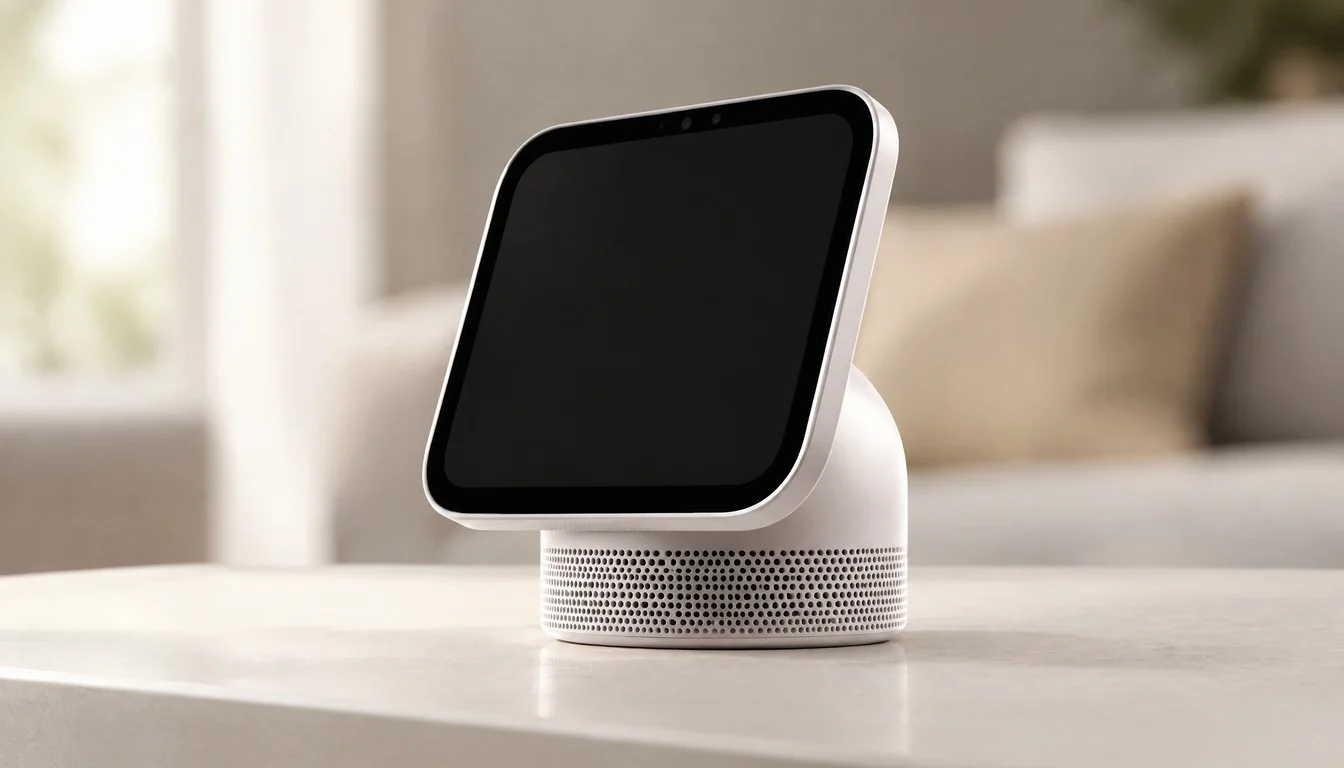
Apple HomeView chatbots moved from rumor to code-level evidence on November 8, 2026, when The Verge reported that an iOS 27.3 beta contains groundwork for a new “Conversational Apps” category. The code reportedly prepares two-way audio routing, session management, and interruptions, which are the plumbing a voice chatbot needs on a smart-home hub.
Apple has not announced third-party chatbot apps for HomeView, so everything beyond the code remains inference. What The Verge Reported About HomeView Chatbots Apple HomeView: $299, A18 Chip, Nov. 13 Availability Siri AI on HomeView: What Apple Lists Today The iOS 27.3 Beta Code: “Conversational Apps” Explained What the code reportedly prepares What the code does not show Confirmed vs Unconfirmed: A Clean Scorecard Why a Smart-Home Hub Is a Hard Place for Chatbots Competitive Comparison: Apple Versus Other Home Assistants Historical Context: Apple and Outside Voice Assistants Market Impact: Who Gains If HomeView Opens Up Privacy and Safety Questions for Chatbots in the Home Timeline: Key Dates Through November 13 Five Predictions for HomeView and Chatbots What Buyers and Developers Should Do Now FAQ: Apple HomeView and Chatbots Will ChatGPT or Claude work on Apple HomeView?
What did The Verge find in the iOS 27.3 beta? When does Apple HomeView launch, and what does it cost? Does HomeView already have an AI assistant?
What chip powers Apple HomeView? When will third-party chatbot support arrive? Should I wait to buy HomeView for chatbot support?
What is a “Conversational Apps” category? Related Coverage The timing matters because Apple announced HomeView on October 13, 2026 and schedules availability for November 13, 2026. That leaves five days between today and the day the first units reach buyers.
Reporting that cites Apple information puts the price at $299. Apple’s own assistant, Siri AI, ships inside the device in beta, which means any outside chatbot would arrive in a house where Apple already has a voice in the room. We covered the broader pressure on the company’s AI story in our look at Apple’s 36x forward earnings and the Big Tech AI spending test .
This analysis separates what Apple has said, what the beta code reportedly shows, and what nobody has confirmed. Support for ChatGPT, Claude, or any other third-party chatbot is unconfirmed, and so is a launch date for such support. A claim circulating online that OpenAI’s ChatGPT and Anthropic’s Claude will launch as dedicated HomeView apps is also unconfirmed.
Readers who want the wider model race can start at our AI and machine learning hub . Google · Preferred Sources Don't miss new tech stories on Google Add Shattered once in the Google app and our stories show up in your news suggestions. Add now What The Verge Reported About HomeView Chatbots The Verge’s report centers on a find in an iOS 27.3 beta.
Code in that build reportedly includes a category named “Conversational Apps” along with preparations for two-way audio routing, session management, and interruptions. The reporting credits a code investigator known as pdfu with the discovery. The headline conclusion is modest: chatbots might be coming to HomeView, and Apple appears to be building the framework that would let them.
The same report carries a caution that readers should not skip. The code is “still not fully wired up,” per the reporting. Unfinished code in a beta shows direction, not a commitment.
Apple regularly ships groundwork in betas that never reaches customers in the form people expect, and it sometimes ships features months after the first traces appear. What the report does not say matters as much as what it says. It does not name ChatGPT.
It does not name Claude. It does not give a date. Apple has not announced third-party chatbot apps for HomeView, and the company has not responded to the code discovery in any form that appears in our fact base.
Any article that treats the code as a launch announcement overshoots the evidence. For a news desk, the right framing is a three-layer ladder. At the bottom sits the confirmed product, a $299 hub with Apple’s own assistant.
In the middle sits the reported code, which suggests an app category for conversation. At the top sits the speculation, in which named chatbot makers ship named apps on named dates. Only the bottom layer is solid today.
Apple HomeView: $299, A18 Chip, Nov. 13 Availability Apple HomeView is a smart-home hub that Apple announced on October 13, 2026. Availability is scheduled for November 13, 2026.
Reporting that cites Apple information lists the price at $299. The device runs on the A18 chip, which suggests Apple wants the hub to handle real intelligence work rather than act as a thin speaker. Apple Intelligence powers the assistant experience on the device.
A hub built around a modern chip and a modern assistant stack is the kind of product that can host a conversational app framework without feeling bolted on. We are deliberately not listing screen size, speaker configuration, memory, or storage here. Our verified fact sheet does not include those specifications, and guessing at them would violate basic reporting standards.
Buyers who need those details should wait for Apple’s product page and early hands-on coverage around the November 13 availability date. Siri AI on HomeView: What Apple Lists Today Siri AI is built into Apple HomeView and is powered by Apple Intelligence. It is available in beta on HomeView software version 27.2.
Apple lists Siri AI as supporting open-ended questions and back-and-forth conversations on the device. That is notable, because back-and-forth conversation is exactly the behavior people associate with chatbots. This creates a real strategic puzzle.
If Siri AI already handles open-ended conversation, why would Apple prepare a “Conversational Apps” category for outside developers? There are at least three plausible answers. Apple may want specialist assistants for tasks Siri AI does not cover.
It may want to let users pick a preferred model for certain conversations. Or the category may serve something unrelated to chatbots, such as language tutors, storytelling apps, or customer-support voices from retailers. The code alone cannot settle which.
The beta label also deserves attention. Apple is shipping its first-party conversational assistant on this hub as a beta on version 27.2, while the possible third-party framework sits in a separate iOS 27.3 beta. Two beta tracks with different version numbers suggest that Apple is staging the rollout.
First-party behavior comes first, and an open door for others, if any, follows. The iOS 27.3 Beta Code: “Conversational Apps” Explained What the code reportedly prepares According to the reporting, the beta code includes preparations for three technical capabilities. The first is two-way audio routing, which lets a voice app both listen and speak through the device’s microphones and speakers in a managed way.
The second is session management, which tracks an ongoing conversation so it does not reset with each utterance. The third is interruptions, which let a user cut off the assistant mid-sentence or let a higher-priority event, such as a timer or a doorbell alert, break in. Anyone who has built a voice product recognizes this list.
Half-duplex voice systems that talk and then listen feel like walkie-talkies. A conversational app needs full-duplex audio, durable state, and graceful barge-in handling. Those are hard problems to solve at the operating-system level, and Apple appears to be solving them in the platform instead of leaving each developer to improvise.
What the code does not show The code does not show an approval process, an API for developers, a revenue model, or a list of partner apps. It does not show a user-facing setting where someone would choose a chatbot. It does not show any named company.
The reporting describes the code as “still not fully wired up,” so even the pieces that exist may change before any public release. Readers should also separate “category exists” from “category opens to everyone.” Apple could reserve such a category for a handful of partners, for its own apps, or for a later software cycle.
The fact sheet lets us say none of that with confidence, so we do not. Confirmed vs Unconfirmed: A Clean Scorecard The table below sorts every claim in circulation into what the verified record supports and what it does not. Treat the right-hand column as a reading guide, not a prediction.
Claim Status What backs it Apple HomeView was announced October 13, 2026 Confirmed Apple announcement Availability is November 13, 2026 Confirmed Apple announcement Price is $299 Reported, cites Apple information Reporting that cites Apple Device runs on the A18 chip Confirmed Apple announcement Siri AI is in beta on HomeView software 27.2 Confirmed Apple announcement iOS 27.3 beta contains a “Conversational Apps” category Reported The Verge, code investigator pdfu Apple announced third-party chatbot apps Not announced No Apple statement ChatGPT or Claude support on HomeView Unconfirmed No named source Launch date for third-party chatbot support Unconfirmed No named source Two rows deserve extra emphasis.
The claim that OpenAI’s ChatGPT and Anthropic’s Claude will launch as dedicated HomeView apps is unconfirmed, and it remains unconfirmed even though the idea feels natural. Code that prepares a category is not the same thing as a partner list. Why a Smart-Home Hub Is a Hard Place for Chatbots A chatbot on a phone has a screen, a keyboard, and a person holding it.
A chatbot on a hub has none of that. It lives on a shelf or a kitchen counter, hears a room full of voices, and answers to whoever speaks first. That changes the engineering and the product design.
Start with identity. A hub in a shared home hears children, guests, and roommates. A conversational app has to decide whose context to load, and it has to avoid leaking one person’s history into another person’s answer.
Session management, which the beta code reportedly prepares, is the first step toward that, but it does not answer the identity question by itself. Then there is latency. Voice conversation feels natural only when responses start fast.
A hub with an A18 chip can do some work on-device, yet large chatbot models usually run in the cloud, which adds round-trip delay. Interruption handling helps hide that delay because users can cut in when the assistant rambles. Our piece on the AI bill shock and the limits Forrester wants on agents shows the other side of that cloud dependency, where always-on conversations can turn into surprise costs for whoever pays the model provider.
Finally, there is the question of who answers when two assistants could respond. If Siri AI and a third-party chatbot both live on the hub, the system needs a clear rule for who hears the wake word and who owns the thread. Apple’s emphasis on audio routing and session ownership in the reported code reads like an attempt to write that rule into the operating system.
Competitive Comparison: Apple Versus Other Home Assistants Apple enters a market where rival platform owners already pair their home devices with their own large language models. Amazon and Google both sell home hardware tied to their own assistants. We do not have verified specifications or prices for those rival products in our fact base, so this section compares strategy rather than spec sheets.
Google builds its own Gemini model family. Our Claude versus Gemini comparison shows how close the top frontier models now sit on independent indexes, which weakens the argument that any single platform owner must lock users into a house model. If the best models are near parity, a hub that lets users choose becomes more attractive than a hub that forces one.
Apple’s possible third path would split the difference. Siri AI would remain the default voice, powered by Apple Intelligence, while a conversational app layer would let outside models plug in under Apple’s rules for audio, sessions, and interruptions. That would give Apple control of the experience without requiring it to win every model benchmark.
It would also hand Apple a gatekeeper role over which chatbots reach the living room. The table below frames the three strategic options for a hub maker. It uses no vendor-specific numbers, because our verified record does not support them.
Strategy How it works Upside for the platform Main risk Closed first-party assistant One house assistant handles every request Tight control, simple privacy story Falls behind if the house model lags rivals Single partner model One outside model powers the hub Fast access to a strong model Dependence on one supplier Open conversational app layer Several chatbots plug in through platform rules User choice, ecosystem pull Hard audio, identity, and safety rules Hybrid (first-party default, optional apps) Siri AI stays default, apps add depth Control plus flexibility Confusing wake-word and handoff behavior The reported code points toward the third and fourth rows, but the evidence does not exclude the first two.
A category name in a beta is a hint, not a strategy memo. Historical Context: Apple and Outside Voice Assistants Apple has long treated the voice assistant as a core platform feature rather than an open marketplace. Siri has been the house voice on its devices, and outside companies mostly reached it through narrow integrations.
That history makes an app category for conversation a notable shift if it ever ships, because it would let outside voices speak in their own right instead of passing requests through Siri. The company has also shown a pattern of building infrastructure first and opening it later. Betas often contain framework code months before a public rollout, and some of it never graduates.
The phrase “still not fully wired up,” as relayed in the reporting, fits that pattern. It marks the code as scaffolding. On the other side of the ledger, the AI industry changed fast in 2026.
Frontier chatbot makers now court distribution wherever they can find it. Google has pushed Gemini deeper into its own products, as in our report on the Google Messages redesign with Gemini in the beta . A hub that hosts third-party chatbots would be Apple’s answer to that distribution race, if the company chooses to run it.
Market Impact: Who Gains If HomeView Opens Up The first beneficiaries would be the chatbot makers themselves. A voice app on a $299 hub gives a model provider a daily-use surface in the home, which is hard to buy through advertising. Even without confirmed partners, the existence of the code makes the opportunity visible to every company that sells conversational AI.
The second group is independent developers. A “Conversational Apps” category could create room for small teams to build specialized voice experiences, such as cooking guides, study partners, or accessibility tools, without training their own foundation models. That depends on Apple publishing developer tools, which it has not done in anything we can verify.
The third is Apple itself. Investors have debated how much Apple must spend to stay credible in AI, a theme we examined in the 36x forward earnings piece. A hub that welcomes outside models lets Apple show AI relevance without carrying every training bill.
A hub that stays closed keeps margins and control but puts more weight on Apple Intelligence quality. There are losers in the scenario too. Rival hubs that sell voice choice as a differentiator lose some of that edge if Apple matches them.
Niche voice-assistant startups face a harder time if the platform owner defines the audio rules and absorbs their best features. None of this is certain, and traders should treat the beta code as a signal worth watching, not a catalyst to size positions around. Privacy and Safety Questions for Chatbots in the Home Putting an always-available chatbot in a shared room raises questions that phone apps rarely face.
Who can talk to it? Does it know a child is speaking? Where does the audio go?
Apple has built part of its brand on privacy, so any third-party framework will face a high bar on how audio is captured, stored, and shared with outside servers. Safety around younger users is the sharpest edge. Lawsuits against chatbot makers over minors are already in the news.
Our breakdown of the 104-page Gemini lawsuit, alleged versus proven shows how quickly conversational AI can become a legal and reputational problem when a young person is involved. A home hub is a shared device, so a platform owner that opens it to outside chatbots inherits part of that exposure.
We have no verified information on what safeguards Apple would require. The company could demand age checks, content filters, or on-device wake-word processing. It could also limit the category to vetted developers.
Those are open questions, and Apple has not answered them publicly. Timeline: Key Dates Through November 13 The dates below come from the verified record. Items marked unconfirmed have no source behind a date.
Date Event Status October 13, 2026 Apple announces HomeView Confirmed Not dated Siri AI beta listed on HomeView software 27.2 Confirmed as a beta November 8, 2026 The Verge reports “Conversational Apps” code in an iOS 27.3 beta Reported November 13, 2026 HomeView availability, reported $299 price Scheduled Not announced Third-party chatbot support Unconfirmed Not announced ChatGPT or Claude apps on HomeView Unconfirmed The gap between the November 13 launch and the open-ended third-party line is the story.
Apple can ship the hardware on schedule and still leave the chatbot question for a later software update. Early buyers should plan around Siri AI as it exists today. Five Predictions for HomeView and Chatbots These are analyst-style judgments from the evidence above, not reported facts.
Each carries real uncertainty. Apple stays quiet through launch. The company has no reason to discuss an unfinished beta category, so expect no official comment on third-party chatbots on November 13.
The category debuts for a small partner group first. Apple tends to test new platform surfaces with limited partners before opening tools broadly, and voice-with-sessions is a hard surface to police. Siri AI remains the default voice.
The wake word and primary experience stay with Apple’s assistant, with any outside chatbot reached by explicit user choice or app name. Chatbot makers announce interest only after Apple does. Companies like OpenAI and Anthropic rarely pre-announce on another platform owner’s hardware, so silence from them is not a signal either way.
Privacy rules arrive with the framework. Any opening will likely come with firm limits on audio retention and age-appropriate use, shaped by the legal climate around minors and chatbots. We would update these quickly on two triggers.
A developer-facing document from Apple would raise the odds of a broad opening. A statement from a named chatbot maker would move the ChatGPT and Claude rumor from unconfirmed to reported. What Buyers and Developers Should Do Now Buyers who want HomeView on day one should buy it for what Apple sells today.
That means a $299 hub with the A18 chip and Siri AI in beta. If third-party chatbots arrive later, treat them as a bonus. A purchase justified only by a rumored ChatGPT or Claude app rests on an unconfirmed claim.
Developers have more to track. Watch Apple’s beta release notes for the iOS 27.3 cycle and any HomeView software notes after version 27.2. If a documented API appears, the three named capabilities, two-way audio routing, session management, and interruptions, will tell you what the platform expects from a conversational app.
Teams building voice products today can already design around those three behaviors. Teams also need a cost plan. Always-on voice sessions can drive inference spend, a point we raised in the bill shock coverage above.
And for companies exploring agent-style products, our report on Perplexity Teammates and the $200 Max agents launch shows how fast the market is moving toward assistants that carry ongoing work, which is the same session-management idea Apple’s code reportedly prepares. The takeaway: the code is real enough to report, early enough to doubt, and silent on every detail that would let anyone plan a launch.
Apple HomeView ships on November 13 with Siri AI. Whether chatbots join it is a question only Apple can answer, and so far it has not. FAQ: Apple HomeView and Chatbots Will ChatGPT or Claude work on Apple HomeView?
Not confirmed. Apple has not announced third-party chatbot apps for HomeView, and support for ChatGPT, Claude, or other chatbots is unconfirmed. A claim that both will launch as dedicated HomeView apps is also unconfirmed.
What did The Verge find in the iOS 27.3 beta? The Verge reported code that includes a “Conversational Apps” category and preparations for two-way audio routing, session management, and interruptions. The code investigator identified in the reporting is pdfu.
The reporting says the code is “still not fully wired up.” When does Apple HomeView launch, and what does it cost? Apple announced HomeView on October 13, 2026, and availability is scheduled for November 13, 2026. Reporting that cites Apple information puts the price at $299.
Does HomeView already have an AI assistant? Yes. Siri AI is built in and powered by Apple Intelligence.
It is available in beta on HomeView software version 27.2, and Apple lists support for open-ended questions and back-and-forth conversations. What chip powers Apple HomeView? Apple HomeView is powered by the A18 chip.
Our verified record does not include other hardware specifications, so we do not list them. When will third-party chatbot support arrive? No launch date for third-party chatbot support is confirmed.
The beta code suggests preparation, but Apple has set no public timeline. Should I wait to buy HomeView for chatbot support? Only if chatbot support is the sole reason you want the device.
Buy for what Apple sells now, a $299 hub with Siri AI in beta, and treat any later chatbot apps as an unconfirmed extra. What is a “Conversational Apps” category? It is the category name reportedly found in iOS 27.3 beta code.
It appears tied to features for voice conversations, but Apple has not described it, so its scope, rules, and partners remain unknown.
Article text via FreeNewsAPI. Rights remain with shattered.io.
Read on publisher site → Opens shattered.io in a new tab