Black Hawk down: Trump’s trade war pauses Canadian helicopter deal
HomePoliticsFederal Politics Ottawa halted plans to buy 16 U.S.-made helicopters ahead of trade talks: sourcesRCIPosted: 2:18 PMThe Liberal government quietly ordered a pause on a modest, but important...
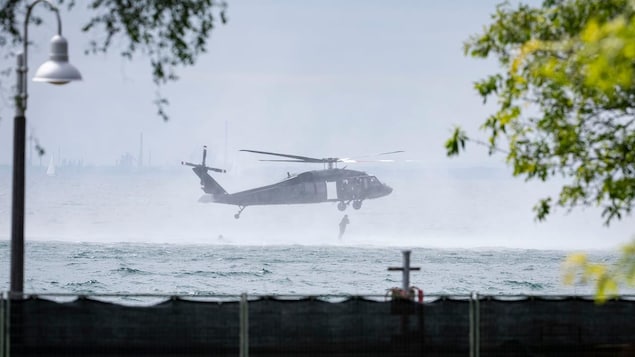
Home Politics Federal Politics Ottawa halted plans to buy 16 U.S.-made helicopters ahead of trade talks: sources RCI Posted: 2:18 PM The Liberal government quietly ordered a pause on a modest, but important purchase of 16 U.S.-made UH-60M Black Hawk helicopters just before trade negotiations began last summer with the Trump administration, CBC News and Radio-Canada have learned.
The aircraft, which are intended for use by Canada's special forces, are manufactured by Sikorsky, a subsidiary of the U.S. defence giant Lockheed Martin. The decision to suspend the acquisition is linked to trade and diplomatic tensions with the Trump administration, according to several sources within the government and defence industry.
The purchase had been signed off by the U.S. State Department agency that handles foreign military sales and was headed for congressional approval when the halt was ordered before trade negotiators met in Washington, according to two confidential sources. What tariffs are still in place?
Tracking the Canada-U.S. trade war (new window) FRONT BURNER Should Canada have taken the U.S. deal? (new window) The decision, the sources said, was partially related to the trade talks, which ultimately failed. It was also part of a wider effort by federal officials to inventory what the Canadian military planned to purchase from the United States.
U.S. President Donald Trump has repeatedly questioned Canadian sovereignty since being re-elected. He has also launched a major trade war with Canada, imposing tariffs on key sectors such as steel, aluminum and automotive manufacturing.
As Canada seeks to reduce its military reliance on the United States, the government decided that the timing was not right to purchase American helicopters without a competitive bidding process, several sources said. CBC News is not identifying the sources because they were not authorized to speak publicly.
Since being elected in the spring of 2025, Prime Minister Mark Carney has made it a priority to boost domestic defence industrial production, establish partnerships with foreign firms operating in Canada and — only as a last resort — purchase directly from abroad. The pause on the Black Hawk purchase comes as the Carney government continues to review whether it will purchase a full order of F-35 stealth fighters, which are also manufactured by Lockheed Martin.
The government ordered a review of that plan in the late winter of 2025 and has yet to decide whether it will buy all 88 fighters as originally planned. Canada has committed to buy 16 F-35s, but has also ordered the parts for more than a dozen others. Government 'continues to evaluate options' Whenever Canada — or other countries — buy U.S. military gear, the purchaser is required to request permission through the U.S.
Foreign Military Sales program. Once reviewed by officials, the deal is sent to American lawmakers who have 15 days to object before it becomes official. A spokesperson for Stephen Fuhr, the secretary of state overseeing Canada's military procurement, suggested options other than the Black Hawks could be considered.
The government of Canada continues to evaluate options to meet the needs of the special operations forces, said Sofiya Sapeha. Canada remains in contact with the relevant partners and continues to review all information necessary for decision-making. Enlarge image (new window) A Black Hawk helicopter is seen on display in Kielce, Poland, last month.
A defence expert tells CBC News that the U.S.-made helicopter is well suited for Arctic operations. Photo: Reuters / Kacper Pempel The Black Hawks are intended to replace the special forces' use of the CH-146 Griffon, which is more than three decades old and significantly inferior in terms of military operations.
One of the reasons Canada's commandos were keen on the Black Hawk was because of its range and robustness for operations over vast distances in the Arctic. The UH-60 has a typical combat radius of about 595 kilometres, which can be extended by air-to-air refuelling. In that case, its range goes out to 2,250 kilometres.
The Griffon's normal combat range is up to 656 kilometres, but can be fitted with external fuel tanks that take it up to 909 kilometres. Special forces have been using the Griffon since their inception as a separate unit within the Canadian military in the early 1990s. The helicopter is currently flown by 427 Special Operations Aviation Squadron.
Retired major-general Denis Thompson, who commanded special operations troops, said the difference between the two helicopters is stark. Harper says Canada had 'no choice' but to walk away from trade talks (new window) Trump's top trade rep says U.S. 'comfortable' with state of relationship (new window) In some ways you're comparing apples and oranges because a Griffon is a small, agile helicopter better suited for temperate climates and frankly better suited for urban operations than something as large as a Black Hawk, Thompson said.
Range is important and the fact that it's a military design, a helicopter designed expressly for the military, means that it is just more robust and it can stand up to more punishment than the Griffon. Thompson questioned the political calculus, but said he understands the way Canadians feel about the Trump administration.
When we buy a piece of equipment, we're not hanging on to it for the two years that are left in Mr. Trump's mandate, Thompson said. We're hanging on to them for 20, 30 years.
And so what's important is to make sure that we buy the equipment that Canadian Armed Forces need and that we look to the long-term and not short-term political gain. Low public support for buying American Earlier this year, Policy Magazine published the results of a poll (new window) that indicated that 62 per cent of Canadians disagree with purchasing military equipment from the United States.
Similarly, Abacus Data found that 64 per cent support an immediate halt to U.S. military purchases. I know it's difficult to explain that to the public, but that's what needs to be done, said Thompson. He said equipment like the Black Hawk and F-35 weren't selected for political reasons, at least not from the military standpoint.
They were selected because they are the best piece, the most suitable piece, of equipment to fulfil the task that the military believes it might have to fill. Defence analyst Justin Massie said the government is also clearly grappling with military procurement projects that were set in motion before the trade tensions began.
WATCH | Canada-U.S. trade minister on state of negotiations: What is changing is not so much the strategy as the political discomfort of publicly announcing purchases of American military equipment. said Massie, a political science professor at Université du Québec à Montréal. A spokesperson for Lockheed Martin highlighted the firm's willingness to continue working with the Canadian Armed Forces, without commenting on the status of the acquisition process.
We are ready to support international customers wishing to acquire the latest-generation UH-60M Black Hawk helicopter through the Foreign Military Sales program, said the spokesperson, Amanda Hauck. Other projects stalled According to government and defence industry sources, Ottawa is hesitating to approve further military purchases from the United States, or even announce contracts already signed with American firms.
For instance, a recent Department of National Defence contract for specialized cloud computing services with California-based Google has not yet been announced. This contract involves storing and protecting classified information related to national security. Pentagon procurement post reveals Canada quietly locked into HIMARS deal (new window) Another contract for a ground vehicle crew training system is reportedly slated for the U.S. firm Raytheon but has not been announced, sources say.
Earlier this year, the government waited months before confirming a contract (new window) to purchase M142 High Mobility Artillery Rocket Systems (HIMARS) from Lockheed Martin. ABOUT THE AUTHOR Murray Brewster (new window) · CBC News · Senior reporter, defence and security Murray Brewster is the senior defence writer for CBC News, based in Ottawa.
He has covered the Canadian military and foreign policy from Parliament Hill for over a decade. Among other assignments, he spent a total of 15 months on the ground covering the Afghan war for The Canadian Press. Prior to that, he covered defence issues and politics for CP in Nova Scotia for 11 years and was bureau chief for Standard Broadcast News in Ottawa.
Follow Murray Brewster on X (new window)
Article text via FreeNewsAPI. Rights remain with Radio-Canada.
Read on publisher site → Opens Radio-Canada in a new tab


