Childhood poverty increases risk of atherosclerosis in adulthood
People who grew up in low-income families are at greater risk of developing atherosclerosis in the coronary arteries later in life. This is shown by a new study from Karolinska Institutet published in the...
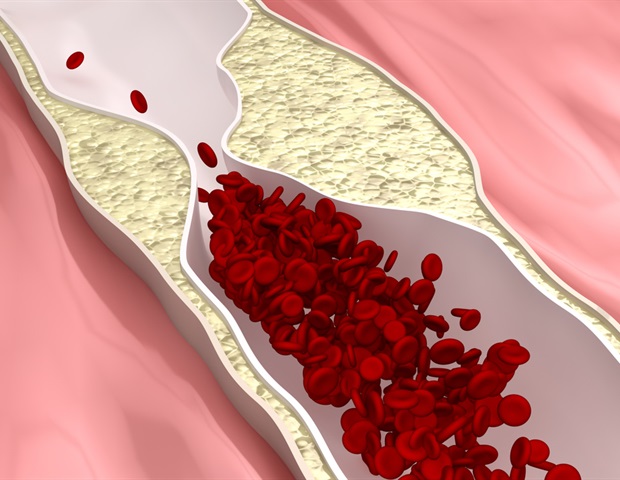
People who grew up in low-income families are at greater risk of developing atherosclerosis in the coronary arteries later in life. This is shown by a new study from Karolinska Institutet published in the Journal of the American Heart Association . The association remained even after the researchers had taken lifestyle habits and other risk factors into account.
The study involved 15,640 people aged between 50 and 64 from the Swedish population-based SCAPIS study. The researchers examined family income when the participants were aged 10 to 12 and compared this data with the results of computed tomography scans of the coronary arteries around 50 years later.
People who had grown up in families with the lowest incomes were more likely to show signs of moderate to severe atherosclerosis in the coronary arteries than those from families with the highest incomes. When the researchers took age, gender and other factors into account, the odds of moderate to severe atherosclerosis were 43 per cent higher among people from the lowest income families.
After adjusting for lifestyle habits, socio-economic circumstances in adulthood and established risk factors, the odds were still 31 per cent higher. "Our findings show that socio-economic circumstances early in life have an impact on cardiovascular health several decades later," says Per Svensson, associate professor at the Department of Clinical Research and Education, Södersjukhuset, Karolinska Institutet, who led the study.
Continue reading
Watch a short ad to unlock the full article
The rest stays locked if you skip or close the ad early.
The researchers do not yet know exactly what mechanisms underlie this association. We believe the link reflects a lifelong accumulation of risk factors that we do not fully capture with data from adulthood. Being overweight during childhood may be one such factor.
There is also research suggesting that low socio-economic status early in life may affect biological processes linked to stress and inflammation . However, the significance of these mechanisms needs to be investigated further." Per Svensson, Associate Professor, Department of Clinical Research and Education, Södersjukhuset, Karolinska Institutet The study was funded by grants from the Swedish Heart-Lung Foundation, amongst others.
Source: Journal reference: Herlitz, S., et al . (2026). Low Parental Income During Childhood Is Associated With Coronary Atherosclerosis in Midlife. Journal of the American Heart Association .
DOI: 10.1161/jaha.126.050332. https://www.ahajournals.org/doi/10.1161/JAHA.126.050332 Suggested Reading Terms While we only use edited and approved content for Azthena answers, it may on occasions provide incorrect responses. Please confirm any data provided with the related suppliers or authors.
We do not provide medical advice, if you search for medical information you must always consult a medical professional before acting on any information provided. Your questions, but not your email details will be shared with OpenAI and retained for 30 days in accordance with their privacy principles.
Please do not ask questions that use sensitive or confidential information. Read the full Terms & Conditions .
Article text via FreeNewsAPI. Rights remain with News-Medical.
Read on publisher site → Opens News-Medical in a new tab