FDA Approves Giredestrant + Everolimus for BC in Second-Line
The FDA has approved giredestrant (Wilserdly, Roche) with everolimus for adults with estrogen receptor-positive, HER2-negative, ESR1-mutated locally advanced or metastatic breast cancer. The combination is...
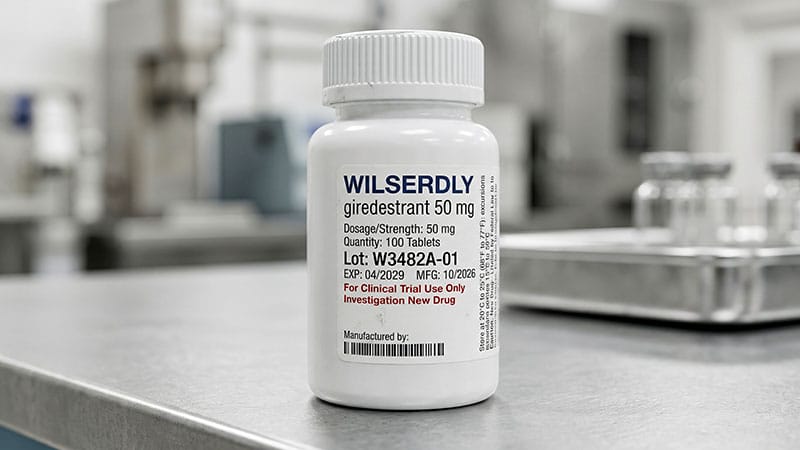
The FDA has approved giredestrant (Wilserdly, Roche) with everolimus for adults with estrogen receptor-positive, HER2-negative, ESR1 -mutated locally advanced or metastatic breast cancer . The combination is for patients who have experienced recurrence during or after completion of endocrine-based adjuvant therapy or progression on at least one endocrine-based regimen in the metastatic setting.
The regulator also authorized the FoundationOne Liquid CDx assay to detect the mutation. In a competitive landscape, Roche said giredestrant, its novel oral selective estrogen receptor degrader, plus everolimus significantly outperforms standard endocrine combinations in a post-CDK4/6 inhibitor setting.
The approval was based on the company’s open-label evERA Breast Cancer trial in 373 patients; about 55% had ESR1 mutations detected by the CDx assay. All of the patients had previously received a CDK4/6 inhibitor and endocrine therapy. They were randomly assigned evenly to receive giredestrant 30 mg once daily or standard of care, which meant physicians’ choice of endocrine therapy ( exemestane , fulvestrant , or tamoxifen ), both on a background of everolimus 10 mg once daily.
Pre- or perimenopausal women were also given a gonadotropin-releasing hormone (GnRH) agonist for ovarian suppression; the four men in the trial were also receiving a GnRH agonist unless they had had bilateral orchiectomy. The patients with ESR1 -mutated breast cancer who received giredestrant plus everolimus had a progression-free survival of 10 months, compared with 5.5 months among those who received standard of care.
In the overall study population, among patients with and those without the mutation, median progression-free survival was 8.8 months with giredestrant plus everolimus vs 5.5 months with standard treatment. It was too early at the time of the analysis to know if there was a statistically significant benefit in overall survival, FDA said in its announcement.
Twenty percent or more of patients receiving giredestrant plus everolimus had stomatitis, rash, fatigue, diarrhea , musculoskeletal pain, pneumonitis, and nausea — the most common adverse reactions. Laboratory adverse events in 20% or more of patients in the experimental arm included anemia ; lymphocytopenia; leukopenia; neutropenia ; thrombocytopenia; elevated liver enzymes; increased creatinine ; and decreases in calcium, potassium, and sodium.
The recommended giredestrant dose is the same as in the trial: 30 mg orally once daily with or without food until disease progression or unacceptable toxicity. M. Alexander Otto is a physician assistant and award-winning journalist.
He is also an MIT science journalism fellow. Email: aotto@medscape.net
Article text via FreeNewsAPI. Rights remain with Medscape.
Read on publisher site → Opens Medscape in a new tab