Forgiveness, bishop voting, and going Jersey
Hey everybody,First things first, pray for the president.On Sunday night, CBS News aired an interview of President Trump, conducted by Pillar reader (in a good way) Ross Douthat.You’ve probably seen it.Pillar...
Hey everybody, First things first, pray for the president. On Sunday night, CBS News aired an interview of President Trump, conducted by Pillar reader (in a good way) Ross Douthat. You’ve probably seen it.
Pillar reader Douthat reminded the president of a joke he’d made last September, at Charlie Kirk’s memorial, when Erica Kirk talked about forgiveness: “I hate my opponents and I don’t want what’s best for them.” Then he reminded Trump of a fact uncomfortable to the president — his own mortality.
And he set a scenario: “Let’s say you pass away. You’re entering the next life, and all you have to do to enter paradise is feel love and forgiveness for James Comey, Nancy Pelosi, [for] anyone who you have expressed hate for over the years. Do you think you can do it?” Trump said the easy answer was yes, but “then I wouldn’t be real, would I?” Douthat pressed a bit more.
“Is the answer is no?” “The answer is no. I want to be honest.” ... “Before the judgment throne of God?” “Before the judgment — no.” “I probably cannot do that now,” he added, “because I do hate some of my enemies and I always will.” — Here’s the thing.
Since Trump came down the escalator in 2016, I’ve wondered just how much of “Trump being Trump” is actually just doing a bit — whether most of his public persona was, like his beloved WWE wrestling, so much kayfabe. There is ample evidence to the contrary, and has been since the day of that first descent.
But Trump is an entertainer, and a very good one at that. Agree with him or not, you can’t deny that he’s probably the funniest president in our lifetimes, and most of the time intentionally. And I’ve always perdured in the hope that when he got on a tirade, Trump was in on the joke — doing a kind of performance piece in the role of America’s unfettered id.
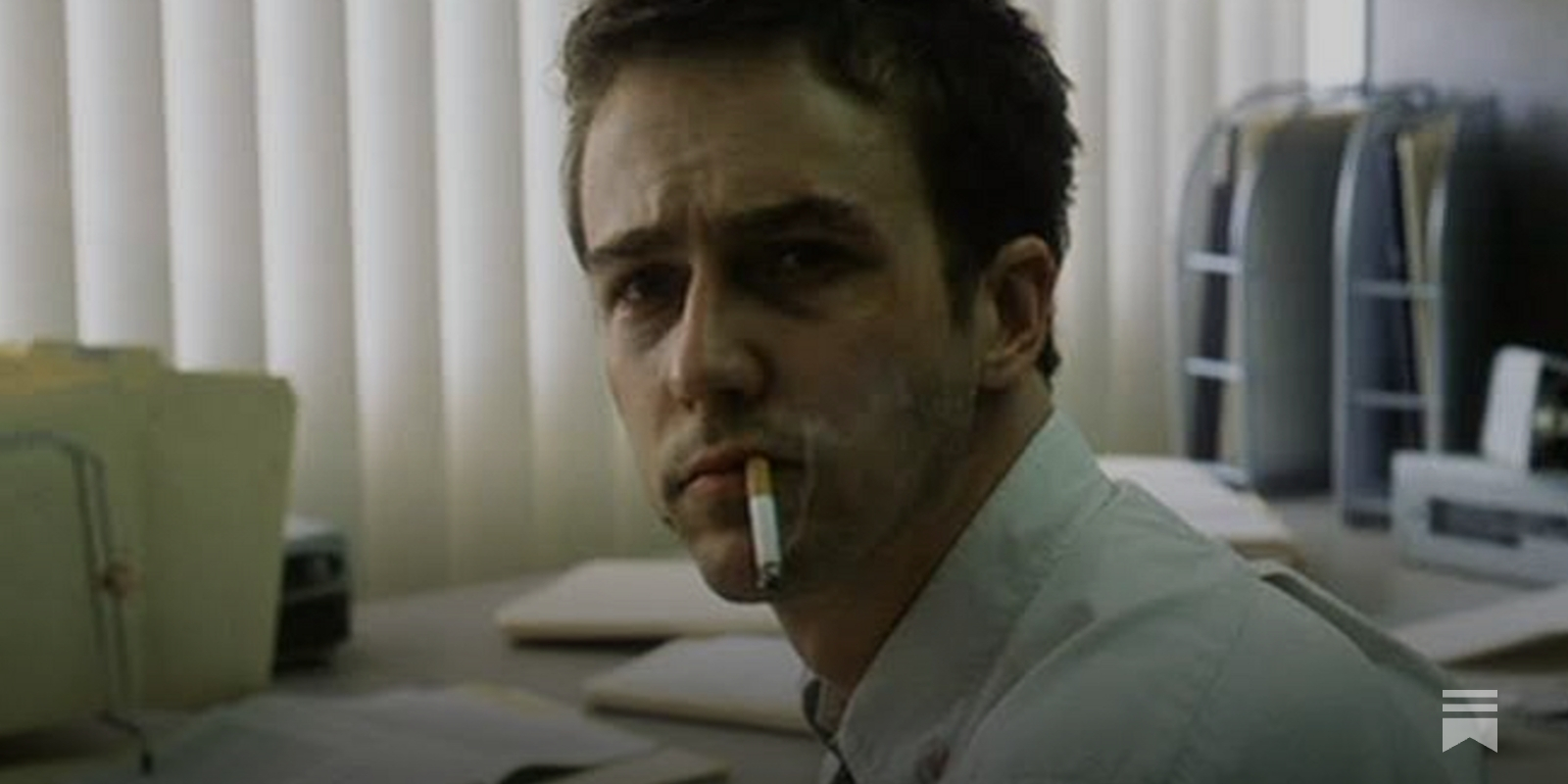
“I am Jack’s complete lack of boundaries,” as the man might have said. But the Douthat interview was Trump on Trump, in a context which seemed more vulnerable and “authentic,” as Trump put it, than the usual bombastic gabble he brings out for MAGA rallies. Trump without the “weave,” as he’s taken to calling his rhetorical digressions.
And there, face to face with Boss Ross, the Donald said bluntly that none of it’s been an act, that he hates his political adversaries, and that he can’t forgive them. Even before the throne of God. It’s sad.
The only Christian response to Trump’s admission is sorrow, for his salvation, which is the only thing that finally matters. Of course, there are quibbles to be made about the way Douthat said it — he asked if Trump could “feel” love for his enemies, and love is an act of the will, not an affected emotion.
And at least some people have jumped in to suggest that Ross’ test suffered some flaw of soteriology, asking Trump to accomplish by natural virtue what can only be actually accomplished in Christ. On the first point, I suppose there is a semantic point to be made, but it hardly seems to be the salient issue in the dialogue, or a mental reservation Trump was making himself.
On the second point, it’s worth noting mostly that Ross was at work, and 60 Minutes isn’t paying him to unleash the kerygma on air — even if I hope Ross found a minute to share it in the Oval Office once the lights came down. More to the point, I wonder if Douthat managed to plant a seed in Trump — perhaps to leave the president wondering, at least, whether holding on to bitterness won’t be his final undoing, in those eventual final moments.
And I hope Ross planted a seed in us, too. Pillar readers (and writers, for that matter) aren’t aiming to accomplish forgiveness by natural virtue. We know it’s accomplished by deeper incorporation into the person of Jesus Christ — and we know that Christ is the means by which we ourselves can accomplish it.
And yet, I, at least, am prone to long grudges and resentments, I’ve got a litany of slights and injustices I can deliver at a near moment’s notice. Some have fueled me for decades. So ahead of my own turn before the divine throne, I’ve got a set of pardons myself to offer.
Perhaps I’ve just been less blunt about that than the Donald. And in that respect, I’d be grateful for your prayers. And maybe we could all take a minute to pray for the president.
And for those who find reconcilation and forgivenes in this nation a daunting prospect. Ok, so real quick: Some of you know that I’m on the board of FIRE Denver , a non-profit which gives grants to Catholic schools so that kids with profound disabilities — kids like mine — can be enrolled in Catholic school.
Well, there’s a wholesale baker we’re friends with, and he donates a LOT of Thanksgiving pies to us, which we can sell, and use every single dollar to fund the inclusion of kids with disabilities. If you live in Colorado, you could buy a pie and put it on your Thanksgiving table. If you don’t, you could buy one or more, and we’ll donate the pie to families in need through Catholic Charities and other apostolates.
And you’ll support kids like mine. This is important. Do us a solid.
Buy some pies , and if you want, choose “donate” from the pick-up options. The sale ends this week: Buy pies. Help kids.
Pope Leo XIV is having an incredible trip to Latin America. Edgar Beltran arrives today in Peru to cover the final, homecoming leg of the journey. But we’ve put together a highlight reel of the rest of it for you.
Pope Leo XIV during his visit to the staff and residents of the Pequeño Cottolengo Don Orione in Claypole. Credit: Independent Photo Agency/Alamy Live News. Give it a read.
— The Institute for Works of Religion, the Vatican’s for-profit retail bank, won a sweeping court decision in Malta, the bank announced on Friday. The court awarded the Vatican bank €24 million, while ending a decade’s worth of back-and-forth litigation over a building in Budapest.
The case involves Vatican intrigue, some of the usual suspects, and a guest appearance from the son-in-law of former Hungarian prime minister, Viktor Orban. Read up. Prepare your diocese for 2027’s Education Freedom Tax Credits with the Catholic Education Fund.
Our turnkey SGO solution provides shared infrastructure, compliance, fundraising, and distribution at scale—delivering national reach with local impact. Don’t navigate this alone. Join our national network of dioceses as a Partner.
Let’s grow Catholic education, together. The Priestly Fraternity of St. Peter has declined to disclose details about the laicization process of James Jackson, a now-laicized priest convicted in 2023 of downloading and storing thousands of files containing child sexual abuse material.
Jackson was laicized in January 2025, according to a March report from the Rhode Island attorney general’s office, but the laicization has not yet been widely reported. Here’s what you need to know. — After a horrific mass shooting in Krakow, Cardinal Grzegorz Ryś said that the final word belongs to love, not hatred.
— A labor court issued a ruling last week that marked a significant setback for the Catholic Church in Germany, one of the country’s largest employers. The German federal court said Nov. 5 that a Catholic employer unlawfully discriminated against an employee by dismissing her for formally leaving the Church.
And that has really interesting implications for the Church across Europe. — Mexican ecclesiastical officials say that a priest kidnapped last month was tortured by criminals while in captivity. The torture is the latest in a surge of violence against clerics in recent years.
— An Armenian court has postponed the trial of the Armenian Church’s Patriarch Karekin II and five bishops after the prosecutors failed to appear before the court on Nov. 9. Catholicos Karekin II, the Armenian Apostolic Church’s primate, is on trial along with five other Armenian bishops for obstruction of justice, after he refused to reinstate a laicized and excommunicated bishop despite a court order to do so amid a dispute with the government.
Here’s the story. Leave a comment When we get to Baltimore next week, the most public thing on the ecclesial agenda is the election of new committee chairs, a new general secretary, and a secretary for the USCCB. I’ve got my election previous and predictions all ready.
So let’s start with this: The general secretary election is usually a more-or-less foregone conclusion. Of the three or so associate secretaries general at the bishops’ conference, one is invariably a priest. Inevitably, that priest is elected to serve as the next secretary general when the five-year term of the incumbent is coming to a close.
Because the USCCB statutes require an election, some USCCB staff priest is ordinarily drummed up to stand as his opponent, and the election proceeds with the full expectation that the guy in the associate job will be getting a better parking space. My prediction is that the generous “also-ran” this year will be Fr.
Ron Kunkel of the USCCB’s doctrinal office. And my second prediction is that associate general secretary Fr. Paul Hartmann will be elected to fill the chair of outgoing general secretary Fr.
Michael Fuller. Hartmann, who has the rarified distinction of a stint as Canon Law Society of America vice president – and is the godfather of the U.S. canon lawyer “listserve” – is inarguably qualified for the position, in my estimation, and so the reflections which follow here are not about him.
But I would offer two thoughts: First, it seems to me a matter of time before the USCCB revisits a question last addressed in the 1990s — namely, whether the role of general secretary might eventually be opened to laity, including religious. I’m not advocating for that, and I haven’t thought about it enough to have an opinion on it.
But while it was generally held in Rome for a while that holy orders are required to serve in the primary staff position of a bishops’ conference, there are now numerous religious women and other laity serving in that role in other countries. I am surprised that hasn’t been proffered more frequently and recently as a possibility for the United States.
But I have to imagine that as Leo appoints more female religious and other laity to head Vatican departments, including an American woman, there will be more questions raised from some corners about whether the USCCB’s CEO role actually requires holy orders. Second — and again, this isn’t about Fr.
Hartmann — it is a bit strange that the statutes require elections, and then the elections are legal fictions. How it works in practice is that the incoming USCCB general secretary selects his deputy and brings him aboard at the conference (or selects a deputy from among the conference staff), and in so doing, effectively anoints his successor.
Even when Msgr. Jeff Burrill resigned in disgrace, the bishops’ conference, without much question, elected to serve in his stead the man he’d chosen for the number two role. The conference is a sui generis institution, full of its own customs and ways of doing things, and it helps when the man who becomes (effectively) CEO already knows the way things work.
There is a value in continuity. And, pragmatically, there is not a spare sacristy-bullpen full of priests somewhere just waiting for a call-up to the episcopal conference big league. In point of fact, the “election” process used by the USCCB might be just about the best that can be done.
But because of that, I am only aware of one instance in recent memory – the election of 2015 – in which there was even much serious discussion about the prospect of electing someone other than the incumbent associate general secretary. Which makes the upcoming general secretary election – and not the elections which took place last week – about the easiest one to handicap in America.
— As to the other races, Fort Wayne-South Bend Bishop Kevin Rhoades was elected one year ago to finish out the USCCB secretarial term of incoming president Archbishop Paul Coakley. Next week, Rhoades will stand for the prospect of being elected to his own term, with Columbus Bishop Earl Fernandes also standing for the post.
Both men are well-respected by the same cadre of bishops, and both are probably seen as “too conservative” by a cadre of the nation’s episcopate. But since he’s already in the post, and the conference loves continuity, I’d expect Rhoades to remain in the secretarial job. Of the committees, the election I’m most interested in is that between Lincoln Bishop James Conley and NY auxiliary Bishop Edmund Whalen, who will stand for the education committee.
Conley is a well-known proponent of the Catholic “classical” education movement, and a signatory, with a few other bishops, of the 2026 Front Royal Statement , a lodestar document of that movement. Whalen, who serves with Conley on the USCCB education committee, is not. Conley ran for education chair the last time it was up for consideration, but did not win.
In the interim, though, the “Catholic liberal education” movement is gaining traction, even if it’s hard to gauge exactly how much among the bishops. For example, the Institute on Catholic Liberal Education, which is the flagship shop on that pedagogy, is training an increasing number of diocesan superintendents, and its annual conference grows each year.
It’s not unreasonable to see the committee election as at least partially a referendum on that subject, rather than a referendum on the men themselves. I expect it could be Conley, and with him, a ringing endorsement for a pedagogical philosophy that’s seen in some corners as the Church’s most authentically human response to our emerging AI technocracy.
In that sense, you might ask whether the future of the education committee — and the future of Catholic schools in America — is a referendum on how Magnifica humanitas is being received and understood among the bishops. That’s worth watching. But – like I said – it’ll be close.
My other committee predictions:
Article text via FreeNewsAPI. Rights remain with The Pillar.
Read on publisher site → Opens The Pillar in a new tab


