French Research Vessel Sails for Greece-Cyprus Cable Seabed Surveys
The French-flagged research vessel Abeille Marengo departed the port of Heraklion, Crete, on Tuesday evening to resume seabed surveys for the Great Sea Interconnector (GSI), the planned electricity link...
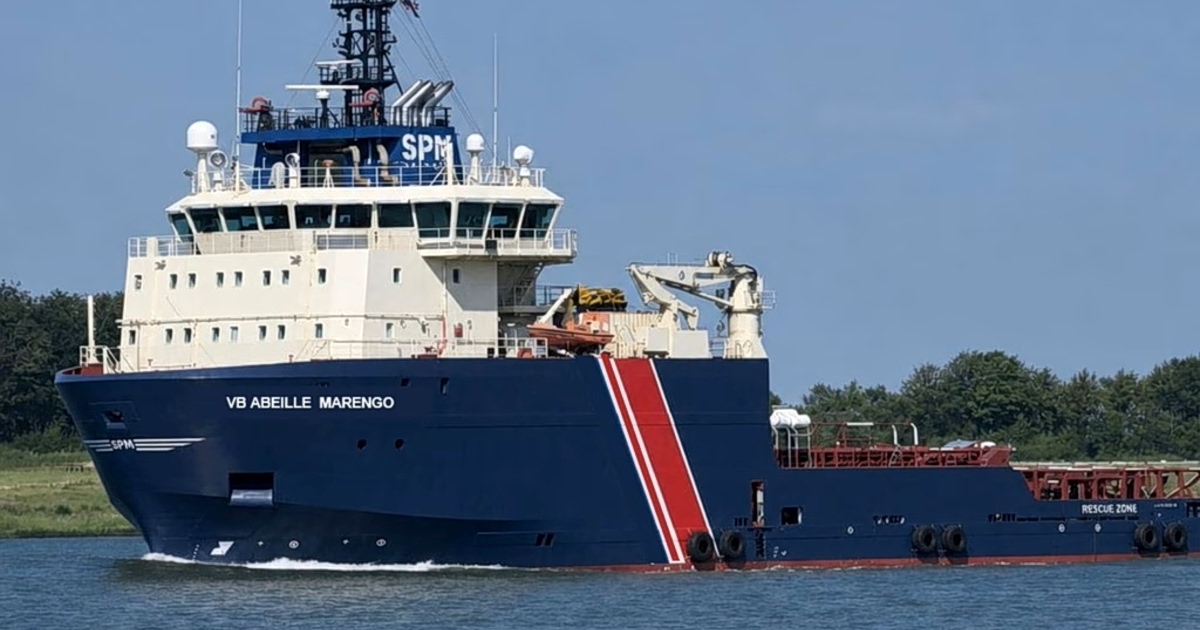
The French-flagged research vessel Abeille Marengo departed the port of Heraklion, Crete, on Tuesday evening to resume seabed surveys for the Great Sea Interconnector (GSI) , the planned electricity link between Greece and Cyprus, with operations initially focusing on waters southeast of Karpathos in the extreme southeast Aegean Sea.
The departure marks a new phase in efforts to advance the long-delayed project, following the interruption of previous seabed surveys off neighboring Kasos in July 2024, amid a confrontation involving Greek and Turkish naval vessels. The vessel, which has been chartered by French cable manufacturer Nexans, will initially calibrate its surveying equipment before proceeding with the planned bathymetric research.
The work is intended to map the seabed and identify the most suitable route for laying and protecting the submarine electricity cable. The restart follows the issuance of navigational warnings ( NAVTEX ) by the competent Greek and Cypriot authorities on November 6, authorizing the research activities along the planned Greece-Cyprus interconnection route.
The vessel’s departure was confirmed on Tuesday evening following some uncertainty over its sailing schedule. The initial voyage will include tests and calibration of its sonar and other measuring instruments before the ship reaches the main survey area. NEWSLETTER TABLE TALK Never miss a story.
Subscribe now. The most important news & topics every week in your inbox. The research will extend from southeast of Karpathos towards a point 12 nautical miles off Cyprus.
The operations are expected to last approximately four months, with the relevant Greek NAVTEX covering the period from November 6 to March 6, 2027. A separate NAVTEX issued by Cyprus covers research activities within its exclusive economic zone from November 19 to March 19, 2027. Approximately 60% of the seabed surveys along the planned Greece-Cyprus route had already been completed before the work was interrupted in 2024.
The new phase is intended to complete the outstanding research and provide the technical information required for the final design and eventual installation of the submarine cable. Turkish saber-rattling and the 2024 pause The resumption of the surveys comes against the backdrop of continuing Greek-Turkish disagreements over maritime jurisdiction in the eastern Mediterranean.
In July 2024, the Italian research vessel Ievoli Relume , which was conducting seabed surveys for the GSI, suspended its operations off Kasos after Turkish warships appeared in the area. The incident triggered a prolonged maritime confrontation between Greece and Turkey and effectively halted the research activities.
The latest Greek NAVTEX, numbered 1411/26, was issued by the Hellenic Navy Hydrographic Service on November 6. Turkey subsequently issued a counter-NAVTEX, numbered 1105/26, claiming that part of the designated survey area falls within what Ankara considers its continental shelf, as declared in a submission to the United Nations in March 2020.
The Turkish announcement described the Greek authorization as unauthorized, said Ankara had not granted permission for the research and called for activities in the disputed area to be coordinated with Turkish authorities. Athens maintains that the surveys have been authorized in accordance with international law and that no Turkish permission is required.
The Greek government has also stressed that the French diplomatic notification to Ankara concerning the planned operations does not constitute a request for permission or recognition of Turkish maritime claims. Government spokesman Pavlos Marinakis has explicitly stated that no agreement or communication between the Greek and Turkish governments took place regarding the project.
French Involvement and the project’s ownership The GSI has received renewed momentum following the entry of French investment group Meridiam as majority shareholder in the project company in August. Meridiam holds a 66% stake in Great Sea Interconnector SA, while Greece’s Independent Power Transmission Operator (IPTO/ADMIE) retains the remaining 34% and its role as project promoter and technical lead.
French cable manufacturer Nexans is responsible for manufacturing and installing the submarine cable. The seabed surveys have been assigned to Italian specialist Next Geosolutions Europe, which is conducting the necessary geophysical and geotechnical investigations. France has also been involved in diplomatic contacts with Turkey, seeking to prevent renewed tensions and facilitate the uninterrupted continuation of the research.
Project cost and financing The Greece-Cyprus interconnection is a European project of common interest, intended to end Cyprus’ electricity isolation and strengthen energy security in the eastern Mediterranean. According to the project’s technical specifications, the planned submarine route between Korakia, Crete, and Kofinou, Cyprus, will extend approximately 900 kilometers.
The initial transmission capacity will be 1,000 megawatts, using high-voltage direct-current technology, with the cable designed to operate at ±525 kilovolts and reach depths of approximately 3,000 meters. The project’s approved capital expenditure stands at approximately 1.94 billion euros.
It has secured a European Union grant of approximately 657 million euros through the Connecting Europe Facility. The European Investment Bank (EIB) is also examining the possibility of providing additional financing of approximately 1 billion euros, according to information reported by Greek financial media.
A final financing decision has not been announced. Another immediate milestone concerns Cyprus’ financial contribution. Under the intergovernmental agreement with Greece, Nicosia is expected to release 25 million euros.
Cypriot President Nikos Christodoulides has pledged that the payment will be made following the issuance of the NAVTEX.
Article text via FreeNewsAPI. Rights remain with tovima.com.
Read on publisher site → Opens tovima.com in a new tab


