Hope and Resilience Help Congolese Christians Endure Atrocities
Christians in the Democratic Republic of the Congo (DRC) are among the many who have suffered from the perennial internal conflicts that have plagued the country. U.N. peacekeepers have been in the country...
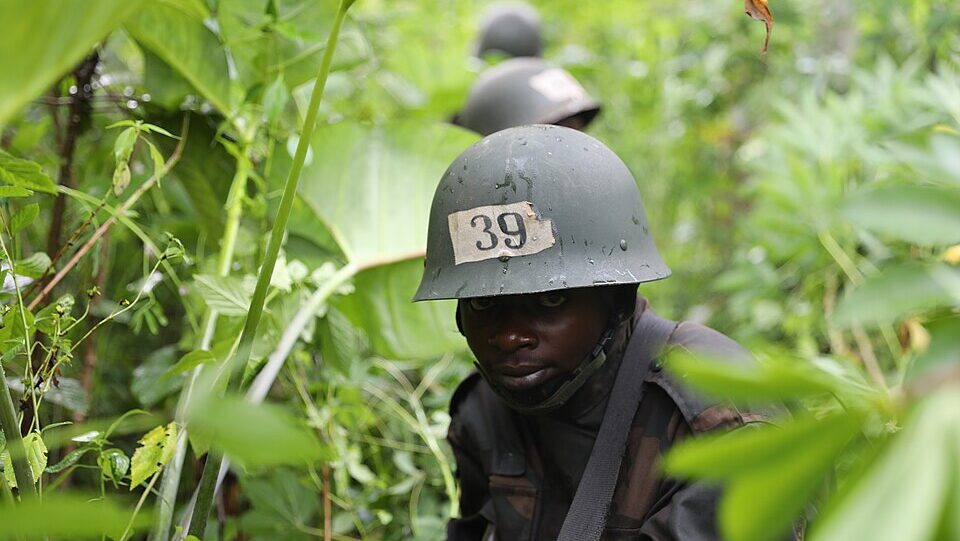
Christians in the Democratic Republic of the Congo (DRC) are among the many who have suffered from the perennial internal conflicts that have plagued the country. U.N. peacekeepers have been in the country for more than 65 years , since it won independence from Belgian colonization on June 30, 1960.
On different occasions, interventions by the Congolese army, as well as regional multinational and bilateral military groups , have failed to bring peace. Even changes in the country’s name and leadership did not have any effect. Moses Kabongo, 82, an Anglican lay leader, has experienced instability for most of his life.
His parents were internally displaced with him multiple times many years before independence. They later sought refuge in neighboring Burundi and Uganda, and were killed a couple of months after returning home. When he was young, he resisted pressure to become a child soldier.
In the DRC, child soldiers used by militia groups and liberation movements are called Kadogo in Swahili. It is said that Kadogo are effective and fearless fighters because they have nothing to lose. “As a young Christian, I could not join any of those groups to fight or kill fellow compatriots and Christians,” Kabongo told TLC.
“Instead, I joined 10 other youths to flee the country, initially to Burundi. A year later, I shifted to Rwanda, Uganda, Kenya, and Tanzania before coming back home again.” Armed groups recruit and abduct children in conflict areas such as Uturi, North Kivu, and South Kivu. They are trained in military skills and deployed as fighters or bodyguards for senior commanders.
DRC President Laurent Kabila was assassinated in January 2001 by a former child soldier bodyguard, who was 18 at the time. Kabongo does not know where five of his eight children are, or if they are alive. It has been 30 years since he has seen them.
“I do not know if they joined some of the militia groups fighting here, or if they are dead or exiled somewhere in East Africa.” In the 1990s, a friend told him that two of his sons were child soldiers in Kabila’s war that deposed Mobutu Sese Seko in 1997. But he has not seen or heard of them since.
Overview of the Conflict Ethnic tensions and the control of minerals are the core drivers of the wars, which date back to the decades before independence from Belgium. The perennial conflict has left millions dead, internally displaced millions more, exiled millions of others in neighboring countries, and left many others with permanent disabilities.
A former U.N. Secretary General, Dag Hammarskjöld, is among the dead in the conflict. He died in a plane crash with 15 others on October 18, 1961.
Hammarskjöld was traveling to Ndola, Zambia, to broker a ceasefire with secessionists from the Katanga region of the DRC. Over 120 armed groups operate in the DRC today, especially in the eastern region, where Anglicans are the majority. The region is the mother of the Anglican Church in the country.
Apolo Kivebulaya, a Ugandan evangelist and catechist, came to the eastern Congo from the Church of Uganda under the auspices of the Church Missionary Society in 1896. Dioceses in the eastern region of the country include Goma, Bukavu, Aru, and Boga (Ituri region). Boga is where Kivebulaya settled.
It was recognized as a mission station in 1910, and became a diocese in 1972. Broken Peace Accord The U.S.-brokered peace accord signed last December by Rwandan President Paul Kagame and his counterpart, Félix Tshisekedi of the DRC, has not slowed down the conflict. The Global Centre for the Responsibility to Protect (R2P) predicted that the agreement, which focused on ceasing hostilities in North and South Kivu, would not hold unless the March 23 Movement (M23) was involved.
M23 has controlled the eastern region of the country since January 2025. It has been alleged that M23 fighters are supported by both the Rwandan and Ugandan militaries, but both countries have denied the allegations. More recently, the DRC government sued Rwanda at the International Court of Justice on June 26.
The DRC government claims that Rwanda has been directly responsible for massacres, sexual violence, forced displacement, torture, and the illegal exploitation of natural resources in its eastern region since 1996. Meanwhile, the U.S. government has imposed sanctions on Rwanda , accusing it of violating the peace accord and supporting M23 by deploying thousands of troops and providing military equipment, logistics, and training.
The U.S. demands that Rwanda must halt its support for M23 and withdraw its troops from eastern DRC. In a further complication of the conflict, in October of this year former DRC president Joseph Kabila formed a new political party, the Front for the Refoundation of the Nation (FRN), and established a military alliance with M23.
Kabila had been outside the country since he handed over power to President Tshisekedi in 2019. He was later charged in a military court and found guilty of war crimes. He was sentenced to death in absentia .
Suffering and Hope Esther Bahati, an Anglican former nurse in Goma, has been internally displaced many times, and has survived several M23 attacks. Many of her friends have been killed, others permanently disabled, and a few are in exile. “I am alive and strong because of my Christian faith, and I believe that Jesus is coming,” Bahati proclaimed.
“It does not matter how long I will have to wait for him, but God will deliver us out of this trouble the same way he did to the children of Israel from Egypt.” “We are suffering because of the minerals in our country,” she added. “Let our tormentors come for [the minerals] provided they leave us in our faith, in our peace, and alive.” Support from elsewhere in the Anglican Communion has come from the Most Rev.
Dr. Hosam Naoum, Anglican Archbishop of Jerusalem. Writing to the Christians in the DRC, he said, “We are united with you in suffering, for we too are in the midst of violence, destruction, and hatred.” He went on to say, “The ground of our hope is not that everything is going to get better very quickly (it probably will not) but that God will not abandon us. ...
We pray for you that you will know the fullness of God’s grace to uphold you and give you strength to face every trouble and endure through every challenge. This is the gift of God in Jesus Christ—we are held in the palm of God’s merciful hand in this life and in the life to come.
Grace, mercy and peace to you.” Daniel Sitole Daniel Sitole is a freelance journalist in Kenya. His stories have appeared in newspapers and magazines in many countries, including Canada, South Africa, the United Kingdom, and the United States.
Article text via FreeNewsAPI. Rights remain with The Living Church.
Read on publisher site → Opens The Living Church in a new tab