Hybrid RSV Program Linked to Less Healthcare Use
LYON, France — A hybrid respiratory syncytial virus (RSV) immunization program that targets both mothers and infants is associated with substantial reductions in hospitalizations, the need for respiratory...
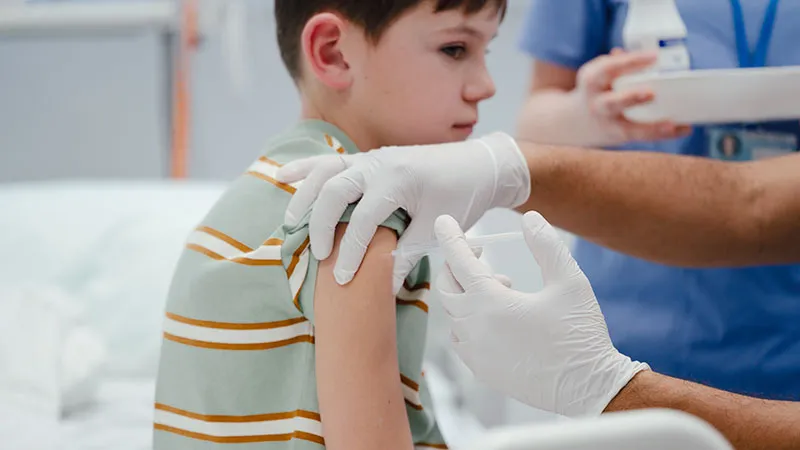
LYON, France — A hybrid respiratory syncytial virus (RSV) immunization program that targets both mothers and infants is associated with substantial reductions in hospitalizations, the need for respiratory support, and healthcare costs, indicate findings from an Australian observational study presented at the Congress of the European Paediatric Academic Societies (CEPAS) 2026 on October 30.
The hybrid program "seems to have eased the pressure in our system and, importantly, it kept many of the highest risk infants who typically need those more intensive therapies out of hospital," said study presenter Nicola Irwin, PhD, of the Department of Paediatrics at Canberra Health Services, Australia.
However, experts warn that addressing both access and acceptance barriers toward vaccination, and vaccine skepticism among some healthcare professionals, is key to the success of such initiatives. Irwin explained that nirsevimab became available for higher-risk infants ahead of the winter of 2024, while maternal RSV vaccination was federally funded from February 2025.
Now, every infant born in the Australian Capital Territory (ACT), which includes Canberra, is eligible to receive protection against RSV through the free but not mandatory hybrid program. For this, mothers are offered RSV vaccination between 28 and 36 weeks' gestation, and infants can receive nirsevimab if the mother did not take up her vaccination or had been vaccinated within 2 weeks of giving birth, as the infant may not be sufficiently protected.
To investigate the impact of the program, the researchers studied infants in ACT between April 1, 2022, and October 31, 2025, who were younger than 2 years and had laboratory-confirmed RSV and/or had received nirsevimab. Over the study period, 3922 doses of maternal RSV vaccine were administered, alongside nirsevimab for 412 infants within the health service.
"Coverage was estimated at around 78% of pregnant women and just over 10% of infants," Irwin said. She emphasized that breakthrough infections were uncommon, occurring in just 1.5% of infants who received nirsevimab, with 0.7% admitted to a hospital ward or the ICU. Focusing on infants younger than 6 months and comparing the baseline 2022-23 season with the first hybrid season in 2025, she showed that the program was associated with a significant reduction in the incidence of RSV cases, from 121.5 per 1000 infant-years in 2022-23 to 84.1 per 1000 infant-years in 2025 (rate ratio [RR], 0.69; P = .008).
There was also a significant reduction in emergency department presentations (RR, 0.52) as well as in hospitalizations (RR, 0.44; P < .001 for both). Among infants hospitalized, the proportion who were born at 32 to less than 37 weeks' gestation fell from 11.8% to 7.3%, while the proportion born before 32 weeks' gestation dropped from 2.2% to 0.0% ( P = .035).
The median length of hospital stay decreased from 2.7 days to 1.8 days ( P < .001), "which is really meaningful in the context of the typically short admissions we see in pediatrics," Irwin said, and the proportion of infants admitted to the ICU fell from 6.2% to 2.4%. She also reported that, in 2022-23, just over 70% of infants needed some kind of respiratory support, which decreased to just over 40% in the hybrid 2025 season, in particular the need for higher-intensity therapies.
The researchers calculated that, overall, the hybrid season was associated with a 43.7% relative reduction in emergency department presentations, resulting in 24.9 cases averted per 1000 infants and a number needed to immunize of 40. It was also associated with a 51.1% relative reduction in hospitalizations, translating into 17.0 cases averted per 1000 infants and a number needed to immunize of 59.
These changes were accompanied by a reduction of almost one third in costs associated with emergency department presentations and a halving of hospitalization costs. Irwin stressed that the ongoing success of the program depends on continued parental acceptance of vaccination, noting that the "hybrid program offers some flexibility for different parental preferences." In a separate presentation, Hans Jürgen Dornbusch, MD, of the Institute for Hygiene and Microbiology at the Medical University of Graz in Austria, expanded on that theme, saying that there are two groups of interacting barriers that lead to under vaccination.
The first group relates to access, such as missed opportunities for routine vaccination, rural or underserved settings, insufficient follow-up and reminder/recall systems, and armed conflicts and other interruptions to service provision. Alongside those are acceptance barriers, which include concerns about vaccine safety or effectiveness, distrust and misinformation via social media, and a perceived low disease risk when vaccine-preventable diseases have become less visible.
In addition, low socioeconomic status and poor health literacy affect both an individual's ability to access services and to interpret vaccine information, thus contributing to both sets of barriers. Session co-chair Iren Kantor, MD, MSc, president of the Hungarian Pediatric Primary Care Association, explained that acceptance is something that has to be created and not simply taken for granted.
Speaking to Medscape Medical News , she explained that the medical profession often speaks about the need for parents and families to make an informed decision, but she believes that not enough emphasis is put on the "informed" part. For her, this means informing them in ways that will reach them and meet them at their level.
It is the parent, Kantor emphasized, "that has to make the decision about their children's vaccination," but they are often young, and "we haven't shifted our tactics or technology we use to reach this population." Currently, she continued, they are receiving information "only from one side," typically from anti-vaccine activists, and "this is not good because there is no balance." Kantor also expressed frustration with some of her medical colleagues over their lack of support for vaccination.
"I am a little bit disappointed to see the number of our colleagues who are not on the side of the science," she said, "and I don't find any reasonable explanation for this...we have to look at the root of this problem." No funding was declared. Irwin reported previous conference sponsorship from Sanofi.
Dornbusch reported relationships with AstraZeneca, GSK, MSD, Pfizer, and Sanofi. Kantor reported no relevant financial relationships .
Article text via FreeNewsAPI. Rights remain with Medscape.
Read on publisher site → Opens Medscape in a new tab