Ælfwig may be buried in a Westminster Abbey sarcophagus — Live Science
Archaeologists suggest that one of two abbots was buried in a Roman sarcophagus at Westminster Abbey in England. Possible candidates include Ælfwig, who headed the abbey from 993 to 1020. Live Science...
Archaeologists suggest that one of two abbots was buried in a Roman sarcophagus at Westminster Abbey in England. Possible candidates include Ælfwig, who headed the abbey from 993 to 1020. Live Science reports .
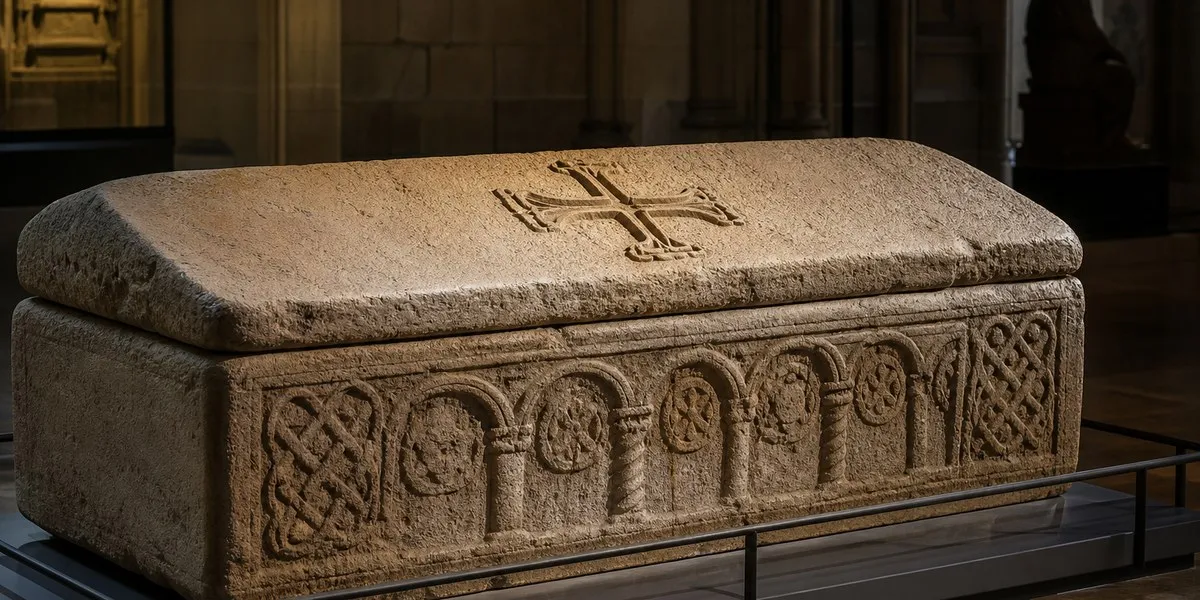
Roman sarcophagus with a medieval cross The stone sarcophagus was found by the abbey’s chief mason in 1869. A fourth-century Latin funerary inscription dedicated to Valerius Amandinus has survived on its side. The text states that Valerius Superventor and Marcellus made the sarcophagus for their father.
A large 11th-century Anglo-Saxon cross is carved on the sarcophagus lid. This indicated that the Roman sarcophagus was used for a new burial several centuries later. Until 2016, it was believed that no human remains had survived inside, but a complete skeleton was discovered when the sarcophagus was opened for conservation.
Dating and possible candidates In a 2016 report, bioarchaeologist James Langthorne determined that the remains belonged to a middle-aged man of average height. The skeleton had been disturbed: there was a hole in the skull, and the bones of the arms and legs had become mixed up. The man also showed signs of osteoarthritis, two healed rib injuries and gout.
More current news is available on the UA.News Telegram channel Telegram . Radiocarbon dating placed the bones between 987 and 1052, confirming the medieval reuse of the sarcophagus. Westminster Abbey’s consulting archaeologist Warwick Rodwell believes that the honorary burial in a stone sarcophagus with a large cross almost certainly belonged to an abbot.
Rodwell considered three Westminster abbots from that period: Wulfsige, Ælfwig and Wulfnoth. Wulfsige, who was abbot from 988 to 993, later became a bishop elsewhere, making his burial at the abbey unlikely. Ælfwig and Wulfnoth, who held the office from 1020 to 1049, therefore remain possible candidates.
According to the researcher, the fact that Ælfwig was already a Westminster monk may support his candidacy. The reason why the abbot was buried specifically in a Roman sarcophagus remains unknown. Scholars have also not established its original location.
The sarcophagus, made of limestone from Oxfordshire, is now displayed in the Queen’s Diamond Jubilee Galleries at Westminster Abbey.
Article text via FreeNewsAPI. Rights remain with UA.NEWS.
Read on publisher site → Opens UA.NEWS in a new tab