Maladaptive brain-state locking framework redefines chronic brain disorders
Neurodevelopmental, psychiatric, and neurodegenerative disorders are traditionally studied separately yet show overlapping disturbances in neural regulation and resilience. We propose maladaptive brain‐state...
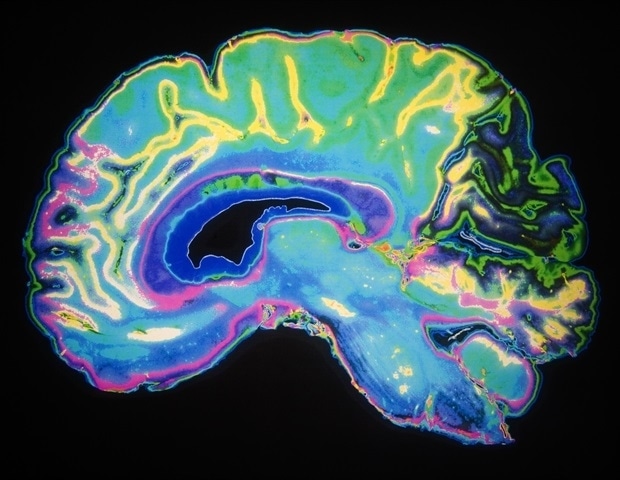
Neurodevelopmental, psychiatric, and neurodegenerative disorders are traditionally studied separately yet show overlapping disturbances in neural regulation and resilience. We propose maladaptive brain‐state locking (MBSL): a failure of adaptive state‐transition or recovery dynamics in which a maladaptive state becomes insufficiently reversible.
MBSL differs from persistence alone-an abnormal state maintained by a continuing pathological driver does not constitute locking. Candidate features include abnormal persistence, impaired transition toward adaptive states, delayed recovery after perturbation removal, and history‐dependent loss of flexibility.
Lifespan timing, regional context, disease stage, and resilience modify phenotypic expression rather than define disorder categories. Existing evidence is compatible with components of the hypothesis, but direct demonstration requires longitudinal or perturbational evidence of impaired recovery.
Key limitations include etiological heterogeneity, nonspecific biomarkers, and unresolved causality. If validated, MBSL could support research on measurable reversibility and interventions aimed at restoring adaptive state regulation. Introduction Neurodevelopmental, psychiatric, and neurodegenerative disorders differ in onset, symptoms, and diagnostic framework, yet overlap in synaptic, glial, neuroimmune, metabolic, and circuit disturbances.
Shared mechanisms alone do not explain why some disturbances resolve while others become persistent. The central gap is impaired state reversibility. The brain moves through changing biological states that are beneficial when properly timed and reversible, but pathological when adaptive programmes stabilise in maladaptive forms.
This article introduces MBSL as a lifespan hypothesis for how distinct disorders may arise from failures in biological state regulation. Hypothesis MBSL is a failure of adaptive state‐transition or recovery dynamics in which a maladaptive state becomes insufficiently reversible. Locking differs from persistence: persistence is duration, locking is impaired capacity to exit.
A state maintained by an ongoing driver is not evidence of MBSL, nor is a static biomarker abnormality or fixed lesion unless accompanied by impaired transition dynamics. Candidate signatures include prolonged dwell time in a maladaptive state, reduced transition probability toward adaptive states, delayed or incomplete recovery after perturbation removal, hysteresis, and reduced flexibility across repeated cycles.
Successful "unlocking" requires measurable restoration of a predefined state‐dynamic property; symptom improvement alone is insufficient. The hypothesis is falsified if abnormal states resolve with expected kinetics after perturbation removal, or if persistence is fully explained by continued driver exposure.
"Brain state" denotes an integrated, multiscale configuration across molecular, cellular, circuit, and network levels that interact bidirectionally. Candidate abnormalities include synaptic imbalance, altered excitation–inhibition, prolonged glial reactivity, unresolved neuroimmune activation, metabolic stress, impaired plasticity, circuit instability, and maladaptive repair.
Lifespan timing is a modifier, not a classifier. Early‐life locking may affect circuit formation; adolescent/adult locking may alter emotion, cognition, and stress regulation; later‐life locking may interact with declining resilience. Regional and disease‐stage contexts add further modifiers, as single‐cell studies show region‐specific vulnerability despite shared pathology.
Evaluation Current evidence does not establish MBSL as a shared causal mechanism. Three levels of evidence exist: (1) shared disease‐associated features demonstrate biological overlap but not a shared mechanism; (2) findings of prolonged activation, failed resolution, or impaired plasticity are compatible with impaired state regulation but do not prove locking; (3) direct evidence requires longitudinal or perturbational demonstration of abnormal recovery or transition dynamics.
Related Stories Experts call for lifelong care after brain and spinal injuries Could ultraprocessed foods affect your brain before you notice? Vascular anatomy influences experimental stroke treatment effectiveness Synaptic, glial, neuroimmune, metabolic, and plasticity findings across disorders are compatible with impaired recalibration, but persistence alone does not demonstrate MBSL.
Direct evidence would require showing that recovery or transition away from a maladaptive state is measurably impaired. Future directions Key priorities include: longitudinal studies tracking state signatures to distinguish transient from locked states; multimodal biomarkers (imaging, electrophysiology, omics, metabolic profiling, digital measures); experimental models (organoids, animal models) testing whether state‐transition abnormalities can be shifted toward adaptive regulation; AI‐based modelling to integrate multiscale data; and prospective intervention studies with predefined dynamic endpoints to distinguish symptomatic improvement from biological unlocking.
Limitations Etiological and pathological heterogeneity is substantial; MBSL does not imply biological equivalence or a single shared lesion. Candidate markers are nonspecific- inflammation , glial activation, and metabolic disturbance may be causes, consequences, or amplifiers. MBSL lacks a single validated biomarker and requires longitudinal, multimodal measurement.
Causality is unresolved: a persistent state may be causal in one context but compensatory in another. Current evidence does not establish MBSL as a universal upstream cause. Conclusions MBSL is a testable lifespan hypothesis proposing that distinct brain disorders may converge on impaired state‐transition or recovery dynamics.
Persistence becomes mechanistically meaningful when the capacity to leave a maladaptive state is measurably impaired. MBSL does not equate chronicity with locking or imply a single shared pathology. Current evidence is compatible with components of the framework but does not establish it as a general cross‐disorder mechanism.
Validation requires longitudinal or perturbational evidence of impaired reversibility. If confirmed, MBSL could complement existing frameworks by focusing on measurable reversibility and state‐transition control. Source: Journal reference: Naffaa, M.
M. (2026). Maladaptive Brain-state Locking as a Lifespan Framework for Neurodevelopmental, Psychiatric, and Neurodegenerative Disorders: A Hypothesis. Exploratory Research and Hypothesis in Medicine .
DOI: 10.14218/erhm.2026.00045. https://www.xiahepublishing.com/2472-0712/ERHM-2026-00045
Article text via FreeNewsAPI. Rights remain with News-Medical.
Read on publisher site → Opens News-Medical in a new tab