Mutant protein variant explains dominant inheritance of genetic immunodeficiency
New research shows how a mutant form of a protein named STAT3 causes a genetically dominant immunodeficiency. "Accordingly, this study provides vital insight into a signaling pathway essential in human...
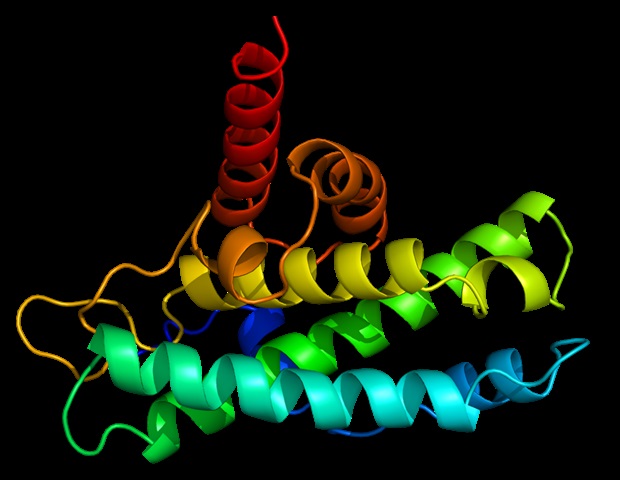
New research shows how a mutant form of a protein named STAT3 causes a genetically dominant immunodeficiency. "Accordingly, this study provides vital insight into a signaling pathway essential in human biology," Joseph Mackie and colleagues write. Some inherited conditions are autosomal recessive, meaning that they result from the inheritance of two disease-causing gene variants – one from each parent.
Autosomal dominant diseases, on the other hand, arise from a single copy of a disease-causing gene variant, which has effects that persist even after inheriting the other normal copy of the gene. For example, in the autosomal dominant form of hyper-IgE syndrome (HIES), the inheritance of a variant form of the gene STAT3 causes immunodeficiency even though patients also have one normal copy of the gene.
STAT3 is a transcription factor that is important for immunity because it drives the expression of genes in response to many of the cytokines that determine how immune cells function. Upon cytokine stimulation, STAT3 activates and forms structures called dimers with other STAT3 molecules, which move into the nucleus to regulate gene expression.
Mackie et al. identified a patient harboring a unique STAT3 variant (STAT3 R31Q ) that had not been documented previously in patients with HIES. Compared with the normal form of the protein, STAT3 R31Q was less able to drive the expression of target genes when the researchers stimulated immune cells with cytokines.
Furthermore, STAT3 R31Q preferentially formed dimers with the normal form of STAT3, and these STAT3: STAT3 R31Q heterodimers remained in the cytoplasm instead of moving into the nucleus. This combination of impaired gene expression regulation and the formation of dimers with normal STAT3 explains why a single copy of the STAT3 R31Q allele causes HIES, Mackie et al. say.
Source: Journal reference: Mackie, J., et al . (2026). Disruption of the N-terminal domain in a STAT3 hyper-IgE syndrome variant causes disease by sequestering STAT3 in the cytoplasm. Science Signaling.
DOI: 10.1126/scisignal.aeg5302. https://www.science.org/doi/10.1126/scisignal.aeg5302 Suggested Reading Terms While we only use edited and approved content for Azthena answers, it may on occasions provide incorrect responses. Please confirm any data provided with the related suppliers or authors.
We do not provide medical advice, if you search for medical information you must always consult a medical professional before acting on any information provided. Your questions, but not your email details will be shared with OpenAI and retained for 30 days in accordance with their privacy principles.
Please do not ask questions that use sensitive or confidential information. Read the full Terms & Conditions .
Article text via FreeNewsAPI. Rights remain with News-Medical.
Read on publisher site → Opens News-Medical in a new tab


