NASA has detected dangerously high levels of cosmic radiation near the Moon
NASA’s uncrewed Artemis I mission delivered special crystal detectors to lunar orbit, which recorded unexpectedly high levels of cosmic radiation.The mission provided scientists with unique data on radiation...
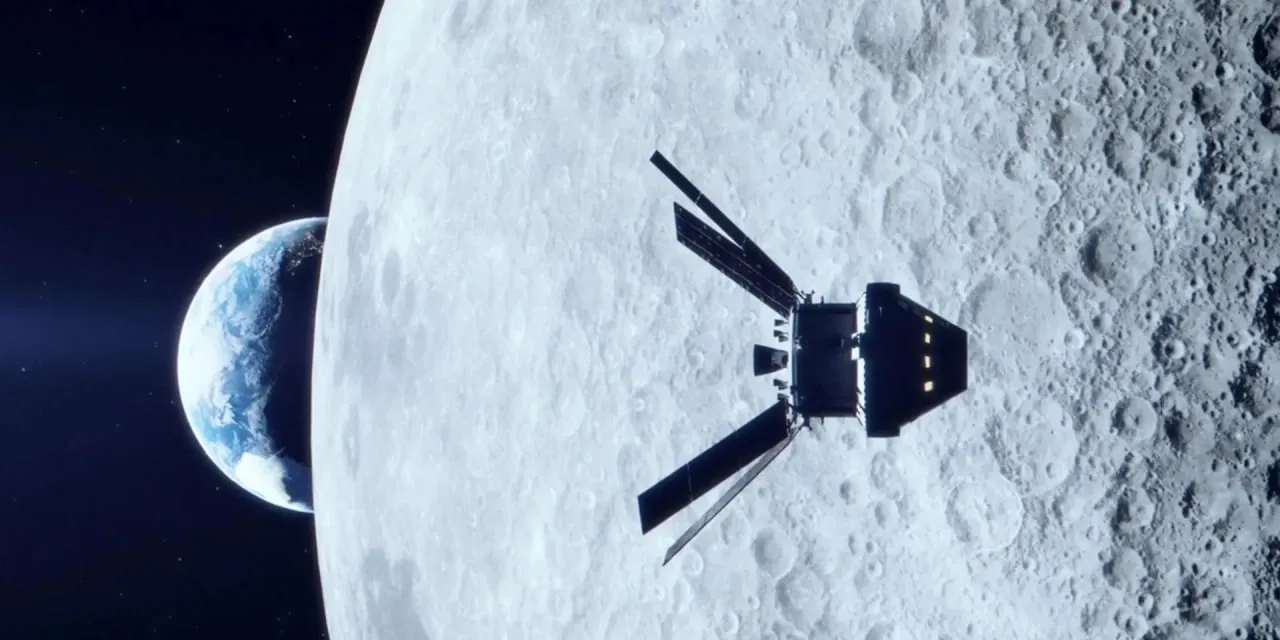
NASA’s uncrewed Artemis I mission delivered special crystal detectors to lunar orbit, which recorded unexpectedly high levels of cosmic radiation. The mission provided scientists with unique data on radiation exposure in deep space near the Moon. On board the Orion spacecraft were two mannequins, inside which more than 10,000 microscopic crystals were placed.
The results of this large-scale study were published in the scientific journal *Radiation Measurements*. The data obtained helped better assess the risks astronauts may face during long-duration crewed spaceflights. Unlike traditional passive plastic detectors, which require complex chemical processing to study particle tracks, the new crystals work on the principle of photographic film.
Charged particles leave microscopic defects in them—so-called color centers. When illuminated with blue light and observed under a standard microscope, these areas begin to glow red, allowing researchers to clearly see the particle’s trajectory and analyze the ionization density. Thanks to the development of special software to eliminate background noise, scientists were able to achieve extraordinary accuracy—the results differed from those of standard tracking methods by no more than 15%—as well as detect weaker events that had previously gone unnoticed.
A comparison of data obtained during experiments on the International Space Station revealed an interesting pattern. In low Earth orbit, the main threat comes from low-energy protons trapped by the planet’s magnetic field in the Van Allen belts, causing radiation doses inside the body to be distributed unevenly.
Near the Moon, these belts are absent, and high-energy galactic cosmic rays—capable of penetrating the human body—play a dominant role. Although the overall radiation level near the Moon is higher, the difference compared to Earth’s orbit turned out to be less catastrophic than previously predicted.
This is stated in a report from NASA’s Artemis I Space Mission Venus will disappear from the evening sky in September. Retrograde planets in October 2026: the best and worst days of the month . Astronomical events in October : when to observe Saturn, the Orionids, and the Seven Sisters
Article text via FreeNewsAPI. Rights remain with UA.NEWS.
Read on publisher site → Opens UA.NEWS in a new tab