New car licence fee? OUTA warns against another RAF charge for motorists
OUTA CEO Wayne Duvenage opposes a proposed annual vehicle fee to fund the Road Accident Fund, arguing that government should fix the troubled institution rather than charge motorists more.
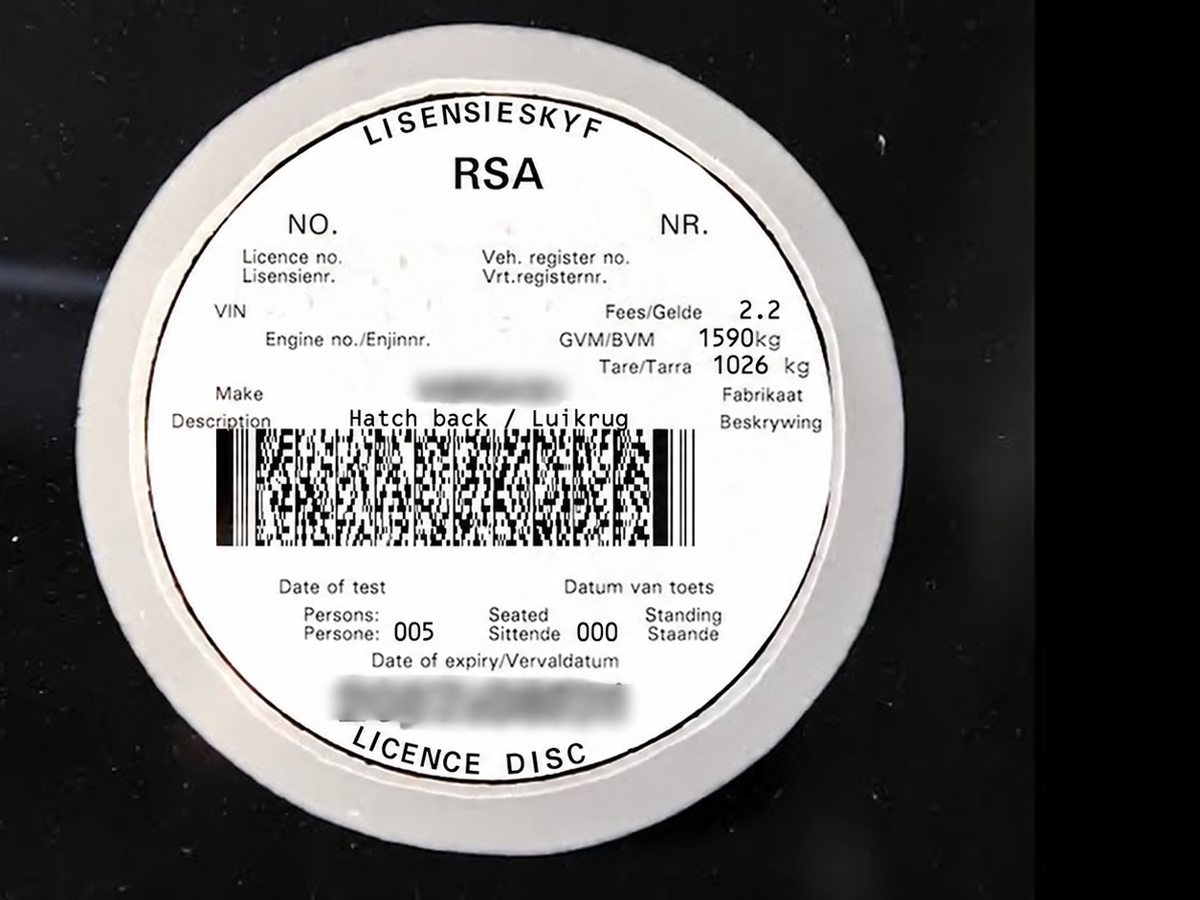
The Organisation Undoing Tax Abuse (OUTA) has warned against plans to introduce an additional fee on vehicle licence renewals to fund the Road Accident Fund (RAF), arguing that government should address the institution's mismanagement instead of asking motorists to pay more. OUTA CEO Wayne Duvenage said the proposal to extend RAF funding beyond the existing fuel levy was a knee-jerk reaction that failed to address the fund's underlying problems.
Government is investigating alternative ways to fund the RAF as the growing use of electric and hybrid vehicles raises questions about the sustainability of a levy collected through petrol and diesel sales. One option under consideration would extend the charge to motorists through vehicle registration or annual licence renewals.
Another would target foreign-registered vehicles entering South Africa. But Duvenage argued that shifting the levy to annual vehicle fees would be an inefficient and potentially unaffordable alternative. Related articles: — Motorists could face extra licence fee to help fund RAF — Transport Minister confirms RAF won't receive additional funds from govt — OUTA opposes calls to scrap RAF, slams government's 'inability' to introduce reforms OUTA says government must fix the RAF Duvenage said the debate should distinguish between the RAF's funding model and the institution responsible for compensating people injured in road accidents.
He said the fund served an important purpose, providing compensation to people whose lives were changed by road accidents, including those left unable to work. However, he argued that the institution had been grossly mismanaged and that repeated increases in the fuel levy had allowed government to avoid addressing the problem.
“Instead of saying, ‘let's fix the entity’, they don't,” Duvenage said. He argued that government should resist calls for additional funding and focus on finding savings and improving the RAF's management. Duvenage pointed to the previous proposal to increase value-added tax (VAT) by two percentage points, saying government had been forced to reconsider after resistance from the public and political pressure.
His position is that the same principle should apply to the RAF: government should fix the problem rather than seek more money from taxpayers and motorists. Why an annual vehicle fee could be a problem Duvenage said an annual charge would be less equitable than collecting the levy through fuel purchases.
Under the current model, motorists contribute through the fuel levy when they buy petrol or diesel. Those who drive more generally buy more fuel and therefore contribute more towards the fund. An annual fee, by contrast, could charge motorists the same amount regardless of how far they drive.
“If you drive 150 kilometres a month and somebody drives 10,000 kilometres a month, you're both going to pay the same,” he said. Duvenage argued that motorists could also face a substantial additional expense when renewing their vehicle licences. He estimated that a third-party fee could add R2,500 to the annual cost of running a vehicle, on top of the existing licence fee.
This was his illustration of the potential cost, rather than a confirmed amount under an approved proposal. He warned that higher annual costs could encourage some motorists to avoid paying the fee, creating further enforcement challenges. “If we can't even police people who are driving without driver's licences, without vehicle licences, with unroadworthy cars, how are we going to police that?” he asked.
Duvenage said the fuel levy remained the most efficient collection method because it did not require the additional administration associated with a separate annual charge. Electric vehicles are not yet a major funding threat The move towards electric and hybrid vehicles has prompted questions about how the RAF will collect contributions from motorists who use less petrol or diesel.
But Duvenage said electric vehicles still accounted for less than 0.5% of South Africa's national vehicle fleet. He also pointed out that vehicle fuel efficiency had improved over the past two decades, while combined petrol and diesel consumption had remained broadly stable at between 22 billion and 23 billion litres a year.
He argued that the shift towards electric vehicles was a longer-term challenge that did not justify an immediate overhaul of the funding model. “Yes, in five, 10 years' time, maybe there's 5%, 10% of vehicles that are electric on the roads,” he said. “And of course, we're going to have to find a solution for that percentage of vehicles.” Duvenage said government should consider alternatives when the scale of the problem warranted them, rather than rush into a change that could create new difficulties for motorists.
He also cautioned against scrapping the RAF's existing funding system without a workable alternative, warning that people injured in road accidents could otherwise be left trying to recover compensation directly from individuals. OUTA calls for better management Duvenage said the RAF needed to be fixed rather than given additional revenue to compensate for its shortcomings.
He acknowledged that funding would have to be considered as the vehicle fleet changed but maintained that the existing fuel levy remained the fairest and most practical option for now. “The knee-jerk reaction is we're trying to throw the baby out with the bathwater instead of fixing the problem,” he said.
Duvenage said the RAF was fixable, but the government needed to listen to concerns about its management and ensure that the institution used its funding effectively. Never miss a major story. Get breaking news and the latest developments from South Africa and beyond as they happen.
Article text via FreeNewsAPI. Rights remain with EWN.
Read on publisher site → Opens EWN in a new tab