New gene therapy approach shows promise for treating rare muscular dystrophy
Researchers at Children’s National and the University of Washington have developed a new gene therapy approach that could help overcome a major challenge in treating limb-girdle muscular dystrophy type R2...
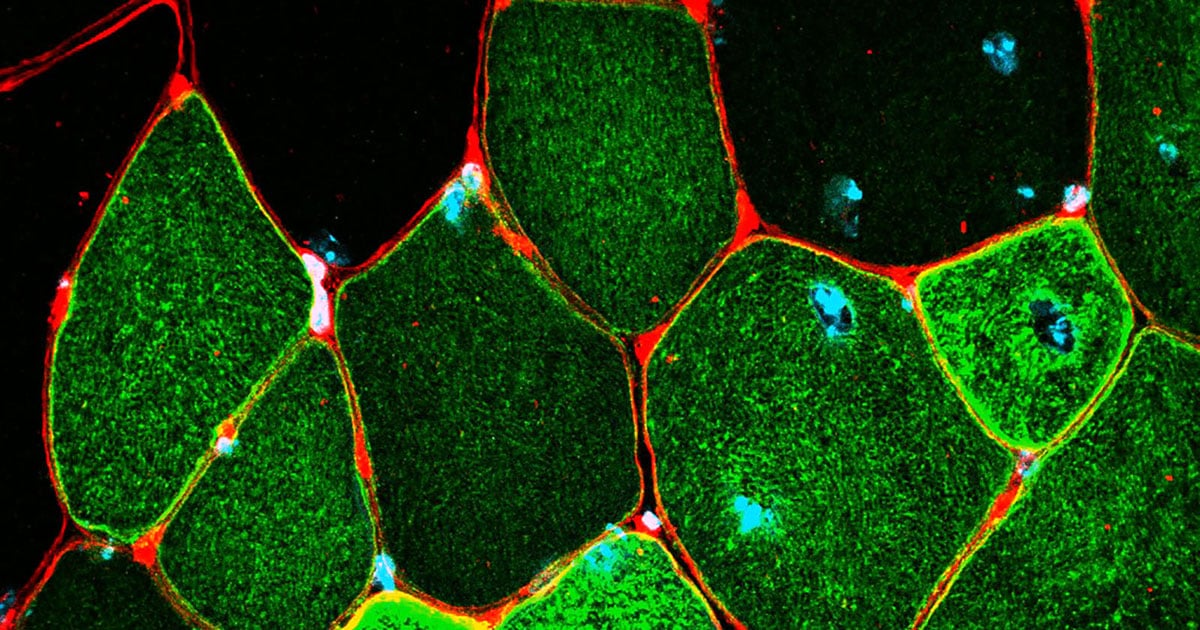
Researchers at Children’s National and the University of Washington have developed a new gene therapy approach that could help overcome a major challenge in treating limb-girdle muscular dystrophy type R2 (LGMDR2), a rare genetic disease that causes progressive muscle weakness and degeneration.
The approach successfully restored a critical muscle protein and improved muscle strength, function and health in preclinical models, including models with more advanced disease. Dive deeper LGMDR2 is caused by mutations in the DYSF gene, which prevent the body from producing functional dysferlin.
Dysferlin plays an essential role in repairing muscle cell membranes after they are damaged through normal activity. Without it, damage accumulates over time, contributing to inflammation, muscle degeneration and weakness. Gene therapy offers a promising way to address the underlying cause of the disease by restoring dysferlin.
But researchers have faced a basic problem: The genetic instructions needed to produce the full-length protein are too large to fit inside a single adeno-associated virus, or AAV, commonly used to deliver gene therapies. The DYSF genetic sequence is about 6.2 kilobases, while an AAV can carry only about 4.7 kilobases.
And unlike some proteins that can be shortened for gene therapy, full-length dysferlin is needed to achieve the desired therapeutic benefit. To get around that limitation, the research team divided the instructions for dysferlin between two AAV vectors and used molecules called split inteins to reconnect the two pieces after they were expressed in the muscle cells.
The split inteins act as molecular tools, allowing the two separately produced pieces of dysferlin to join together and form the full-length protein inside the cell. Researchers paired this approach with AAVMYO1, an AAV vector designed to efficiently target muscle. What this means “The large size of the dysferlin gene has been a major obstacle to developing effective gene therapies for this disease,” said Nikki McCormack, PhD, lead author of the study and a postdoctoral fellow in the laboratory of Jyoti Jaiswal, PhD , at Children’s National.
Continue reading
Watch a short ad to unlock the full article
The rest stays locked if you skip or close the ad early.
“Our findings show that it is possible to overcome this limitation by using split-intein, to restore the full-length protein, and improve muscle repair and function even after the disease has progressed,” added Dr. Jaiswal, a corresponding author of the study. In laboratory studies, the reconstructed dysferlin restored the ability of dysferlin-deficient muscle cells to repair damage to their membranes.
Researchers then tested the strategy in preclinical models of LGMDR2. Following systemic delivery, the treatment produced full-length dysferlin across multiple muscle groups. It also improved muscle strength and contractile force and reduced signs of muscle damage.
Importantly, researchers observed benefits both when the therapy was given around the onset of disease and when it was tested in preclinical models with more advanced muscular dystrophy. In the advanced disease model, treatment reduced fibrosis and fatty degeneration in affected muscles and improved muscle force.
The team also compared the split intein approach with another dual-AAV strategy that relies on homologous recombination, in which genetic material carried by two vectors must recombine inside the cell. The split intein strategy produced more full-length dysferlin and led to greater improvements in muscle repair and function.
The therapeutic benefits were achieved at a vector dose five times lower than one previously used for the homologous recombination strategy. What comes next That could be especially important for translating the approach toward patients. People with dysferlinopathy are often diagnosed years after symptoms first appear, meaning a potential therapy would need to provide benefit even after muscle damage has already progressed.
In the study, the split intein strategy restored dysferlin in preclinical models with advanced disease and reduced muscle degeneration while improving muscle contractile force. These are exciting preclinical findings, supporting the need for additional research before the approach can move toward clinical testing.
Future studies will need to examine immune responses to the AAV vectors and split inteins, the long-term safety and durability of the treatment and ways to achieve more uniform dysferlin expression throughout muscle fibers. Still, the study demonstrates a potential way around one of the central challenges facing gene therapies for diseases caused by unusually large genes.
By dividing the genetic payload between two muscle-targeting vectors and rebuilding the full-length protein inside cells, the strategy could expand possibilities for treating LGMDR2 and potentially other genetic muscle diseases. Read the full study , Use of split intein and myotropic AAV vectors enables effective preclinical gene therapy 2 for dysferlinopathy in Science Translational Medicine here.
The study was led by researchers at Children’s National and the University of Washington, with collaborators from several institutions. Dr. Jaiswal and Hichem Tasfaout, PhD, of the University of Washington, are corresponding authors.
Article text via FreeNewsAPI. Rights remain with Children's National.
Read on publisher site → Opens Children's National in a new tab