New mechanism helps cancer cells selectively produce proteins that drive tumor growth
A previously unknown mechanism helps cancer cells selectively produce proteins that drive tumor growth - such as KRAS - in common cancers, according to new research from The University of Texas MD Anderson Cancer Center.
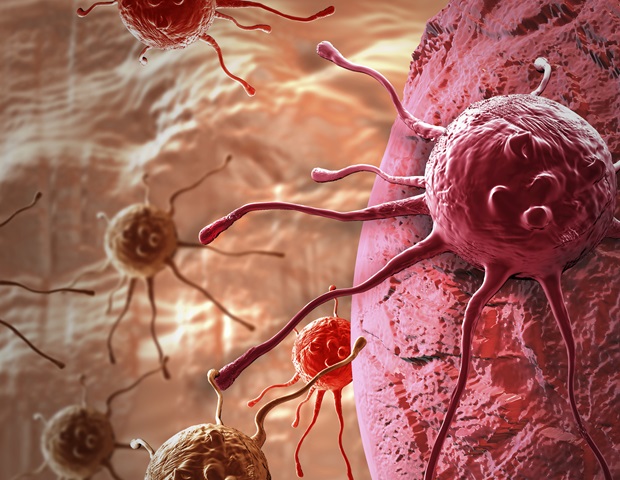
A previously unknown mechanism helps cancer cells selectively produce proteins that drive tumor growth - such as KRAS - in common cancers, according to new research from The University of Texas MD Anderson Cancer Center. The findings reveal that targeting a specific enzyme may improve responses to targeted therapies and help overcome treatment resistance.
The study, published in Nature Cell Biology , was co-led by Pawel Mazur, Ph.D., associate professor of Experimental Radiation Oncology, along with collaborators at other institutions. Our findings show that, in cancer cells, the METTL13 enzyme facilitates the production of important growth-driving proteins.
By understanding the underlying mechanisms and removing that support, we may be able to make tumors more vulnerable to treatment and help improve patient outcomes." Pawel Mazur, Ph.D., Associate Professor of Experimental Radiation Oncology, University of Texas MD Anderson Cancer Center What did researchers discover about the mechanisms behind KRAS-driven cancers?
KRAS is one of the most commonly mutated cancer genes, driving tumor growth in multiple types of cancers including many lung and pancreatic cancers. Although KRAS-targeted therapies have improved outcomes for some patients, tumors often adapt and become resistant over time. Many cancer-driving genes, including KRAS , produce large amounts of messenger RNA rich in specific strings of genetic "words," called codons, that serve as instructions to build proteins.
Structural, chemical and metabolic barriers sometimes make it harder for protein-producing machinery to read those codons. The researchers found that METTL13 adds a small chemical tag, known as methylation, to one of the proteins involved in protein production. This modification helps cancer cells read the codons more efficiently, giving them an advantage to produce larger amounts of proteins that promote tumor growth.
Related Stories New drug effectively decreases recurrence of and death from endometrial cancer New alpha-emitting radiopharmaceutical therapy achieves strong responses in advanced prostate cancer Next generation KRAS inhibitor divarasib significantly extends lung cancer survival Importantly, METTL13 did not broadly increase production of all proteins, but rather selectively enhanced production of only a subset of proteins, many of which are involved in cancer growth and survival.
Can targeting METTL13 improve outcomes for KRAS -mutant cancers? Reducing or removing METTL13 lowered levels of KRAS and other cancer-driving proteins and slowed tumor growth in several preclinical cancer models. In KRAS -mutant lung cancer models, including tumors that had already developed resistance to the KRAS inhibitor sotorasib, METTL13 loss slowed tumor growth, restored treatment sensitivity and significantly extended survival.
Additionally, researchers noticed that patients whose tumors had higher METTL13 activity tended to have poorer responses to KRAS inhibitors, further suggesting the pathway plays a role in treatment resistance. Why does this matter for patients? Current KRAS inhibitors work by blocking the KRAS protein after it has already been produced.
These new findings suggest there may be a way to intervene earlier by targeting the METTL13 enzyme and limiting how much KRAS protein is produced by cancer cells in the first place. While these results are preclinical and require further validation before they can be translated into the clinic, researchers are working to better understand how METTL13 controls protein production and to develop strategies for safely targeting it.
Future studies also will investigate whether the level of METTL13 could help predict which patients are most likely to benefit from KRAS-targeted therapy. Source: Journal reference: Liu, S., et al . (2026). Methylated eEF1A selectively decodes mRNA to shape cancer proteomes.
Nature Cell Biology . DOI: 10.1038/s41556-026-02085-6. https://www.nature.com/articles/s41556-026-02085-6
Article text via FreeNewsAPI. Rights remain with News-Medical.
Read on publisher site → Opens News-Medical in a new tab