Nike’s IPL Comeback After 18 Years Comes With a Pricing Challenge
Nike is returning to the Indian Premier League (IPL) after an 18-year gap, signing a multi-year kit partnership with Mumbai Indians (MI) for the men’s and women’s teams from 2027. The deal marks the sportswear giant’s first IPL kit agreement since its association with the now-defunct Deccan Chargers in 2008. Announced on October 21, the [...]
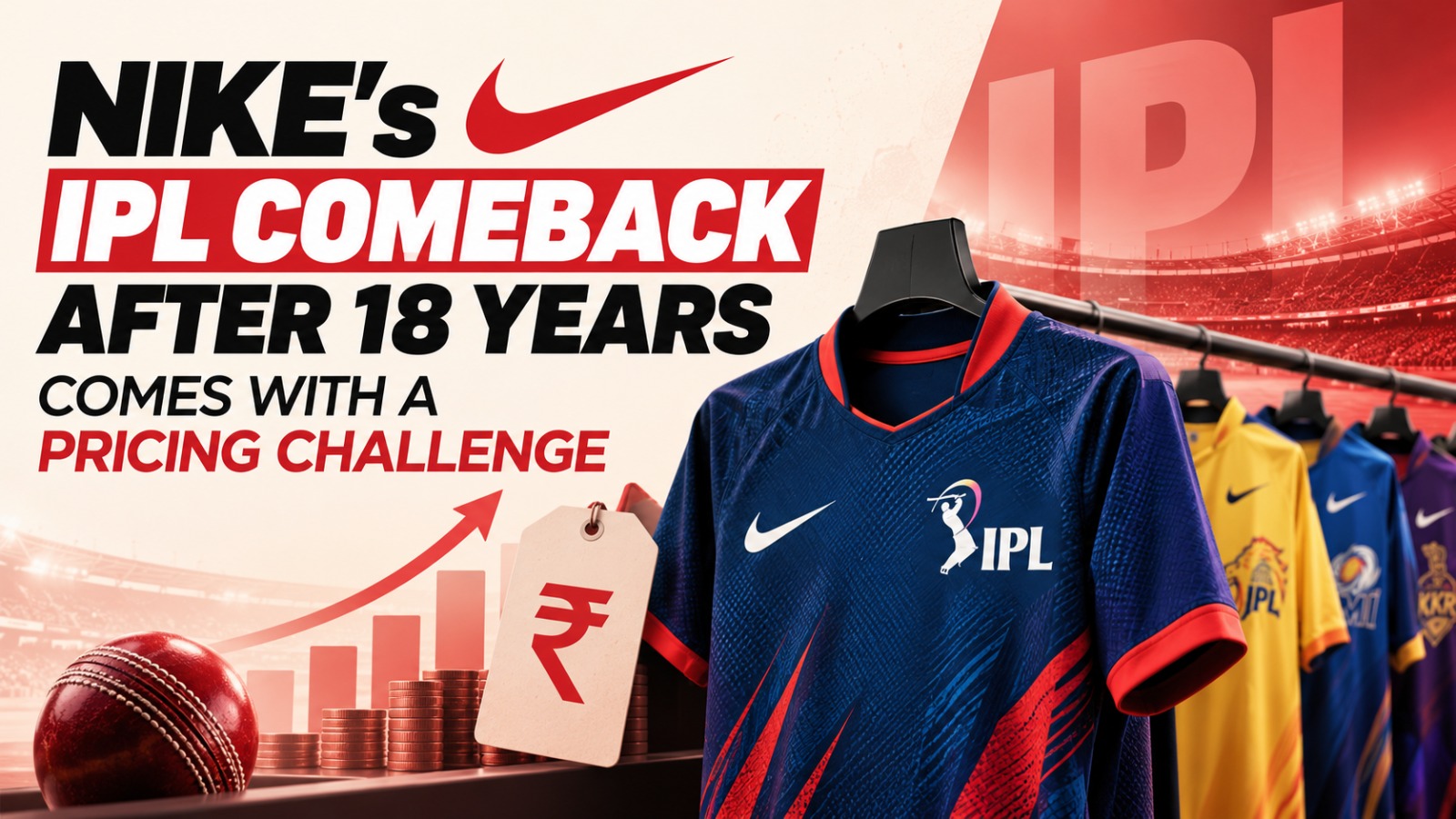
Nike is returning to the Indian Premier League (IPL) after an 18-year gap, signing a multi-year kit partnership with Mumbai Indians (MI) for the men’s and women’s teams from 2027. The deal marks the sportswear giant’s first IPL kit agreement since its association with the now-defunct Deccan Chargers in 2008.
Announced on October 21, the partnership brings Nike back to one of India’s biggest sporting platforms at a time when cricket merchandise has become an important part of franchise branding. One notable feature of the deal is that Nike’s iconic Swoosh will appear on Mumbai Indians jerseys, giving the brand visibility beyond the role of a conventional kit manufacturer.
MI staff are expected to begin wearing the new gear this month, while the men’s and women’s teams are set to showcase their kits ahead of their respective seasons. For Nike, however, the return is about more than supplying matchwear. The partnership raises a bigger question: can an international sportswear brand turn its association with an IPL franchise into a sustainable merchandise business in a market where many fans remain sensitive to prices?
Why Nike Is Returning to the IPL Now Nike has a long history with Indian cricket. The Oregon-headquartered company entered India in 2004 and became the official kit sponsor of the Indian men’s cricket team in 2006. That association continued until 2020, after which MPL Sports, Killer Jeans and Adidas took over at different stages.
The company invested heavily in securing the national team’s kit rights. In December 2005, Nike reportedly spent Rs 195 crore to outbid Adidas and Reebok. Following India’s 2011 ODI World Cup victory, the value of the agreement increased to Rs 270 crore for another five years.
In 2016, Nike committed approximately Rs 370 crore to a four-and-a-half-year deal, paying Rs 87.34 lakh per match. Despite this extensive involvement in Indian cricket, Nike did not maintain a presence in the IPL’s kit-manufacturing business after its association with Deccan Chargers.
Vinit Karnik, managing director at GroupM, believes the timing of Nike’s original entry into the league was a significant factor. According to Karnik, the Indian market for official sports merchandise was still developing when franchise cricket began gaining popularity. Fans were not yet accustomed to the club-based sporting model that is common in leagues such as European football.
That landscape has since changed. The value of the IPL increased from $4.13 billion in 2010 to $9.6 billion, according to a Brand Finance study cited in the available information. The growth has strengthened the league’s commercial appeal, although it does not automatically guarantee strong sales of official merchandise.
Nike’s return also comes as it looks to strengthen its position in India. Karnik suggested that the brand’s absence from Indian cricket in recent years may have made it increasingly important to reconnect with the sport. The Mumbai Indians Swoosh Is More Than a Kit Deal Before Nike, Mumbai Indians worked with Performax Activewear from 2019 to 2024 and Skechers from 2024 to 2026.
The new agreement gives MI access to Nike’s global sportswear capabilities while offering the company a prominent association with one of the IPL’s franchises. The presence of the Swoosh on the playing jersey is particularly significant. IPL franchises command substantial sums for prominent front-of-jersey sponsorship placements.
Mumbai Indians, Royal Challengers Bengaluru and Chennai Super Kings are reported to seek Rs 40 crore to Rs 60 crore per season for such space. A kit-manufacturing partnership is different from a conventional front-of-jersey sponsorship, but the visibility of the Nike logo gives the company a direct connection with the team and its supporters.
In its announcement, Nike described the partnership as part of its continued investment in cricket and its long-term commitment to athletes, fans and the future of sport in India. An industry insider said the collaboration could help Mumbai Indians expand its merchandise offering through Nike’s global team, with new products and collaborations complementing the match kits.
The same insider expects improvements in fabric and performance features, which could benefit players as well as fans interested in official team merchandise. The Rs 5,000 Jersey Problem Nike Must Solve Nike’s return also brings back an old challenge: how to sell premium sportswear in a market where a large section of consumers may not be willing to pay premium prices.
During Nike’s association with the Indian men’s cricket team, jerseys were available in different versions. Around the 2010s, a true replica cost approximately Rs 3,000, while a cheaper version was priced at Rs 2,000. The lower-priced option used inferior fabric but retained the visual appearance of the official jersey.
By the time Nike exited the national team’s kit partnership, the replica jersey cost nearly Rs 5,000. This was considerably higher than the Rs 200 to Rs 300 that fans were reportedly willing to spend on jerseys sold outside stadiums. Indranil Das Blah, former CEO of Mumbai City FC and founder of AMP Sports & Entertainment, believes this price difference limits the market for international sportswear manufacturers.
Unlike European football supporters, who may be willing to spend Rs 5,000 to Rs 6,000 on an official team jersey, Indian consumers have different spending patterns, he argued. Offering several versions of a jersey at premium prices can make official merchandise inaccessible to a significant section of fans.
International brands also face constraints in producing cheaper products without compromising their quality standards. For Nike, therefore, the challenge will be to offer products that justify the brand’s premium positioning without limiting the potential customer base. Karnik believes affordability will be central to the strategy.
He expects the Mumbai Indians merchandise range could include premium products alongside lower-priced options, potentially in the Rs 999 to Rs 1,499 range. These prices are expectations expressed by Karnik, not confirmed prices announced by Nike or Mumbai Indians. Last-Minute Changes Make IPL Kit Manufacturing Difficult Pricing is not the only challenge international sportswear companies face in the IPL.
Blah pointed to the league’s tendency to involve last-minute changes, which can complicate production and planning. Local manufacturers may be better equipped to respond to such requirements, while international companies typically need more time to organise production and deliver their products.
This operational difference may help explain why global sportswear brands have not always maintained a consistent presence in the IPL’s kit-manufacturing market. Nike’s partnership with Mumbai Indians will test whether a global company can combine its production capabilities with the speed and flexibility required by a franchise-based competition.
The brand will also have to make its merchandise attractive to supporters who want to wear their team’s colours without necessarily paying for the most expensive version. Nike’s Competitors Have Stayed Closer to the IPL Nike’s absence has not meant a lack of international and domestic sportswear brands in the league.
Seven has been associated with Chennai Super Kings, while Puma has worked with Royal Challengers Bengaluru and Delhi Capitals. SIX5SIX has been associated with Lucknow Super Giants and Kolkata Knight Riders. Nike’s return through Mumbai Indians gives it a route back into the IPL ecosystem, while Adidas remains associated with the Indian cricket team.
Blah sees the Mumbai Indians deal as a statement of intent from Nike. He argued that India is an important market for the company and that cricket offers a major opportunity to build visibility. With Adidas associated with the national team, a prominent IPL franchise such as Mumbai Indians offers Nike another way to reach cricket fans.
Nike also previously sponsored the Indian football team. Its seven-year agreement with the All India Football Federation began in February 2006 and was extended in 2013. SIX5SIX took over ahead of the 2019 AFC Asian Cup, ending Nike’s 12-year association with Indian football.
The Mumbai Indians agreement therefore marks another step in Nike’s effort to maintain a presence in Indian sport. Will the Nike Deal Increase IPL’s Brand Value? The partnership could improve Mumbai Indians’ merchandise offering and strengthen the team’s association with a globally recognised sportswear brand.
Whether it will significantly increase the valuation of the franchise or the IPL as a whole is a different question. Karnik believes the impact would be more substantial if major global sportswear brands were associated with all 10 IPL franchises, similar to the widespread presence of kit manufacturers across major international sports leagues.
For now, Nike’s agreement covers one franchise, making it an important commercial development but not necessarily a turning point for the entire league’s valuation. The immediate test will be whether Nike can deliver the performance-focused kits and new merchandise collaborations promised through the partnership while keeping products within reach of a wider range of supporters.
After staying away from IPL kit manufacturing for 18 years, Nike is returning with a prominent franchise partner and a familiar logo. But its long-term success may depend less on the visibility of the Swoosh and more on how many fans can afford to wear it. Also Read: DoorDash to Acquire Instacart for $17 Billion, Giving Shoppers Access to 50,000 More Stores
Article text via FreeNewsAPI. Rights remain with ascendants.in.
Read on publisher site → Opens ascendants.in in a new tab