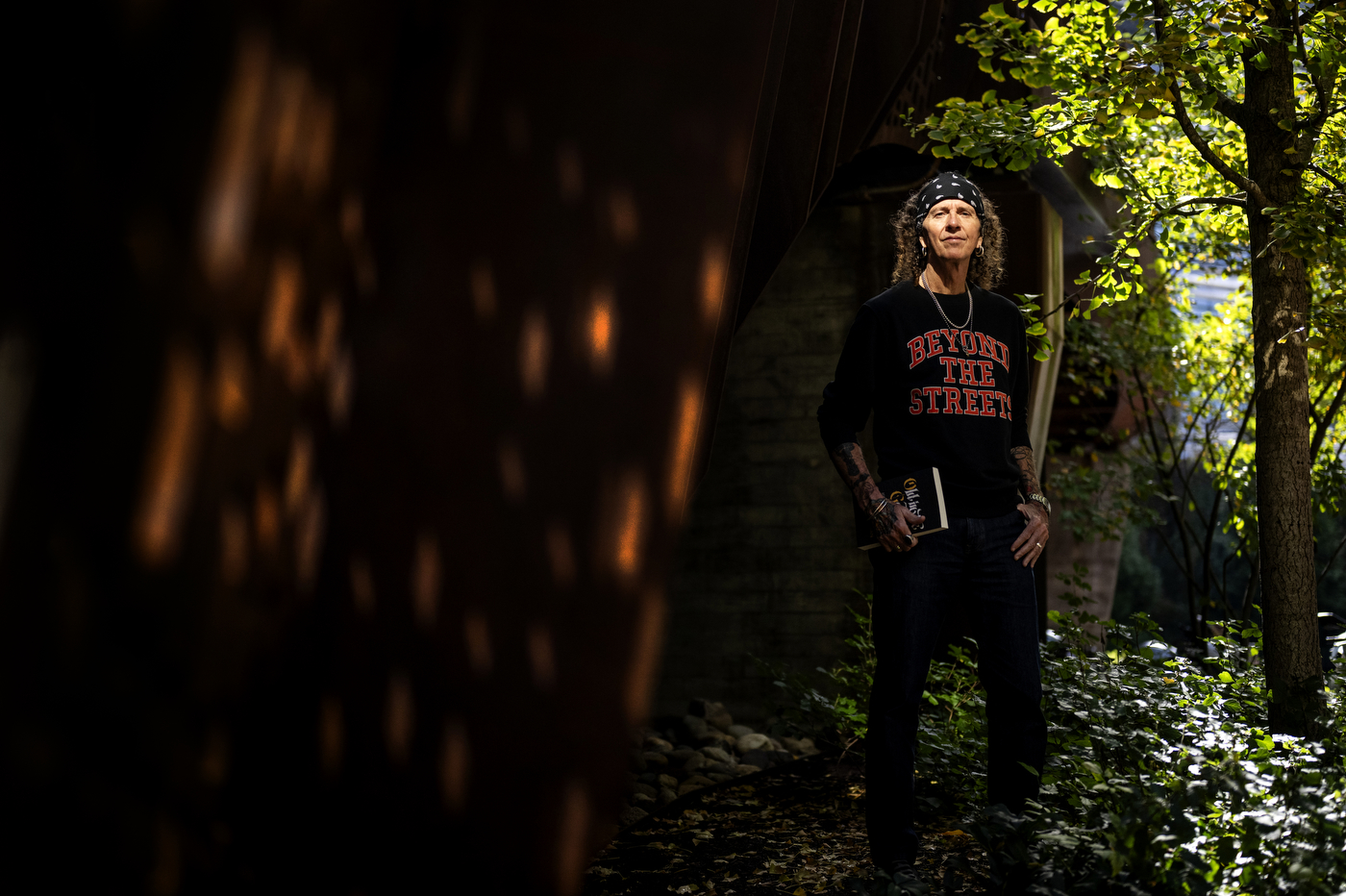
Patrick Page brings "All the Devils Are Here" to
In the beginning, villains were kind of, well, boring. One-dimensional. In morality plays, they were reduced to abstract representations of vice — covetousness, envy, lust — squaring off against virtues for...

In the beginning, villains were kind of, well, boring. One-dimensional. In morality plays, they were reduced to abstract representations of vice — covetousness, envy, lust — squaring off against virtues for the soul of some poor schlub.
The vices were generally played by funny actors who improvised with the audience, which led to some good fun. But we’re not talking Tony Soprano/Walter White-level character development or motivation here. William Shakespeare changed all of that, as he changed so many things.
He made the villain not just human, but bursting with malevolent ideas and delicious language. Shakespeare’s villains asked to be unsexed by spirits that tend on mortal thoughts (Lady Macbeth), and they made us accomplices to evil by telling us what they were about to do before they did it ( Richard III ).
As Patrick Page posits in his captivating one-man show, “All the Devils Are Here: How Shakespeare Invented the Villain,” there were villains before Shakespeare, and there were villains after Shakespeare. ArtsEmerson presents a five-night “Devils” run Oct. 28 to Nov.
1. “We now have expectations based on the standards Shakespeare set,” Page said in a video interview, his deep, resonant voice a reminder that he originated the role of Hades in “Hadestown.” “If someone is watching a Marvel or a DC movie, they damn well expect their villain to have meaningful motivations and believable backstory.
They don’t want someone who is opaque, although opacity can still be a wonderful quality in a villain.” Patrick Page and Amber Gray in "Hadestown: The Musical." Bleecker Street and LD Entertainment “All the Devils Are Here,” which takes its title from a line spoken by Ariel in “The Tempest” (“Hell is empty and all the devils are here”), is as enlightening as it is entertaining.
When I saw the show Off-Broadway almost three years ago, I was dazzled by how quickly and effortlessly Page shifted from villain to villain, performing key scenes and soliloquies featuring everyone from Edmund, the bastard son in “King Lear,” to Iago, the sadistic nemesis of Othello.
But I was equally wowed by the educational value, the dramatic, cultural, and historical context that Page layered into the show. “All the Devils Are Here” plays like an immensely engaging and thematically specific Shakespeare seminar, presented by an erudite actor who has been playing these parts for decades.
It’s little wonder that Page is now working on a book about how Shakespeare created our idea of the villain. Page, 64, is happy if you find “All the Devils are Here” nutritional. But he’s mostly pleased with how much audiences seem to enjoy seeing these bad guys (and gals) come to life.
All five of the Boston shows will be followed by a 30-40 minute talkback. “If someone says to you, ‘I’ve got a great idea, let’s go see a one-man show,’ that’s the first time you say, “I don’t think that’s a good idea,’” Page says. “That’s just putting too many eggs into one basket.
If they then say, ‘And it’s going to be a Shakespeare show,’ you say, ‘Well, that absolutely isn’t going to happen.’ So the fact that all these people have come and then they stay to talk about it is just the most wonderful thing.” Page enjoys pinpointing how each Shakespeare villain represents a step forward in dramatic evil.
Edmund, from King Lear, “brings up the idea of a villain who’s ideologically driven, who’s decided that the social playing field is so inequitable that he must adopt these Machiavellian principles in order to level it.” With Iago, “he writes a clinically precise psychopath in a way that makes me know he had to have known a person like this in real life.” Macbeth — the husband, not the wife, though Page has performed monologues from both — marks “the addition of something we now take for granted, but that had never been done: the transformation of the hero at the beginning of the play, a good and decent man, into the villain by the end of the play, a thoroughly wicked man.
We see this today in something like ‘Breaking Bad.’” Walter White, Hannibal Lecter, Ultron, Cersei Lannister : Pick a favorite pop culture villain and you can trace their roots back to the Bard. All the devils were there. Thanks to Page, you see them get together to do bad on one stage.
ALL THE DEVILS ARE HERE Created and performed by Patrick Page. Directed by Simon Godwin. Robert L.
Orchard Stage, Emerson Paramount Center, 559 Washington Street. Oct. 28 through Nov.
1. Tickets $27.50 and up. 617-824-8400 or ArtsEmerson.org .
Chris Vognar can be reached at chris.vognar@globe.com . Follow him on Instagram at @chrisvognar and on Bluesky at chrisvognar.bsky.social.
Article text via FreeNewsAPI. Rights remain with The Boston Globe.
Read on publisher site → Opens The Boston Globe in a new tab