Researchers identify protein that drives chronic inflammation in psoriasis
In new preclinical studies, researchers have identified a protein that propels a vicious cycle of skin inflammation in psoriasis. Their work uncovers how the protein, named CHI3L2, sustains this inflammatory...
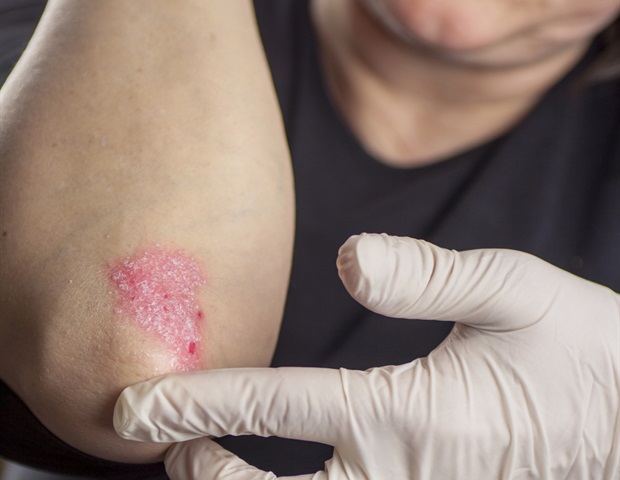
In new preclinical studies, researchers have identified a protein that propels a vicious cycle of skin inflammation in psoriasis. Their work uncovers how the protein, named CHI3L2, sustains this inflammatory skin condition and demonstrates that targeting it with antibodies can calm psoriasis symptoms in mice.
Psoriasis affects more than 60 million people worldwide, leaving them with uncomfortable rashes, itching, and anxiety. Although there are some targeted treatments, they often carry risks such as viral infections and fail in as many as 38% of patients. In the search for new targets, some researchers have recently focused their attention on CHI3L2, which tends to be elevated in the blood of patients with osteoarthritis.
However, most studies of CHI3L2 have provided only correlational data, and scientists still lack knowledge of the causative mechanisms at play. Now, Fei Li and colleagues present direct evidence for how CHI3L2 sustains inflammation in the skin. First, they examined serum and skin lesion samples from patients with psoriasis and observed elevated levels of CHI3L2, including in keratin-producing cells called keratinocytes.
Using protein injection and bone marrow transplant techniques in mice, they confirmed that keratinocytes were the main source of CHI3L2 and showed that the cells secreted the protein when exposed to a cocktail of inflammatory cytokines. Further worked revealed that CHI3L2 boosted the proliferation of keratinocytes and skewed the surrounding environment toward an inflammatory state.
However, targeting CHI3L2 with neutralizing antibodies calmed skin inflammation in mouse models of psoriasis. These findings about CHI3L2, "highlight its key regulatory role and offer previously unrecognized therapeutic avenues for psoriasis treatment," Li et al. write. Source: Journal reference: Li, F., et al. (2026).
Keratinocyte-derived CHI3L2 reprograms phospholipid metabolism to promote skin inflammation in psoriasis. Science Translational Medicine . DOI: 10.1126/scitranslmed.aef3967. https://www.science.org/doi/10.1126/scitranslmed.aef3967 Suggested Reading Terms While we only use edited and approved content for Azthena answers, it may on occasions provide incorrect responses.
Please confirm any data provided with the related suppliers or authors. We do not provide medical advice, if you search for medical information you must always consult a medical professional before acting on any information provided. Your questions, but not your email details will be shared with OpenAI and retained for 30 days in accordance with their privacy principles.
Please do not ask questions that use sensitive or confidential information. Read the full Terms & Conditions .
Article text via FreeNewsAPI. Rights remain with News-Medical.
Read on publisher site → Opens News-Medical in a new tab