Scabies in the Czech Republic: 11,000 cases and 5 deaths
The State Institute of Health (SZÚ) in Czechia report an increase in scabies in 2026, reporting more than 11,000 cases and five deaths associated with the condition, according to local media.
The State Institute of Health (SZÚ) in Czechia report an increase in scabies in 2026, reporting more than 11,000 cases and five deaths associated with the condition, according to local media . Health officials say there can be more to come: “We can expect that cases will continue to increase.
We observe increases in scabies mainly in the colder season, which is also related to more frequent gatherings of people in residential facilities and other shared spaces,“ explained Štěpánka Čechová, spokesperson for the State Institute of Public Health. Scabies: Ivermectin use in mass drug administration The increase has prompted renewed warnings from the State Health Institute (SZÚ) , which is urging residents to recognize symptoms early and take precautions to prevent transmission.
Scabies cases have been increasing in Czechia since 2022, with infections reported across all regions and age groups. The highest case counts have been reported in the Moravian-Silesian, Central Bohemian, and South Moravian regions. Early recognition of scabies and prompt dermatological consultation are crucial for early diagnosis and initiation of appropriate therapy.
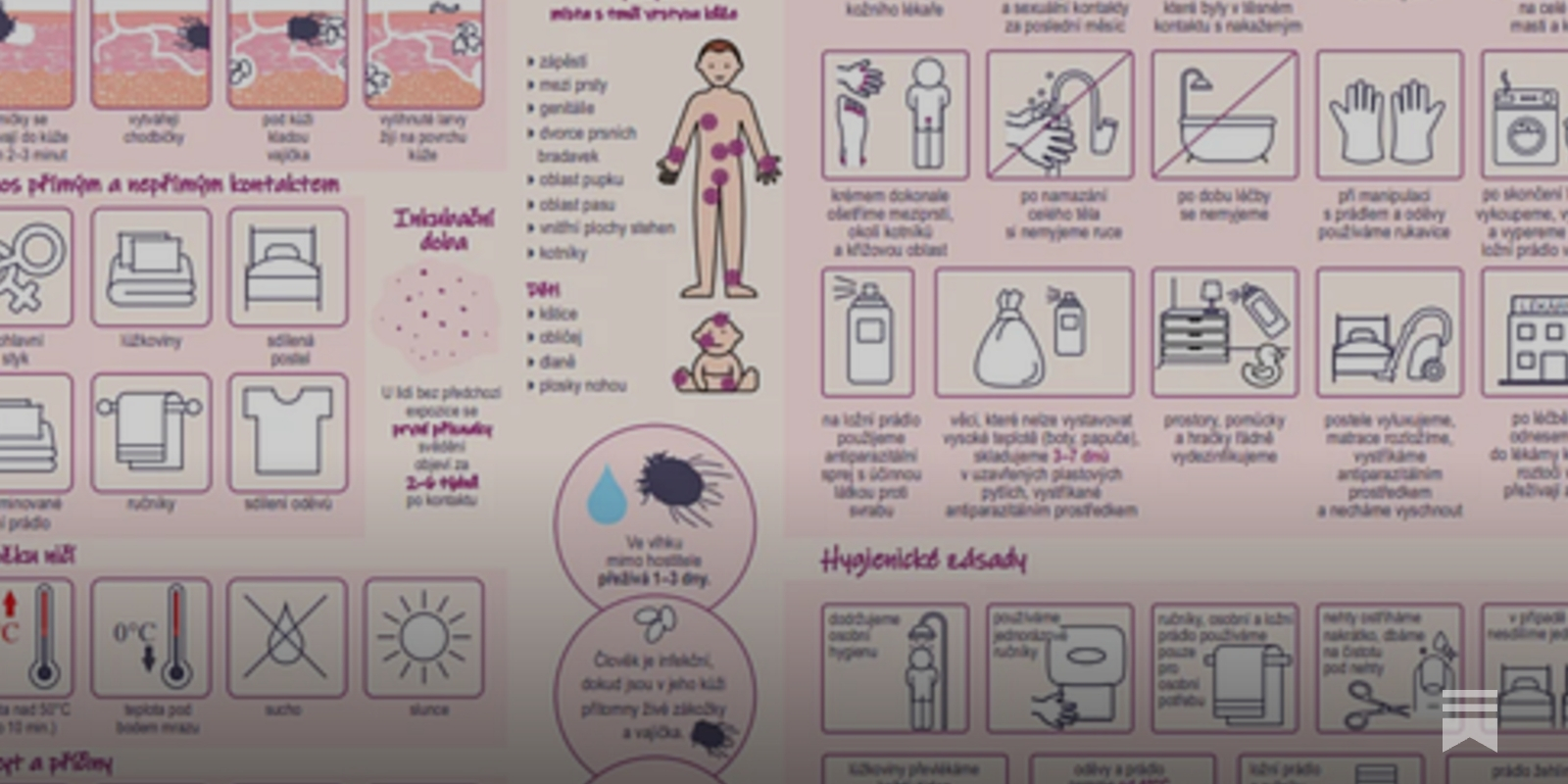
Delayed or inadequate treatment significantly increases the risk of secondary bacterial infections, which can lead to sepsis and multiorgan failure, especially in vulnerable populations. Transmission usually occurs directly, for example, during close skin contact with an infected person, especially during sexual intercourse, in a warm environment on a bed, when sleeping in the same bed, or indirectly, especially through contact with contaminated bed linen, towels or wearing clothes that have been used by an infected person.
The spread of the disease is facilitated by low hygiene standards, promiscuity and institutionalisation (e.g. hostels, dormitories, long-term care facilities, hospitals, psychiatric hospitals, social care institutions). Areas where a large number of people change frequently and quickly without the possibility of sufficient cleaning and changing bed linen are particularly risky.
Clothes and linen that cannot be washed at temperatures higher than 40° C are problematic in terms of possible transmission.
Article text via FreeNewsAPI. Rights remain with Outbreak News Today.
Read on publisher site → Opens Outbreak News Today in a new tab