Stacy Keach obituary
There have been few actors as inexhaustible as Stacy Keach, who has died aged 85. Throughout a long career that began in his childhood he was equally active in theatre, films and TV, moving from the sublime...
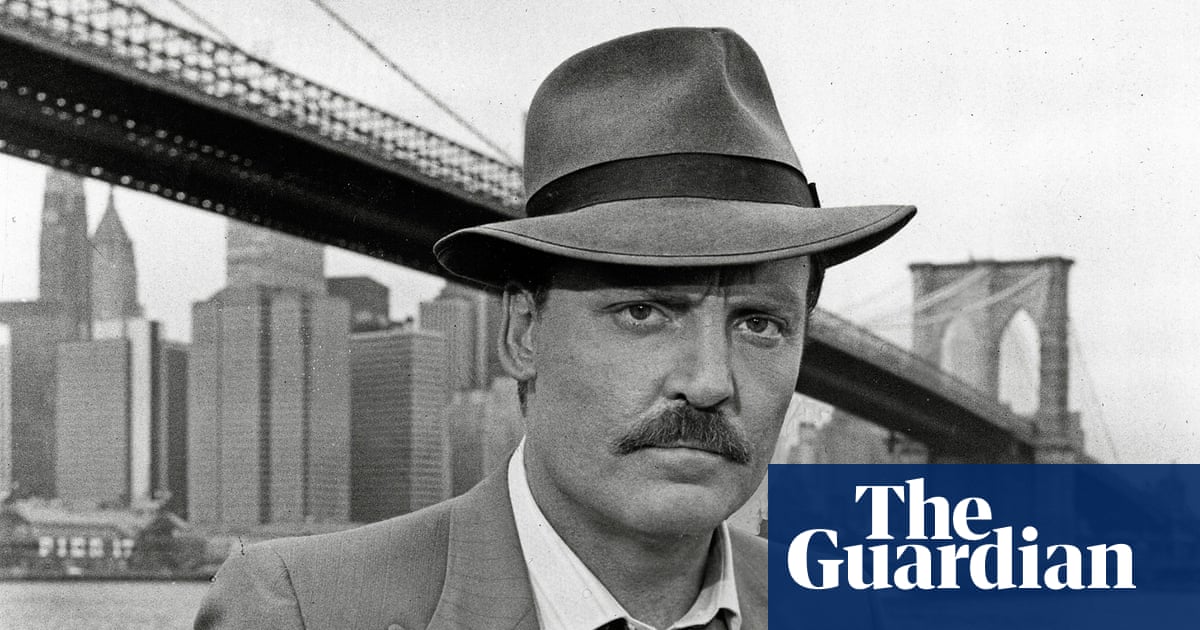
There have been few actors as inexhaustible as Stacy Keach, who has died aged 85. Throughout a long career that began in his childhood he was equally active in theatre, films and TV, moving from the sublime to the ridiculous and back again with aplomb. Perhaps it was his ubiquity and eclecticism that caused him to be so underrated.
Keach meant different things to different people. To theatregoers, he was a fine Shakespearean actor, acclaimed for his Hamlet, who was also adept in other classics and musicals (Barnum, Camelot, The King and I). To the filmgoer, he was one of the faces of Hollywood in the 1970s.
To the television viewer, Keach was the tough private eye Mike Hammer, in the 80s TV series and spinoffs based on the novels by Mickey Spillane. “I approached it as seriously as I approached Hamlet,” Keach said of the role of Hammer. The series, updated and more tongue-in-cheek than the Spillane novels, which had too much sex and violence for 80s TV, still had a stocky Keach as a macho Hammer enjoying his whisky, describing smoking as “a dying art” and chasing “dames”.
For some, however, Keach was known for serving a nine-month prison sentence in Reading jail after being stopped at Heathrow airport in London in 1984 with 31 grams of cocaine concealed in a tin of shaving foam. Having served his sentence and kicked the cocaine habit, Keach later wrote a book and narrated a 1985 documentary, High on the Job , about drug addiction.
Keach had a rich, deep voice and a trademark moustache that changed in thickness and length with each part, and that he first grew to cover up the scars from numerous operations he had undergone for a cleft lip and partial cleft palate as a child. He was born in Savannah, Georgia, and brought up in Los Angeles , the son of Mary (nee Peckham), and Stacy Keach Sr, a former drama teacher and a busy supporting actor in dozens of TV shows.
Although Keach Jr had started acting as a child, while still at Van Nuys high school, and played a teenager in a few TV series, his father encouraged him to study law. He soon switched to drama and literature at the University of California at Berkeley. He then moved on to Yale School of Drama, where he shone, earning himself a Fulbright scholarship in 1964 to study for a year at the London Academy of Music and Dramatic Art.
He had already had experience with the Oregon Shakespeare festival, and from then on would play Shakespeare regularly with success. On his return from London, he joined the Lincoln Center rep company, based in New York (1965-66), and toured in summer stock, before beginning a parallel career in film and on the stage.
Stacy Keach playing Hamlet at the Mark Taper Forum, Los Angeles, in 1974. Photograph: Everett Collection/Alamy In February 1967, Keach played the title role in MacBird!, an off-Broadway satire by Barbara Garson, which depicted President Lyndon Johnson as Macbeth, plotting to kill JFK and become president.
It ran for 386 performances and gained him an Obie award. The following year, he was Falstaff in both parts of Henry IV at the New York Shakespeare festival, and Edmund in King Lear at the Lincoln Center. This was followed by his role as Buffalo Bill in Arthur Kopit ’s Indians on Broadway, for which he won a Tony award.
It was the start of his most triumphant decade, during which he made an average of two films a year, aside from TV and stage appearances. In 1972, for the New York Shakespeare theatre, Keach took on the first of his several Hamlets, which Clive Barnes reviewed enthusiastically in the New York Times .
Barnes later described Keach as “the best American Hamlet in recent decades” whose “neurotic passion and fierce poetry” was “quite wonderful”. Keach’s first key big-screen role was as a derelict alcoholic in The Heart Is a Lonely Hunter (1968). Among his other films were Robert Altman ’s whimsical Brewster McCloud (1970), in which Keach was a tyrannical, mean billionaire, and Doc (1971), another attempt in a cynical age to debunk a western myth, with Keach in the title role as “Doc” Holliday, staring gloomily into a whisky glass and coughing up blood.
The part had a special meaning for Keach – the real Holliday was born with a cleft palate. But it was John Huston ’s equally doleful Fat City (1972) that moved Keach into another echelon in the movies. In this, Keach played a small-time boxer who is attempting a comeback on the boxing circuit aged 29.
For him, boxing is just a tough way of making enough money to keep him in booze and broads. “Don’t waste your green years. Before you know it, your life has slipped away down the drain,” he tells his friend (Jeff Bridges).
In Richard Fleischer ’s The New Centurions (1972), Keach, as a rookie cop, had the unenviable task of holding up the second half of the film after George C Scott , as a bitter older cop, had stolen the first half. In Huston’s The Life and Times of Judge Roy Bean (1972), Keach, in a blond wig, rips into his part as Bad Bob the Albino, and he almost obliterated the memory of Albert Finney ’s stage version in the title role of Guy Green ’s film of John Osborne ’s Luther (1974).
The main interest of Walter Hill’s The Long Riders (1980) was the casting of four sets of real brothers: three Carradines ( David , Keith and Robert ), two Quaids (Randy and Dennis), two Guests (Christopher and Nicholas) and two Keaches, Stacy and his younger brother James (as Frank and Jesse James), both of whom co-wrote and co-produced it.
Thereafter the quality, but not the quantity, of Keach’s films dropped sharply. After appearing in Eugene O’Neill’s Hughie at the National Theatre (1980), and in two glossy TV miniseries both based on novels by Judith Krantz , Princess Daisy (1983) and Mistral’s Daughter (1984), Keach was given the chance to play the classic hard-boiled detective in Mickey Spillane’s Mike Hammer, which initially ran for three series between 1984 and 1987.
While continuing to make TV appearances and a few films, Keach returned to the stage and Shakespeare with Richard III (1990) and Macbeth (1995) for the Shakespeare Theatre Company, Washington. He reprised the role of Hammer on TV in Mike Hammer, Private Eye (1997-98); and in 1998, on film, he was seen as a white supremacist in American History X, and on stage starred in Yasmina Reza’s Art at Wyndham’s theatre, London.
In 2009, Keach, while playing Richard Nixon in the US touring version of the play Frost/Nixon, suffered a mild stroke, but soon returned to his busy work schedule. He was sometimes wasted in minor roles in minor features, often as tough-minded grandfathers, an exception being a nasty businessman in Alexander Payne’s Nebraska (2013), and found more satisfaction in TV series and as a narrator of documentaries.
Some of his later films, including the lurid pulp pastiche Sin City: A Dame to Kill For (2014) and the gangster biopic Gotti (2018), in which Keach played the real-life mobster Aniello “Neil” Dellacroce opposite John Travolta as John Gotti , were not a million miles from Mike Hammer territory.
Keach’s final role was as father to the ageing, pampered movie star played by George Clooney in Noah Baumbach’s showbiz comedy-drama Jay Kelly (2025). Three marriages ended in divorce. Keach is survived by his fourth wife, Malgosia Tomassi, whom he married in 1986, and their son, Shannon, and daughter, Karolina, and by his brother, James.
Stacy Keach (Walter Stacy Keach), actor, born 2 June 1941; died 10 November 2026
Article text via FreeNewsAPI. Rights remain with The Guardian.
Read on publisher site → Opens The Guardian in a new tab