Stonehenge’s Altar Stone Still Has No Confirmed Source
TechnologyA new geological analysis challenges the leading theory that Stonehenge’s Altar Stone came from northeastern Scotland, but researchers have not ruled the region out. The team compared mineral and...
Technology A new geological analysis challenges the leading theory that Stonehenge’s Altar Stone came from northeastern Scotland, but researchers have not ruled the region out. The team compared mineral and chemical features from museum fragments and exposed patches of the stone, finding that none of the locations examined matches it fully.
Stonehenge’s Altar Stone Still Has No Confirmed Source A new geological analysis published November 6, 2026, says Stonehenge’s Altar Stone still has no confirmed source, challenging the leading theory that the slab came from northeastern Scotland. The researchers say their findings do not rule Scotland out entirely.
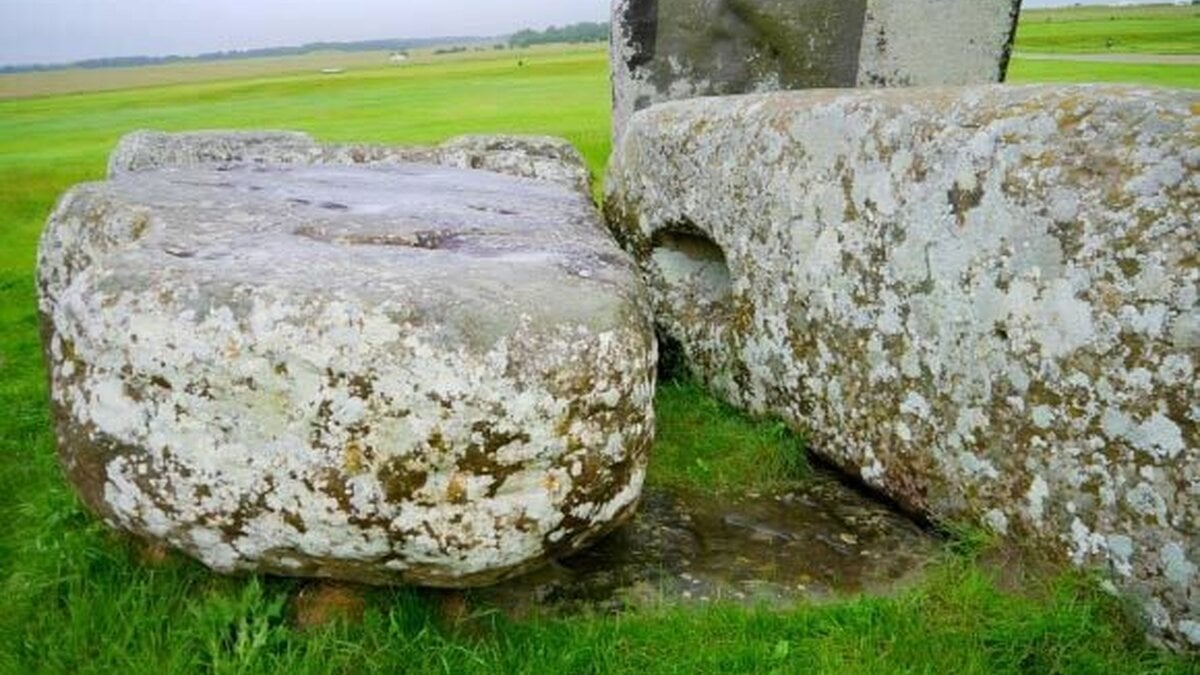
“So far, none of the locations examined have the same set of characteristics as the Altar Stone,” University of South Wales Professor Duncan Pirrie said. The stone is roughly 4.9 meters long and weighs an estimated 6 tons. It lies mostly buried beneath two fallen sarsen stones at the center of Stonehenge.
A team led by Curtin University researcher Anthony Clarke concluded in 2024 that mineral-grain ages pointed to the Orcadian Basin in northeastern Scotland. The proposed journey to Stonehenge would have covered some 700 kilometers or more. Pirrie and his colleagues do not dispute the dating work, which indicates that heavy minerals in the stone have a Laurentian origin associated with ancient crust in the Scottish Highlands.
They argue that mineral ages alone cannot establish where the stone came from. The team examined eight museum fragments linked to the Altar Stone and used portable X-ray measurements on three small patches exposed at Stonehenge. Researchers could not take a sample directly from the stone.
The analysis identified a distinctive scatter of baryte, a barium mineral that cements the sandstone’s grains and contributes to unusually high barium readings. The stone also contains chrome spinel, a heavy mineral scarce in Old Red Sandstone across much of the Orcadian Basin, including Orkney, Caithness, the Moray Firth and Shetland.
Its clay provides another clue. The stone’s mixed-layer illite/smectite contains about 20% expandable layers, suggesting it was not deeply buried or heated. Rocks in Caithness and Orkney register below 10%, a difference the researchers say excludes those areas.
The team also found tosudite, a rare clay mineral. The stone lacks signs of low-grade metamorphism found in Scotland’s Southern Uplands, which rules that region out as well. Earlier candidates have also been eliminated.
West Wales and the wider Anglo-Welsh Basin were excluded in previous work, while the Midland Valley of Scotland does not fit because of its abundance of rock fragments. Carboniferous sandstones from southern and central Britain are a poorer isotopic match than Old Red Sandstone. The latter comparison remains incomplete because strontium data are missing.
Aberystwyth University Professor Richard Bevins said the research has narrowed what geologists should look for. “This latest study significantly refines the search by identifying the specific geological characteristics we need to look for, allowing future investigations to be targeted more effectively.”
Article text via FreeNewsAPI. Rights remain with JournalArta.
Read on publisher site → Opens JournalArta in a new tab