Study explains how sickle cell variant shapes malaria parasite infections
Malaria is one of the deadliest infectious diseases on the planet, afflicting people for the entirety of recorded history. In places where malaria is most common, it's shaped human evolution by driving higher...
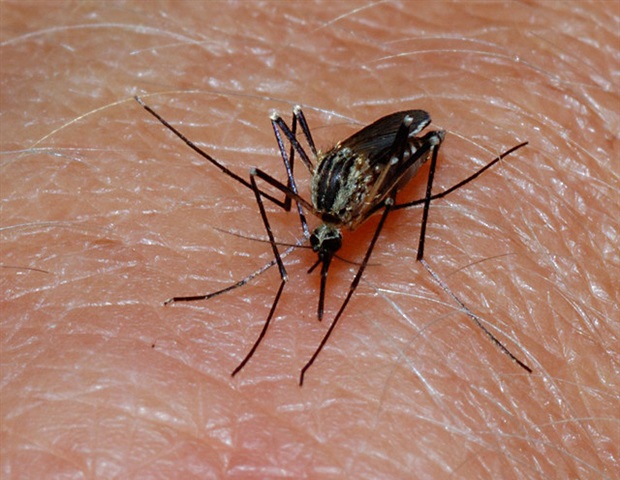
Malaria is one of the deadliest infectious diseases on the planet, afflicting people for the entirety of recorded history. In places where malaria is most common, it's shaped human evolution by driving higher rates of a paradoxically protective genetic change. Two copies of the genetic change cause sickle cell disease, but one copy helps protect people from malaria.
Understanding why could help researchers develop new ways to prevent malaria. Now, a new study that investigates the genetics of people and malaria parasites has found that people with the sickle cell variant are almost exclusively infected by a distinct variety of malaria parasites, which might contribute to their lower rates of disease.
"Sickle cell trait may protect against malaria, not only by changing how the human host responds to infection, but also by shaping which parasites are able to survive and establish infection," says Sandrine Nsango, PhD, associate professor of molecular biology, Faculty of Medicine and Pharmaceutical Sciences, University of Douala, researcher at the Centre Pasteur du Cameroun, Head of the Department of Biomedical Sciences, Faculty of Science, University of Bertoua, and one of the senior authors on the study.
It's still kind of surprising that was under the radar. It was hiding in plain sight. People have been looking at this association for a long time, but you have to be able to ask the parasite for it to tell you this." llen Leffler, PhD, assistant professor of human genetics, University of Utah Health and one of the senior authors of the study The results are published in Nature Microbiology .
Infection under the radar Researchers analyzed the genetics of over 2,000 people in Mfou, Cameroon, as well as the malaria parasites infecting them. This high-throughput DNA sequencing strategy revealed the complex relationship between parasites and people. The team found that people with and without the sickle cell variant tend to be infected by genetically different varieties of malaria parasites.
What's more, specific varieties of the parasite infect people with and without the sickle cell variant at similar overall rates . Despite being infected at similar rates, people carrying the sickle cell variant are much less likely to develop symptomatic malaria. Previous work in Leffler's post-doctoral lab had discovered the unusual strain of malaria by investigating the rare cases where people with the sickle cell variant develop disease symptoms.
Continue reading
Watch a short ad to unlock the full article
The rest stays locked if you skip or close the ad early.
Related Stories Monash study urges coordinated action to fight mosquito-borne diseases New genetic mutations linked to malaria drug resistance discovered Researchers uncover hidden function of known tuberculosis bacterium gene The new research extends these findings to asymptomatic infections, in which people are infected by the parasite but don't get sick.
While less visible than the disease itself, asymptomatic infections were extremely common, affecting three-quarters of the healthy study population. The researchers found that which parasites are present in an asymptomatic infection differs based on if the infected person has the sickle cell variant.
People with the sickle cell variant were more likely to be infected with one variety of the parasite, whereas parasites with a different genetic makeup were more common in people without the variant. These findings suggest that the sickle cell variant influences which parasites can infect a person, whether or not they develop disease symptoms.
Upending prior theories When this new parasite strain was first discovered in symptomatic people with the sickle cell variant, scientists' first guess was that the strain could be a "superbug" that's unusually good at causing disease. But the new results suggest that the opposite might be true.
People with the sickle cell variant are just as likely to become infected-albeit with a different variety of the parasite-but they're a tenth as likely to develop harmful disease. These observations suggest that the biological characteristics of this parasite variety may contribute, at least in part, to the protection against disease conferred by the sickle cell trait.
In other words, to understand why people with sickle cell don't get disease as often-and use that knowledge to develop better therapies-researchers should not only look at the biology of the sickle cell variant but also investigate the differences in the malaria parasite. Nsango says that their findings emphasize that malaria is an example of a continued evolutionary interaction between humans and the parasite.
"The sickle cell mutation is one of the clearest examples of how infectious diseases can shape human evolution, but our findings suggest that humans also shape the evolution of the parasite in return," Nsango says. "Understanding these interactions may help us anticipate how malaria parasites adapt in the future and design more effective strategies for malaria control." "This gives us a new dimension to try to understand what determines the outcomes of infection," Leffler says.
"We hope this will lead to deeper biological understanding of the parasite and of this co-evolutionary system that is quite unique in humans, and ideally to some practical new strategies for tracking or treating infections." Source: Journal reference: Hopson, H. D., et al. (2026).
Sickle cell haemoglobin status shapes malaria parasite genotype in asymptomatic infections. Nature Microbiology . DOI: 10.1038/s41564-026-02502-4. https://www.nature.com/articles/s41564-026-02502-4
Article text via FreeNewsAPI. Rights remain with News-Medical.
Read on publisher site → Opens News-Medical in a new tab