Thorium Clocks Start Ticking With Lasers
Atomic clocks are super accurate. But, unsurprisingly, some atomic clocks are better than others, depending on your definition of better. Researchers at Vienna University claim to have a superior t...
Skip to content Atomic clocks are super accurate. But, unsurprisingly, some atomic clocks are better than others, depending on your definition of better. Researchers at Vienna University claim to have a superior thorium-based atomic clock .
It isn’t necessarily more accurate than other atomic clocks, but it is self-regulating. Apparently, prior atomic clocks need help to stay stable. But scientists have thought that thorium, with its very narrow gap between two states, would make an excellent clock with the help of a laser.
However, the laser has to have precise properties that, at least in early experiments, were provided by another nuclear clock. Obviously, you’d like to be able to use a laser to excite the source — a thorium crystal in this case — and then use the output of that to adjust the laser.
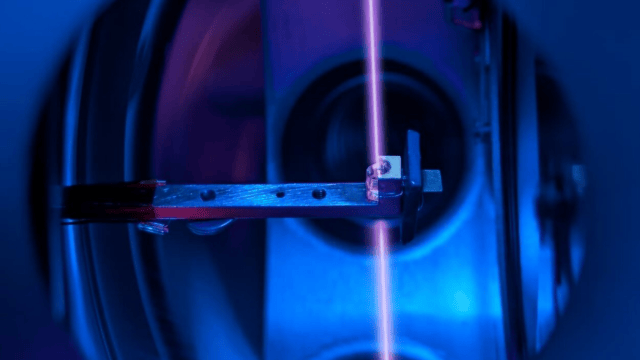
That’s apparently what the team has done. If the laser drifts, the thorium nuclei absorb less light, and that adjusts the output frequency to compensate. If you can follow the physics, you can read the source paper in Nature .
Optical atomic clocks are the way to go for time standards, but this research has promise to provide even more accurate results in the future.
Article text via FreeNewsAPI. Rights remain with Hackaday.
Read on publisher site → Opens Hackaday in a new tab