US develops chip to assess response to childhood leukemia treatment — News-Medical
Researchers from Emory University, Children's Healthcare of Atlanta, and the Georgia Institute of Technology in Atlanta have developed the GradientScreen microfluidic test to assess the response of acute...
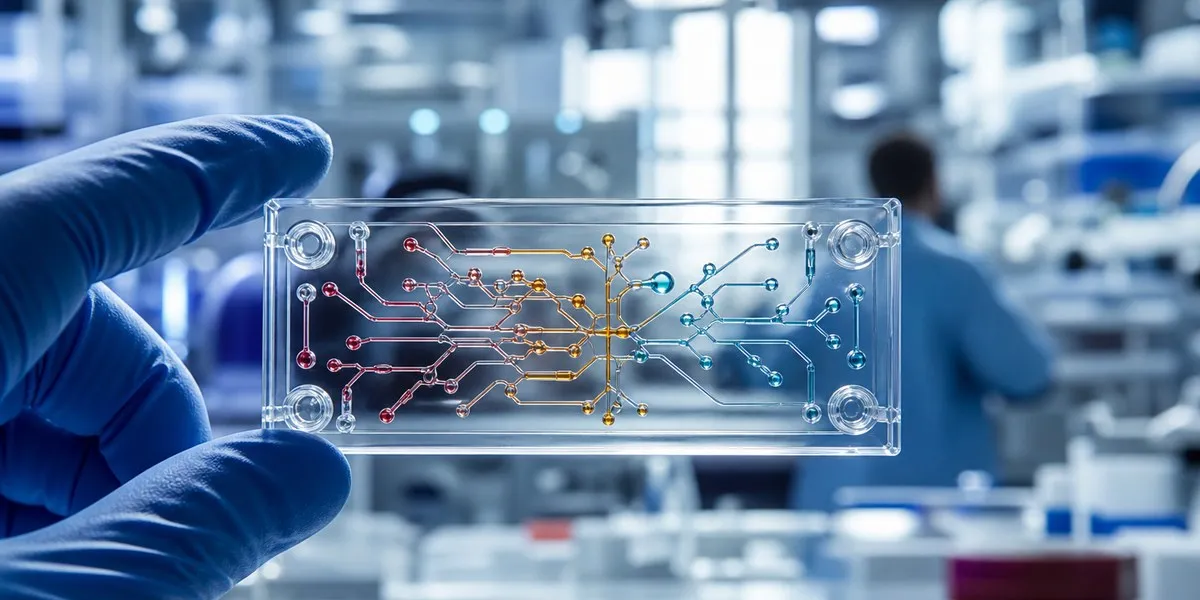
Researchers from Emory University, Children's Healthcare of Atlanta, and the Georgia Institute of Technology in Atlanta have developed the GradientScreen microfluidic test to assess the response of acute lymphoblastic leukemia cells to drug combinations. As News-Medical reports , the technology may provide doctors with additional information about cancer cells' sensitivity to therapy at the time of diagnosis.
How the test works GradientScreen uses a single sample of a patient's blood or bone marrow. Leukemia cells are exposed to combinations of three drugs, and researchers measure how many cancer cells survive. Comparing responses to individual drugs and their combinations makes it possible to identify combinations and dose ratios that work better together.
Unlike separately testing each pair of drugs and dosages, the microfluidic system makes it possible to assess the full range of ratios in a three-drug regimen in a single experiment. The developers note that this functional analysis can complement genomic data, as patients with identical genetic mutations may respond differently to targeted therapy.
More current news is available on the UA.News Telegram channel Telegram . Results of the retrospective study The retrospective study analyzed 17 samples of leukemia cells and bone marrow from patients with acute lymphoblastic leukemia, provided by the Aflac Cancer and Blood Disorders Center at Children's Healthcare of Atlanta.
The test results correlated with clinical treatment outcomes, including the level of residual disease after induction therapy — the first month of chemotherapy — and the occurrence of relapse. Acute lymphoblastic leukemia accounts for about 75% of leukemia diagnoses in children. According to the data cited by the publication, relapse occurs in approximately 15% of pediatric patients, while among adults, relapse or resistant disease accounts for about 50% of cases.
The team named expanding the technology to other types of leukemia, including acute myeloid leukemia, as well as to adult patients, as the next step.
Article text via FreeNewsAPI. Rights remain with UA.NEWS.
Read on publisher site → Opens UA.NEWS in a new tab