Why Sofia Coppola gave Marie Antoinette sneakers
Marie Antoinette never said, “Let them eat cake.” The last queen of France also never wore Converse sneakers or fantasized about a lover to “What Ever Happened?” by The Strokes. Yet these anachronisms, from...
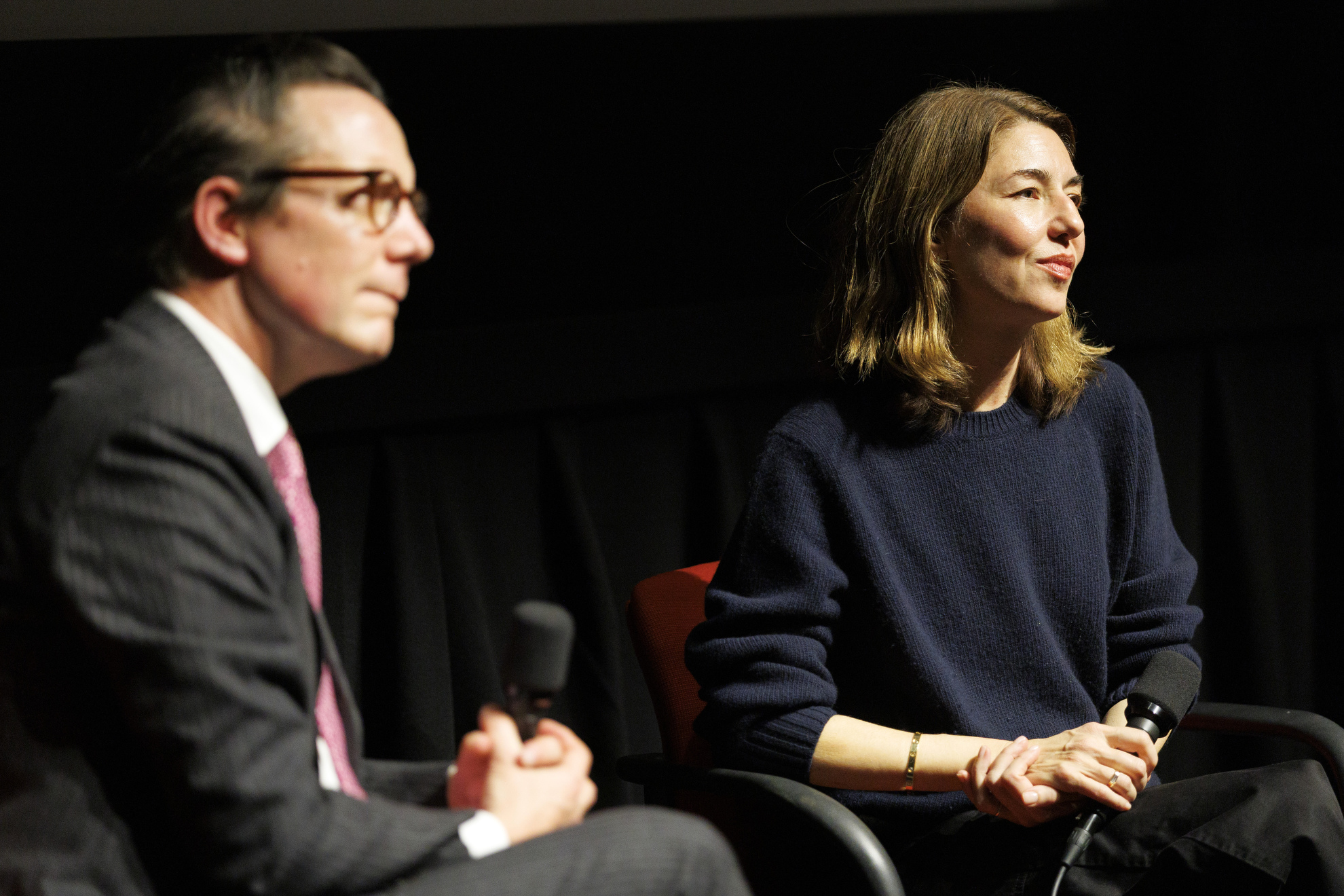
Marie Antoinette never said, “Let them eat cake.” The last queen of France also never wore Converse sneakers or fantasized about a lover to “What Ever Happened?” by The Strokes. Yet these anachronisms, from Sofia Coppola’s film “Marie Antoinette” (2006), may get at more of the truth of her inner world than you might expect.
The Harvard Film Archive recently hosted the director for a Q&A and 4K remastered screening of the biopic to mark its 20th anniversary. Inspired by films like “Barry Lyndon” and “Lisztomania” — as well rococo painters like Jean-Honoré Fragonard — “Marie Antoinette” is known for stepping outside of the period-piece box.
Where other directors might have leaned into a drab or gritty visual language, Coppola set out to fill the film with beauty, something she considers key to understanding the central character. “It felt like her only creative outlet was her environment, her clothes, her flowers and gardens,” Coppola explained during the Q&A.
“She was really known for building this world around her, I think that’s the only way she could express herself.” “She was really known for building this world around her, I think that’s the only way she could express herself.” Sofia Coppola Bringing 18th-century royalty to life on screen took a crew of more than 300 people, including dressmakers, wigmakers, shoe designers, florists, milliners, and jewelers.
The flower arrangements on set were real, as were the candles they used while shooting in Versailles — something Coppola is still surprised they were allowed to do. “Thank God we didn’t light the curtains on fire!” Coppola worked with designers Milena Canonero and Manolo Blahnik to build a wardrobe rooted in the period that still gave them the freedom to play with modern aesthetics.
“I was living in LA and seeing these kind of lone trophy wives at Barney’s buying shoes to cheer themselves up,” Coppola said. “I thought, of course! Her husband’s ignoring her, she buys shoes.
If Marie Antoinette was alive at that time, she would ask [Blahnik] to do them.” But it wasn’t all ship-shaped wigs and macaron towers. In an early scene in the woods of northern France, Marie Antoinette — only 14 years old and then still called Maria Antonia — is forced to change into clothing befitting the French court, symbolizing a transition from her Austrian past to her French future.
Such details about the queen’s life come from Antonia Fraser’s biography “Marie Antoinette: The Journey,” which Coppola also cites as an inspiration for her more modern characterization. “I felt like [Fraser] kind of set the record straight of making her human,” Coppola said. “All the dynamics between the sisters-in-law and the power plays.
The court felt like high school, the Hall of Mirrors felt like the quad, and they’re all walking by and checking each other out.” Shooting on location at the Palace of Versailles also helped flesh out the character. After taking in the size of the queen’s bedroom (which, at points, was where the crew stored camera equipment), Coppola recalled seeing “these little private rooms, like her backstage area, where the scale is much more human.
You can see that she really hung out with her friends there. There was a real divide between her performing and her private life.” During the talk, Coppola offered advice to young creatives. “Start to find the people that you connect with and feel like get you,” she said.
“That’s the fun part about it: You get to collaborate with all these people and explain what you’re trying to do and hear their ideas. Try to be open to what everyone brings.” Attendees commented on Coppola’s attention to subtlety and beauty in her directorial work — an appreciation she says she gets from her mom — and asked for tips on approaching creative work in the face of uncertainty.
“I try to go with what I’m excited about and not analyze it too much,” she said. “If you’re interested in something, there has to be someone else out there that’s interested in that, too.” Upon its release, “Marie Antoinette” was critically polarizing, and even got some boos at the Cannes Film Festival.
“I was told, you know, no one wants to see this. I found this box I have with all these terrible reviews with really funny headlines, like, ‘A Royal Mess’ and ‘Lost in Sensation.’” But the film has garnered devoted fans over the years, especially with audiences who see themselves in the young woman depicted onscreen, forced into an environment bigger than herself.
A documentary “ Making Marie Antoinette ,” directed by the late Eleanor Coppola, Sofia’s mother, was released this year. “In 2005, all the reviews were written by men. I get it that [the movie] is maybe not their thing, but I just think it’s so cool that nowadays young women have a real voice in culture.
Young women weren’t considered an audience in the way that they are today. It’s such a thrill to me that, 20 years later, people are still watching it.” The Harvard Film Archive will screen “ Marie Antoinette ” in 35 mm at 3 p.m. on Nov. 15.
“Making Marie Antoinette” is now playing in select theaters and is available to stream on MUBI.
Article text via FreeNewsAPI. Rights remain with Harvard Gazette.
Read on publisher site → Opens Harvard Gazette in a new tab