Africa’s clean energy transition: Calls grow for local mineral processing
Resource Justice Network and Extractives Industries Global Board member Joyce Nyamukunda speaking during the first day of the Conference in Nairobi on October 19, 2026 / HANDOUTAfrican countries have been...
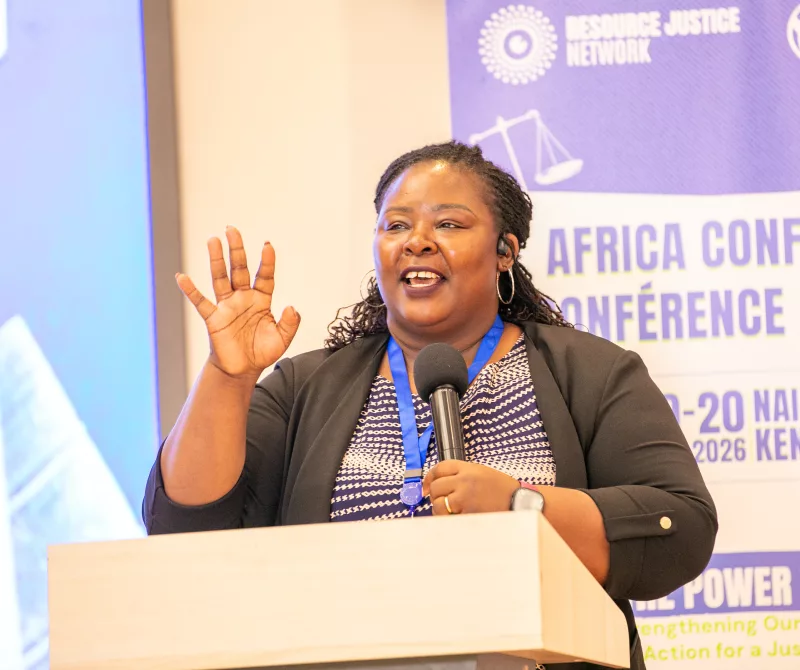
Resource Justice Network and Extractives Industries Global Board member Joyce Nyamukunda speaking during the first day of the Conference in Nairobi on October 19, 2026 / HANDOUT African countries have been urged to invest in local processing of critical minerals to create jobs, retain more economic value and ensure communities benefit from the global transition to cleaner energy.
Resource Justice Network and Extractives Industries Global Board member Joyce Nyamukunda said African countries needed to move beyond extracting and exporting raw minerals and establish systems that would allow them to process the resources before they leave the continent. Speaking at the Resource Justice Network Africa Conference 2026 in Nairobi on Monday, Nyamukunda said regional cooperation could help African countries overcome the financial and technical challenges of establishing processing facilities independently.
“What we need is to set up systems that can be able to add value to the minerals before they are exported. And it is also important that, as African countries, we have that regional cooperation and coordination where we can maybe set up some hubs that can add value to our minerals,” Nyamukunda said.
She said individual countries might not have sufficient resources and expertise to establish processing facilities, making collaboration across borders important in building regional capacity. “It requires a lot of resources. It requires a lot of skills.
But if we come together as different African countries, as different nations, then we can be able to come up with hubs that can add value to our minerals, and then we can export something that is really then processed to a later stage other than just exporting raw minerals,” she said.
Nyamukunda, who represents the Zimbabwe Environmental Law Organisation and coordinates the Resource Justice Network in Zimbabwe, said the benefits of mineral investments should extend to communities where extraction takes place, rather than primarily serving international markets.
She said governments needed to implement legal reforms and ensure existing laws were enforced to help communities benefit from investments linked to the energy transition. The push for local processing comes as critical minerals become increasingly important to technologies supporting the global shift to cleaner energy.
African countries possess significant mineral resources, but the economic benefits they derive from extraction depend partly on how much processing, manufacturing and other value-adding activity takes place locally. Transparency International Kenya Executive Director Sheila Masinde speaking during the Resource Justice Network Africa Conference 2026 in Nairobi on October 19, 2026 / HANDOUT Transparency International Kenya Executive Director Sheila Masinde said African countries had failed to translate their mineral wealth into sufficient economic gains for their populations, despite the continent’s vast natural resources.
“As Africa, we are endowed with vast minerals, but unfortunately, we have not been able to effectively convert those minerals into tangible wealth that can drive our economies forward. So here we are, struggling with basic social service delivery in terms of health, education, sanitation, and yet the mineral wealth that we are endowed with as a continent can actually help us provide more strategically and efficiently to the entire African population,” Masinde said.
She attributed the problem partly to corruption, illicit financial flows and a lack of transparency in agreements between governments and mining companies, saying these factors were contributing to the loss of resources that could support development across the continent. Masinde also questioned the practice of exporting minerals for processing abroad before importing finished products at high prices, arguing that African countries were missing opportunities to capture more value from their natural resources.
She called for stronger accountability in negotiations and contracts involving local and foreign companies, saying transparent resource governance was essential to ensuring the energy transition benefited African populations. Beyond the economic benefits, Masinde said communities living in mineral-rich areas needed access to information and meaningful opportunities to participate in decisions about mining and the management of natural resources.
She said residents often lacked information about mining activities in their areas, how they could benefit from the resources and how to follow the money generated from extraction. Masinde called for clear public participation mechanisms to ensure communities could influence decisions and hold governments and companies accountable.
Representatives from African nations gather for the Resource Justice Network Africa Conference 2026 in Nairobi on October 19, 2026 / HANDOUT The conference, organised by Transparency International Kenya in partnership with the Resource Justice Network, brings together approximately 90 civil society leaders, community representatives, women and youth from 31 countries.
Held under the theme “The Power Within: Strengthening Our Collective Action for a Just Transition,” the two-day meeting is focusing on resource governance, transition minerals, fossil fuel dependency, civic space and ensuring that the benefits of the energy transition reach communities.
The conference is expected to conclude with a joint communiqué outlining Africa’s shared priorities and demands ahead of the 31st United Nations Climate Change Conference (COP31) in Antalya, Türkiye.
Article text via FreeNewsAPI. Rights remain with The Star, Kenya.
Read on publisher site → Opens The Star, Kenya in a new tab