Ocarina of Time Tops Switch 2 eShop Charts [2026]
The Legend of Zelda: Ocarina of Time sits at No. 1 on the Nintendo Switch 2 eShop chart for November 1, 2026, according to Nintendo Everything’s daily chart roundup. The game does not launch until November 5,...
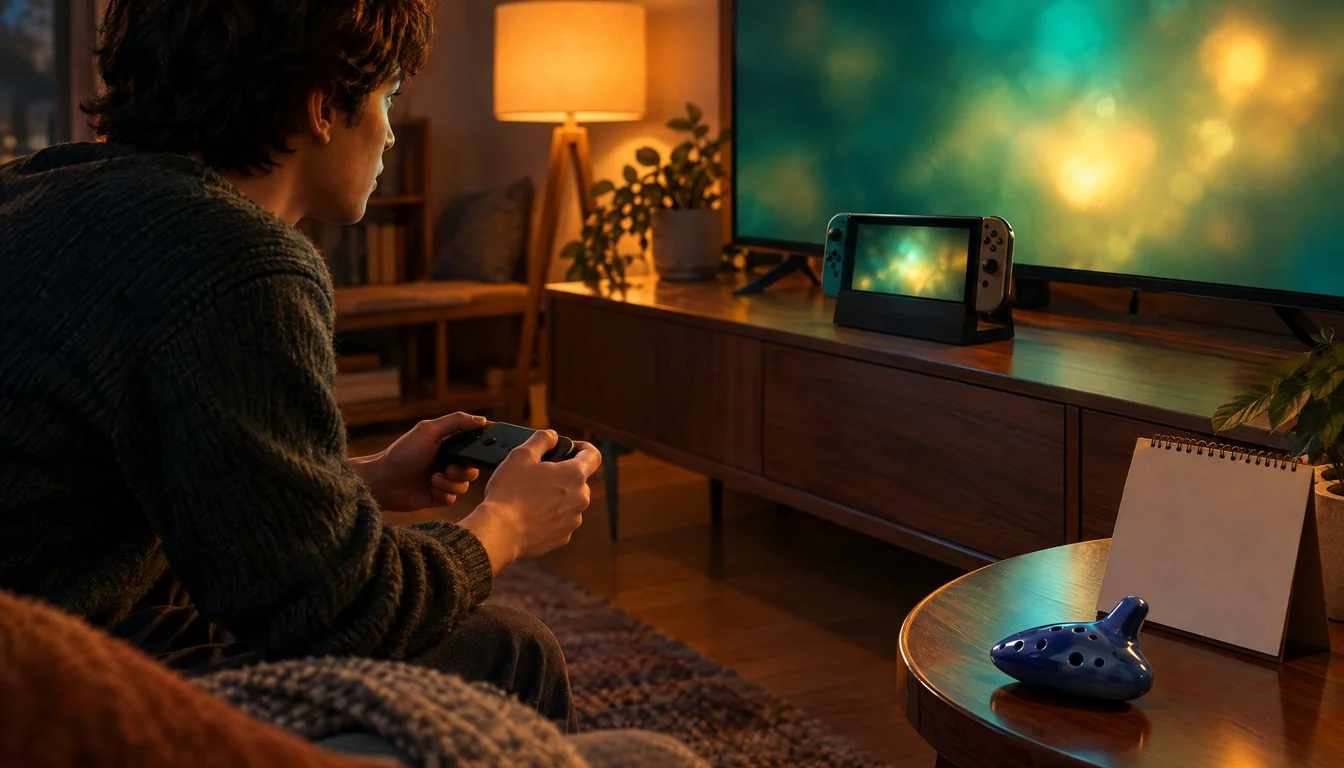
The Legend of Zelda: Ocarina of Time sits at No. 1 on the Nintendo Switch 2 eShop chart for November 1, 2026, according to Nintendo Everything’s daily chart roundup. The game does not launch until November 5, so the ranking reflects pre-orders and pre-loads rather than finished sales or play time.
Nintendo Everything’s own summary was blunt. With pre-loads live, as expected, the game shot up to the top. Ocarina of Time Takes No.
1 on the Switch 2 eShop The Full Top 12 on the November 1 Chart Why Pre-Loads Push a Game to the Top What Nintendo Has Confirmed About the Game Price and Editions: What Retail Coverage Reports Three Zelda Titles Already Sit on the Chart The Rest of the Top 10: Who Is Competing With Zelda Lower on the List: Ports, Remasters and Catalog Staples How to Read an eShop Chart Without Overreading It Historical Context: Forty Years of Zelda and a 1998 Original Market Impact: What a Zelda Launch Means for Switch 2 Hardware Signals Versus Software Signals Competitive Comparison: Zelda Against Nintendo’s Other Anchors Five Predictions for the Weeks Ahead What to Watch After November 5 Frequently Asked Questions Is Zelda: Ocarina of Time really No.
1 on the Switch 2 eShop? When does Ocarina of Time launch on Switch 2? How much does it cost?
Do I need Nintendo Switch Online? Can I play with a microphone or buttons? Does a No.
1 eShop rank mean record sales? What other Zelda games are on the chart? Related Coverage That distinction matters for anyone reading the Switch 2 eShop charts as a sales signal.
Our earlier look at the 11 Switch games landing in November flagged Zelda as the month’s anchor release. The chart now confirms that the market agrees. This analysis walks through what the list shows, what Nintendo has confirmed about the game, and where the evidence stops.
Google · Preferred Sources Don't miss new tech stories on Google Add Shattered once in the Google app and our stories show up in your news suggestions. Add now Ocarina of Time Takes No. 1 on the Switch 2 eShop The headline is simple.
On the chart dated November 1, Zelda: Ocarina of Time holds the first position on the all-games list, ahead of Nintendo Switch Sports Resort in second and Final Fantasy Resonance in third. Nintendo Everything publishes both an all-games chart and a download-only chart, each running 30 titles deep.
The all-games view is the one that carries the Zelda headline. Several outlets have tracked the game’s run-up. Nintendo Life carries a dedicated page for the Switch 2 version, and Nintendo’s own store lists it with a launch date.
The story is not a surprise ranking from nowhere. Pre-orders went live in mid-October, a pre-order discount cycle followed, and the pre-load window opened within the final week before launch. A first-place finish four days before release is also a setup for the next stage.
Once the game unlocks on November 5, the chart will start measuring something different. Pre-load hype turns into real downloads, and the ranking will tell us whether launch-day demand holds up against the rest of the Switch 2 catalog. We will track that in follow-up coverage.
The Full Top 12 on the November 1 Chart The table below reproduces the top 12 positions from Nintendo Everything’s all-games chart. Ranks come directly from that list. The notes column is our own labeling based on the listing names, not a claim about sales.
Rank Title Note 1 Zelda: Ocarina of Time Launches Nov. 5, pre-loads live 2 Nintendo Switch Sports Resort Base game listing 3 Final Fantasy Resonance Standard edition 4 Cyberpunk 2077 Base game listing 5 Minecraft Base game listing 6 Mario Kart World Base game listing 7 Call of Duty: Modern Warfare 4 Standard edition 8 Pokemon Pokopia Base game listing 9 Fire Emblem: Fortune’s Weave Base game listing 10 Hello Kitty Party Land Base game listing 11 Call of Duty: Modern Warfare 4 Vault Edition Separate edition listing 12 Final Fantasy Resonance Digital Deluxe Edition Separate edition listing Two patterns jump out.
First, third-party games fill most of the top 12, with Square Enix, CD Projekt, Activision and Mojang titles all present. Second, two games appear twice through separate edition listings, which splits their demand across two chart slots. Call of Duty and Final Fantasy Resonance both do this.
Why Pre-Loads Push a Game to the Top Pre-loading explains most of the jump. A pre-load lets a buyer who ordered digitally download the game files ahead of launch, so the game is ready the moment the unlock time hits. Pre-load activity likely creates a burst of eShop transactions and downloads in the days before release.
Nintendo does not publish how its storefront weighs those signals, so the exact mechanics stay opaque. Pre-order coverage from outside Nintendo reports a pre-load size of roughly 27 GB and says Nintendo charges digital pre-orders about a week before release. Treat that file size as a reported figure, not an official one.
Nintendo’s store page for the game, which we checked directly, does not list a download size. Still, the timing lines up with the chart. A charge window opening around October 29 fits a No.
1 ranking by November 1. Our guide to the Switch 2 unlock time calendar feed covers the practical side of this, namely how to track exactly when a pre-loaded game opens. For chart watchers, the lesson is that a pre-load spike is front-loaded.
It reflects committed buyers who acted early, which tends to be the most dedicated slice of an audience. What Nintendo Has Confirmed About the Game Nintendo’s official store page for the Switch 2 version gives the firmest set of facts. It lists a November 5, 2026 release, a physical version, and an exclusive special-edition Switch 2 system.
It describes overhauled visuals, orchestral music, voice acting and expanded cutscenes. The page also lists handheld, TV and tabletop play and a single-player mode. Detail What the source says Source Release date November 5, 2026 Nintendo store page Platform Nintendo Switch 2 Nintendo store page Play modes Handheld, TV and tabletop Nintendo store page Players Single player Nintendo store page Ocarina input Buttons, humming or instrument input through the microphone Nintendo store page amiibo Supported for in-game extras Nintendo store page Online features Switch Online membership needed for Save Data Cloud and online features Nintendo store page ESRB rating Animated Blood, Fantasy Violence Nintendo store page Digital bonus Early purchase wallpaper Nintendo store page Price on store page Not shown, retailer lookup only Nintendo store page The last row deserves attention.
On the day we checked, Nintendo’s own page did not display a price. Figures you see elsewhere come from retailer listings and pre-order coverage, which we cover in the next section. Price and Editions: What Retail Coverage Reports Pre-order coverage puts the US price at $59.99 digital and $69.99 physical.
Forbes’ October 14 guide and Nintendo Life’s pre-order roundup both cover price and editions. Later reports say Amazon and Walmart trimmed physical pre-orders by $10 on October 20, which would put physical copies level with digital at $59.99. We could not confirm the discount on Nintendo’s own page, so check the retailer before you buy.
A $59.99 digital tag is a full-price ask, yet it did not stop the game from topping the chart. Full-price pre-orders at that level point to a committed buyer base, though the chart alone cannot say how large it is. The console side is more complicated.
Nintendo’s page references a special-edition Switch 2 system tied to the game. Our coverage of the Zelda Switch 2 restock at Target and Best Buy tracked a $519.99 price and a November 5 date for that hardware. We also reported on Walmart canceling Zelda Switch 2 orders a day before release, which shows how tight console supply has been around this launch.
Three Zelda Titles Already Sit on the Chart Ocarina of Time is not the only Zelda product ranked. Three other Zelda listings appear in the top 30 of the same chart. They show how the franchise’s back catalog benefits from a new release in the series.
Chart rank Listing What it is 1 Zelda: Ocarina of Time New Switch 2 release, due Nov. 5 22 Zelda: Tears of the Kingdom Upgrade Pack Switch 2 upgrade for an existing game 26 Zelda: Breath of the Wild – Nintendo Switch 2 Edition Enhanced edition of an existing game 28 Zelda: Breath of the Wild Upgrade Pack Switch 2 upgrade for an existing game Four Zelda entries in a 30-slot list is a strong showing for one franchise.
The upgrade packs are the interesting part. They suggest owners of Breath of the Wild and Tears of the Kingdom are returning to the series and buying Switch 2 enhancements at the same time they hear about the new release. That pattern, a halo effect around a headline launch, is common in game retail, though the chart alone cannot prove cause and effect.
The Rest of the Top 10: Who Is Competing With Zelda Behind Zelda, the field mixes Nintendo first-party staples with large third-party names. Nintendo Switch Sports Resort holds second and Mario Kart World sits sixth. Pokemon Pokopia and Fire Emblem: Fortune’s Weave land in eighth and ninth.
Nintendo first-party titles take four of the top ten slots by our reading of the list, counting Zelda, Switch Sports Resort, Mario Kart World and Fire Emblem. Third-party strength is just as visible. Final Fantasy Resonance ranks third, with its Digital Deluxe Edition at twelfth.
Cyberpunk 2077 holds fourth. Call of Duty: Modern Warfare 4 ranks seventh, and its Vault Edition adds an eleventh-place listing. Minecraft takes fifth, and Minecraft Ultimate Collection appears separately at 23rd.
For readers who care about the Call of Duty port specifically, Digital Foundry’s verdict is covered in our Modern Warfare 4 on Switch 2 breakdown . Its presence in two chart slots shows that big third-party ports are finding an audience on the platform, even with a Zelda launch sucking up attention.
Lower on the List: Ports, Remasters and Catalog Staples The back half of the top 30 reads like a snapshot of what Switch 2 owners are buying beyond the headline titles. Kingdom Hearts Collection sits at 13th and Resident Evil 4 at 14th. Stellar Blade holds 15th, Donkey Kong Bananza 16th, and Diablo 4 17th.
Resident Evil 2 appears at 24th, Elden Ring at 27th, and The Elder Scrolls 4: Oblivion Remastered at 29th. Smaller names also break in. Orbitals ranks 18th and Village in the Shade 19th, and Star Fox sits at 20th.
Cities: Skylines Expanded Edition lands at 21st, Splatoon Raiders at 25th, and Fallout 4 closes the top 30 at 30th. That spread shows a healthy mix of AAA ports, Nintendo franchises and indie releases. The broader point is that the Switch 2 library is no longer thin.
A top 30 that includes Elden Ring, Diablo 4, Stellar Blade and Resident Evil entries describes a platform where third-party publishers now see a reason to show up. How to Read an eShop Chart Without Overreading It An eShop chart is a ranking, not a sales report. It shows order, not units.
A No. 1 position could mean a modest lead or a wide gap, and the chart alone cannot tell you which. Nintendo Everything’s lists also cover the digital storefront, so retail boxed sales sit outside the number entirely.
Three cautions apply to the Zelda result in particular. First, the pre-load effect inflates early rank for any big release. Second, the chart appears to count separate editions as separate entries, so a game’s demand can show up in two places.
Third, physical sales do not appear here. Because Nintendo sells a physical edition of Ocarina of Time, the digital chart will undercount total demand. We have used the same approach in other recent coverage.
Our piece on Switch 2 losing the fastest-selling US console crown relied on Circana tracking data, which measures a different thing than the eShop chart. Put the two together and you get a fuller picture. Circana speaks to hardware and retail across channels, while the eShop list speaks to digital software interest.
A practical checklist helps. Compare a game’s chart rank with its release date to see whether it is a pre-load story or a post-launch story. Check whether the title appears in multiple edition listings.
Look at how many slots a franchise occupies, because a franchise with four entries tells a different story than a one-off hit. And always ask what the chart cannot see, from retail boxes to gift cards redeemed outside the eShop. Applied to the November 1 list, that checklist yields a measured conclusion.
Zelda’s top spot is real and expected, the franchise’s breadth on the chart is impressive, and the raw size of the demand remains unknown. Anyone claiming a record from this chart alone is reaching past the data. Historical Context: Forty Years of Zelda and a 1998 Original The Legend of Zelda debuted in 1986, which makes 2026 the series’ 40th anniversary.
Nintendo has built a slate of anniversary releases and hardware around that milestone, and the Switch 2 version of Ocarina of Time is its centerpiece. The original Ocarina of Time arrived on the Nintendo 64 in November 1998 and has long sat near the top of critics’ all-time lists.
Coverage of the pre-order launch ties the announcement to a Zelda 40th Anniversary Direct in September, though we could not verify that date against a Nintendo primary source for this piece. What we can say with confidence is that Nintendo’s store page now sells the game as a Switch 2 release with rebuilt visuals, orchestral music, voice acting and expanded cutscenes.
That is a far more ambitious package than a straight re-release. The release also lands inside a busy fall for the platform. Our Nintendo November 2026 slate rundown lists nine titles, eight of them on Switch 2.
Zelda leads that month, but it shares the calendar with other releases that will compete for the same wallets. Market Impact: What a Zelda Launch Means for Switch 2 A strong Zelda launch matters to Nintendo’s platform for three reasons. It drives hardware demand, since a flagship exclusive gives holdouts a reason to buy a console.
It lifts attach rates, because new owners buy additional software. And it feeds the upgrade pipeline, as the chart’s Breath of the Wild and Tears of the Kingdom entries hint. The hardware side has had friction.
Our earlier reporting covered the 12 percent slip in US Switch 2 momentum that Circana flagged and the retailer order cancellations around the Zelda console bundle. Those stories suggest supply and pricing, not demand, are the constraint on how fast the Zelda effect translates into console sales.
A shortage of special-edition units could cap the hardware upside even if software charts stay strong. For publishers, the signal is mixed. A Nintendo exclusive at No.
1 can crowd out launches, and third parties pay attention to release timing around it. Yet the chart’s depth, with dozens of non-Nintendo titles in the top 30, shows that a Zelda week does not erase demand for other games. Call of Duty, Cyberpunk and Final Fantasy Resonance all hold top-twelve spots with Zelda ahead of them.
Hardware Signals Versus Software Signals The eShop chart is a software signal. It says what existing Switch 2 owners want to download. Hardware signals come from different places, such as retailer stock, order cancellations and Circana’s monthly tracking.
When the two move together, the platform story is strong. When software demand runs ahead of hardware availability, as the Walmart cancellations hint it might, Nintendo faces a supply question rather than a demand problem. Analysts will want to see whether the special-edition console sells through in the first week and whether restocks arrive on schedule.
That data will arrive over the coming weeks, and it will do more to size the Zelda effect than any single day’s chart. Competitive Comparison: Zelda Against Nintendo’s Other Anchors Zelda now leads a chart that also contains Mario Kart World, Donkey Kong Bananza, Star Fox, Splatoon Raiders and Pokemon Pokopia.
That is a full bench of Nintendo franchises on one list. Zelda takes first place while Mario Kart World, the console’s marquee racer, sits sixth. Pre-load timing probably explains part of that gap, since Mario Kart World has been available far longer.
Against third-party games, Zelda’s edge is exclusivity. Nobody else can sell this game, so it never competes against a rival storefront discount on the same title. Call of Duty, Cyberpunk 2077 and Resident Evil all face discounting and multi-platform competition.
A Nintendo first-party title keeps its price steady, which is part of why a $59.99 listing can still top the chart. The fairest comparison is against Nintendo’s own past launches, and that is where this analysis hits a limit. We do not have verified chart-position or unit data for earlier Switch 2 first-party debuts, so we will not rank Zelda’s opening against them.
If you want that comparison, wait for Nintendo’s next earnings disclosure or for post-launch sales reporting. Five Predictions for the Weeks Ahead These are our own forecasts based on the chart’s structure, not reported facts. Treat them as informed judgment.
Zelda holds No. 1 through launch week. Pre-load buyers convert to players on November 5, and new purchases stack on top.
Displacement would take a surprise shadow-drop. Zelda back-catalog listings climb. The Breath of the Wild and Tears of the Kingdom upgrade entries should rise as the anniversary release draws attention to the series.
Mario Kart World stays inside the top 10. Holiday gifting tends to favor evergreen first-party titles. The physical edition outsells the digital one in some regions.
Nintendo games often skew physical, and the digital chart will hide that. Treat this as a hunch and watch for retail data. Third-party ports hold steady.
Call of Duty, Cyberpunk and Final Fantasy Resonance have enough pull to stay in the top 12 even after Zelda unlocks. What to Watch After November 5 Three things will tell us whether the pre-load spike was a mirage or a start. The first is the chart on November 6 and 7, once unlock-day downloads register.
The second is whether Zelda’s physical edition shows up in Circana or retailer tracking. The third is whether hardware supply catches up with demand for the special-edition console. Fans planning their weekend can also pick up a different angle.
Our Ocarina of Time dungeon crawl series, which reaches the Shadow Temple on November 5, pairs well with the launch for players who want to revisit the original’s structure. For more game coverage, see our gaming section . Frequently Asked Questions Is Zelda: Ocarina of Time really No.
1 on the Switch 2 eShop? Yes, on the all-games chart Nintendo Everything published for November 1, 2026. The ranking reflects pre-loads and pre-orders, because the game is not yet out.
When does Ocarina of Time launch on Switch 2? Nintendo’s store page lists November 5, 2026 as the release date. How much does it cost?
Pre-order coverage reports $59.99 digital and $69.99 physical in the United States, with some retailers reportedly cutting physical copies to $59.99. Nintendo’s store page showed no price when we checked, so confirm with your retailer. Do I need Nintendo Switch Online?
Only for certain features. Nintendo’s page says a membership is required for Save Data Cloud and online features. It does not say you need one to play the single-player game itself.
Can I play with a microphone or buttons? Nintendo’s page says you can play the ocarina with buttons, by humming, or with instrument input through the microphone. Does a No.
1 eShop rank mean record sales? No. The chart shows rank order, not units, and it covers digital storefront activity only.
Pre-load timing can lift a game to the top without telling you how large its sales will be. What other Zelda games are on the chart? The Tears of the Kingdom Upgrade Pack sits at 22nd, Breath of the Wild – Nintendo Switch 2 Edition at 26th, and the Breath of the Wild Upgrade Pack at 28th.
Article text via FreeNewsAPI. Rights remain with shattered.io.
Read on publisher site → Opens shattered.io in a new tab


