Pneumonic Plague: What Pharmacists Need to Know About Treatment
Emergency and ICU pharmacists would be most likely to see pneumonic plague. An expert reviews first-line agents, alternatives, and postexposure prophylaxis. Marilyn N. Bulloch, PharmD, BCPS, FCCM, SPP, CPAFH,...
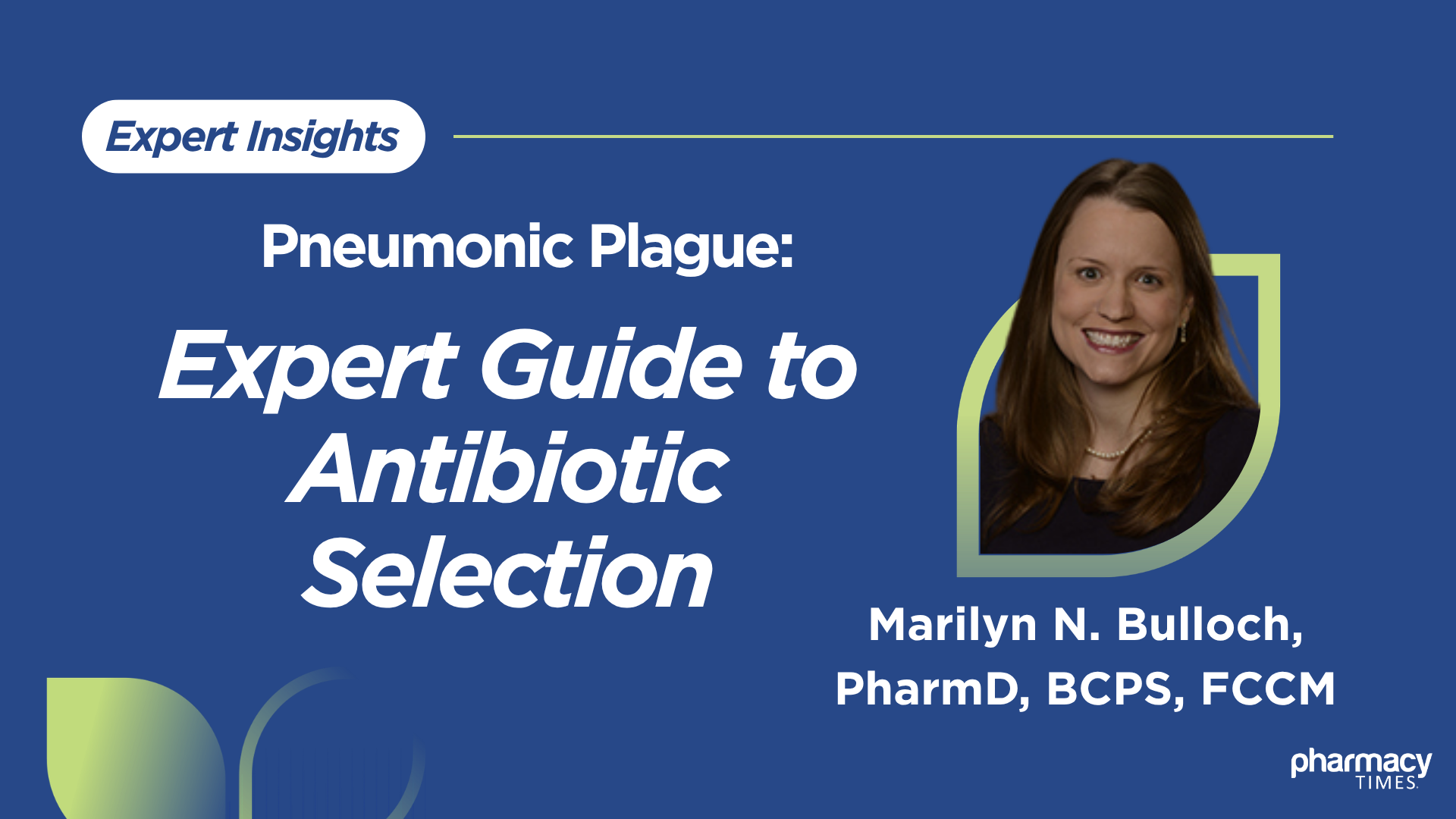
Emergency and ICU pharmacists would be most likely to see pneumonic plague. An expert reviews first-line agents, alternatives, and postexposure prophylaxis. Marilyn N.
Bulloch, PharmD, BCPS, FCCM, SPP, CPAFH, an associate clinical professor at the Auburn University Harrison College of Pharmacy, discusses pneumonic plague following the suspected death of a laboratory worker in Russia. She described how the infection presents, why antibiotics must start within 24 hours, and the first-line and alternative agents pharmacists should know, along with monitoring during the 2-week treatment course and postexposure prophylaxis for close contacts.
1 Marilyn Bulloch, PharmD, BCPS, FCCM, SPP, CPAFH: This is an interesting topic. Actually, it is one that our colleagues out in the western part of the U.S. are familiar with, because some may have treated this infection. Plague Is Not Just a Historical Infection From what we know, the pathogen involved in the lab incident in Russia involves Yersinia pestis.
This is the bacteria that caused the infamous Black Death during the Middle Ages and inspired the plague masks. A lot of people assume it is a historical infection that disappeared, but in reality, there are a handful of people who become infected every year. I think there is something like 5-7 cases on average each year in places like Arizona and New Mexico.
I believe it can be found in other western states too. From what I recall, there have been periodic plague epidemics in other countries in the past few decades. Most of the cases in the U.S. have caused bubonic plague, which is different from pneumonic plague despite being caused by the same bacteria.
Bubonic plague is usually caused by a bite from a flea who is transmitting it from an infected animal—like a rat (but there are SO many animals globally that can transmit this bacteria). It impacts the lymphatic system, and you get general sick symptoms like fever and headache, but the sort of telling symptom is the buboes—the swollen lymph nodes.
How Pneumonic Plague Presents Pneumonic plague is respiratory in nature, and because of that, it can be spread from human to human in droplets. While treating a patient with the plague can be scary, the bubonic form is less scary because it is an animal-human transmission. The symptoms with pneumonic plague are much more severe, and they appear and progress pretty quickly in most patients.
This correlates to historical records of the plague, where some patients would be exposed in the morning and dead by the evening. The average patient will have a high temperature, which may be higher than general fever thresholds (but may not in some patients such as older adults or those with immunosuppression).
Because it is in the lungs, they can have substantial shortness of breath and chest pain. Obviously being in the lungs, there is a very real possibility for pneumonia—and that’s what it may feel like to most patients. A severe pneumonia that set in really quickly.
There are a lot of reports of patients coughing up blood. Key Takeaways Pneumonic plague progresses quickly and can look like a severe pneumonia, and fever may be absent in older adults or patients with weakened immune systems. Antibiotics must start within 24 hours, with gentamicin and fluoroquinolones as co-first-line options and doxycycline or chloramphenicol reserved for patients who can’t take them.
Treatment runs about 2 weeks and requires monitoring for adverse effects like ototoxicity, and anyone within 6 feet of a patient without appropriate PPE needs 7 days of prophylactic antibiotics. Why Early Antibiotics Are Essential The good news is that if a person is particularly vigilant and seeks care quickly, it can be treated.
Unlike the Middle Ages (or the suspected outbreak in LA in the 1920s), we have antibiotics—and several antibiotics have coverage against Y. pestis. It is, however, essential to get the antibiotics in quickly—not just a best practice. Antibiotics need to be started within 24 hours to really have a chance at saving the patient’s life.
Honestly, this is not something the average community pharmacist will be facing—but our inpatient pharmacists, particularly those in the emergency rooms and ICUs, might. That is how sick these patients are. First-Line Options: Gentamicin and Fluoroquinolones Gentamicin and fluoroquinolones are co-first-line options, and even if available orally, the antibiotics need to be initiated as IV.
Some resources that I have seen recently only list ciprofloxacin or just ciprofloxacin and ofloxacin, but levofloxacin and moxifloxacin are both viable treatment options. I think ciprofloxacin gets mentioned more because it appears in older publications about the bacteria. With aminoglycosides, it is important to keep in mind the recommendation for use is primarily for gentamicin with some historical reference to streptomycin.
However, streptomycin is not used for much in general anymore; the average hospital will not have it readily available, and even if they do, few of their in-house laboratories are going to be set up to conduct the pharmacokinetic monitoring required (which is not the same as other aminoglycosides).
Other aminoglycosides like tobramycin and amikacin don’t really have human data to support their use in this situation. Alternative Agents and Their Limitations Tetracyclines, particularly doxycycline, also provide coverage against the bacteria. However, in pneumonic plague, there were inconsistent results in animal studies (thought to be due to animal pharmacokinetics), and because of this, they are currently considered when a patient cannot take either gentamicin or a fluoroquinolone.
In milder cases of Y. pestis, doxycycline has been shown to have a similar efficacy as gentamicin—but in terminal stages (which, honestly, is where we will see most patients with pneumonic plague by the time they get to us), doxycycline was not as effective. Chloramphenicol is another potential option—but its side effect profile and risk of aplastic anemia are real concerns.
Still, if patients cannot take one of the other options, it should be considered. Considerations in Children and Pregnancy I would point out that this is one of the few exceptions to the “avoid in pediatrics” rule that we usually associate with tetracyclines and fluoroquinolones. The CDC recommends their use in children as young as 1 month because of the severity.
Fluroquinolones (specifically ciprofloxacin and levofloxacin) can be considered for pregnant women (side note – tetracyclines should still not be used unless there is absolutely no other option for pregnant women). I might prefer aminoglycosides for treatment if possible, but for prophylaxis, where an oral agent might be preferred, they could help provide necessary antibiotics without requiring hospitalization.
Sulfa antibiotics have been used in the past, but they do not have as good of a success record as the other options. Patients treated with drugs like TMP-SMX tend to stay sicker longer than has occurred with the other antibiotics. Treatment Duration, Monitoring, and Prophylaxis Treatment is going to be for about 2 weeks, so adverse effects that may not be as evident with shorter courses (e.g., ototoxicity with aminoglycosides) must be monitored.
A lot of these adverse effect considerations impact patients after the antibiotics are complete—like tendon issues with fluoroquinolones or hearing loss with aminoglycosides. Doses are usually normal doses—but at the higher end of the dosing range. Because of the severity of the condition, anyone who has been within 6 feet of a person with pneumonic plague without appropriate PPE requires prophylactic antibiotics (recommendation is for 7 days)—generally the same options as treatment—though oral agents can and should be used.
REFERENCE 1. Halpern L. Pneumonic plague: Symptoms, antibiotics, and current US risk.
Pharmacy Times . Published October 8, 2026. Accessed October 9, 2026. https://www.pharmacytimes.com/view/pneumonic-plague-symptoms-antibiotics-and-current-us-risk Newsletter Stay informed on drug updates, treatment guidelines, and pharmacy practice trends—subscribe to Pharmacy Times for weekly clinical insights.
Subscribe Related to this article
Article text via FreeNewsAPI. Rights remain with Pharmacy Times.
Read on publisher site → Opens Pharmacy Times in a new tab