Possible New Dwarf Planet Identified Orbiting Beyond Pluto
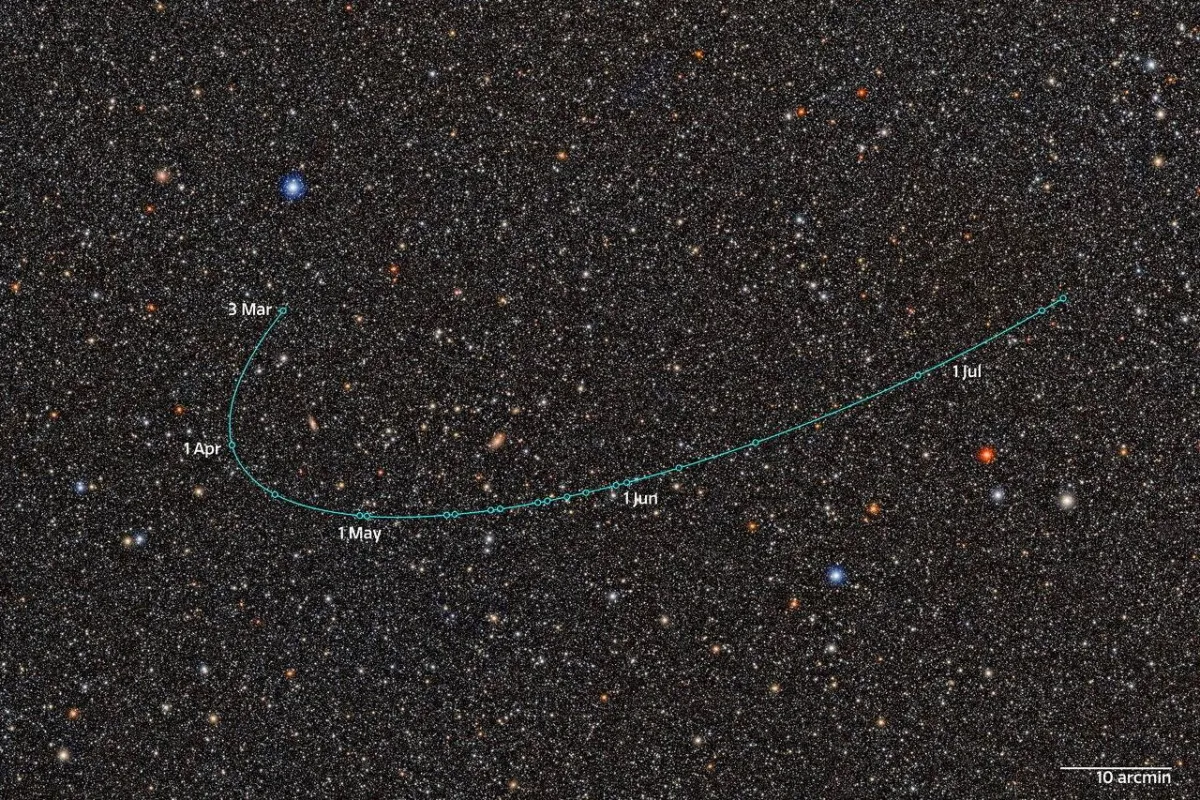
Scientists using a Chile-based telescope have identified an icy object orbiting beyond Pluto that may join our solar system's small roster of dwarf planets. Researchers said the candidate, named 2026 ED138, has a diameter estimated at between roughly 370 and 930 miles (600 and 1,500 km) and is orbiting about 46 times farther from the sun than Earth. By way of comparison, Pluto orbits at an average of about 40 times farther from the sun than Earth.
Climate change must be declared a "global health emergency" to shape governments' policies after heat caused three million deaths between 2016 and 2023, a report in The Lancet said Wednesday. Published by the British medical journal ahead of the COP 31 climate summit in November, the 10th edition of the report brought together 146 researchers from 30 countries to assess the impact of climate change on the health of the world's population.
It said there were a record 710,000 heat-related deaths in 2023 with more than 70 percent of that toll linked to human-caused climate change. Marina Romanello, the executive director of the health and climate research project Lancet Countdown, said there were "three million heat-related deaths globally in an eight-year span since the Paris Agreement" of 2015.
"That's roughly equivalent to the entire population of Wales being wiped out in the space of eight years due to heat," she told a news conference, according to AFP. And "68 percent of those deaths are directly attributable to climate change." The legally binding international climate treaty adopted in the French capital aimed to limit global warming to well below 2C and pursue efforts to keep it to 1.5C compared to pre-industrial levels.
Romanello said the global health emergency due to climate change should have "an integrated approach so that we're not responding to emergency after emergency.” Instead she called for "a cohesive long-term response that builds resilience, builds capacities, and builds the possibilities of countries to avoid further emergencies moving forward.” To determine the share of deaths attributable to warming caused by human activity, the researchers compiled the number of heat-related deaths recorded by states, then subtracted those that would have occurred in the absence of climate change, said Professor Ollie Jay of the University of Sydney.
Jay said the intensity and frequency of periods of intense heat were amplified by climate change, pointing out that last year an extreme drought affected more than half of the world's land surface for at least one month. By reducing worker productivity, warming has cost the global economy more than one trillion dollars per year over the past three years, the researchers said.
Southeast Asia and Africa, the hardest-hit regions, are estimated to have lost the equivalent of 3.9 percent and 3.2 percent of their GDP, compared with 0.2 percent for Europe and 1.5 percent for the Americas. However, there has been concrete progress in some areas. Since 2016, 56 of the WHO's 194 member states have adapted their health and early-warning systems to anticipate extreme events.
Investment in clean energy reached $2.1 trillion in 2025 -- double that of the amount invested in fossil fuels, which cause climate change. However fossil fuels still account for 80 percent of global energy, causing air pollution that results in 2.73 million deaths per year, the study said.
Meanwhile, roughly 323,000 deaths have been avoided in "at least" 77 countries where air pollution from fossil fuels has fallen since 2016, according to the report. Although funding for climate-related medical research has increased sevenfold to reach $316 million in 2024, 84 percent of these funds go to researchers in wealthy countries, even though the least developed nations are the most affected by the growing climate-related health threats.
Romanello said this year for the first time the researchers' work was complicated by the disappearance of certain data sources, particularly from the United States, such as fossil fuel subsidies, which have not been made public by the US authorities. And for the past two years, global geopolitical instability has pushed global warming and its health impact into the background, she said, stressing that inaction was exacerbating the situation.
Article text via FreeNewsAPI. Rights remain with Asharq Al-Awsat English.
Read on publisher site → Opens Asharq Al-Awsat English in a new tab