Researchers identify three atmospheric states of SIMP 0136 using Webb data — ScienceDaily
Researchers at Trinity College Dublin analyzed observations from the James Webb Space Telescope and identified three recurring atmospheric states of the brown dwarf SIMP 0136, located about 20 light-years...
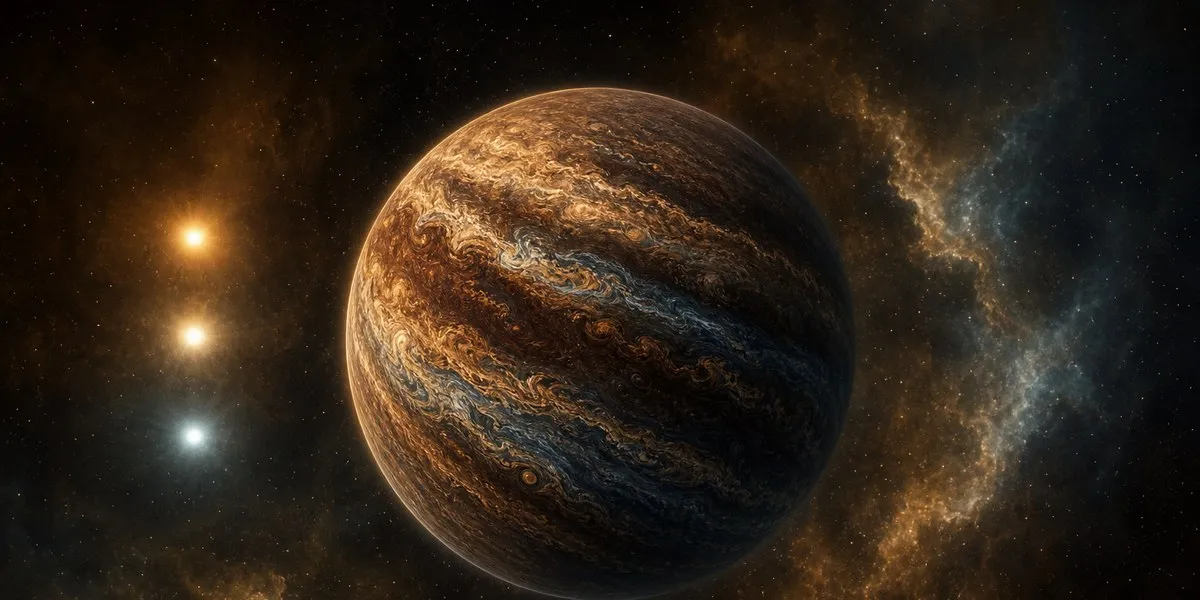
Researchers at Trinity College Dublin analyzed observations from the James Webb Space Telescope and identified three recurring atmospheric states of the brown dwarf SIMP 0136, located about 20 light-years from Earth. As ScienceDaily reports , most changes in the object's atmosphere are explained by two main factors: temperature fluctuations and changes in the vertical structure of clouds.
Analysis of brightness changes The team used principal component analysis, a mathematical tool for identifying the strongest patterns in large datasets. The scientists tracked how the light from SIMP 0136 changed as the object rotated, bringing different areas of its atmosphere into view.
The sensitivity of Webb's instruments made it possible to detect very small brightness fluctuations. The researchers did not begin the analysis with detailed assumptions about the atmosphere's behavior: the method made it possible to isolate dominant processes, separating them from minor fluctuations and random noise in the measurements.
More current news is available on the UA.News Telegram channel Telegram . The study, published in the journal Astronomy & Astrophysics, showed that nearly all recorded atmospheric variability can be described by two dominant components. Some areas are hotter and have thinner clouds, while others are cooler, with thicker cloud layers extending higher into the atmosphere.
These factors persisted for more than a dozen rotations, although the detailed appearance of the atmosphere changed. Significance for exoplanets SIMP 0136 is a brown dwarf, an object larger and hotter than a typical gas giant but not massive enough to shine like a star. Such objects can be observed directly, allowing atmospheric processes to be studied that are more difficult to investigate in most exoplanets.
The new approach may help identify the processes responsible for major atmospheric changes more quickly before more complex computer models are applied. It can be used to study other brown dwarfs and giant exoplanets, including the analysis of cloud formation, heat transport, and atmospheric circulation.
Article text via FreeNewsAPI. Rights remain with UA.NEWS.
Read on publisher site → Opens UA.NEWS in a new tab


