The hidden impacts on Ukraine and its people after years of war
The Russian bombing of Kyiv has continued for nearly five years now, and the strain on Ukrainian society is tangible. Those who fight are exhausted and resent those who don’t, writes Lindsey Hilsum.
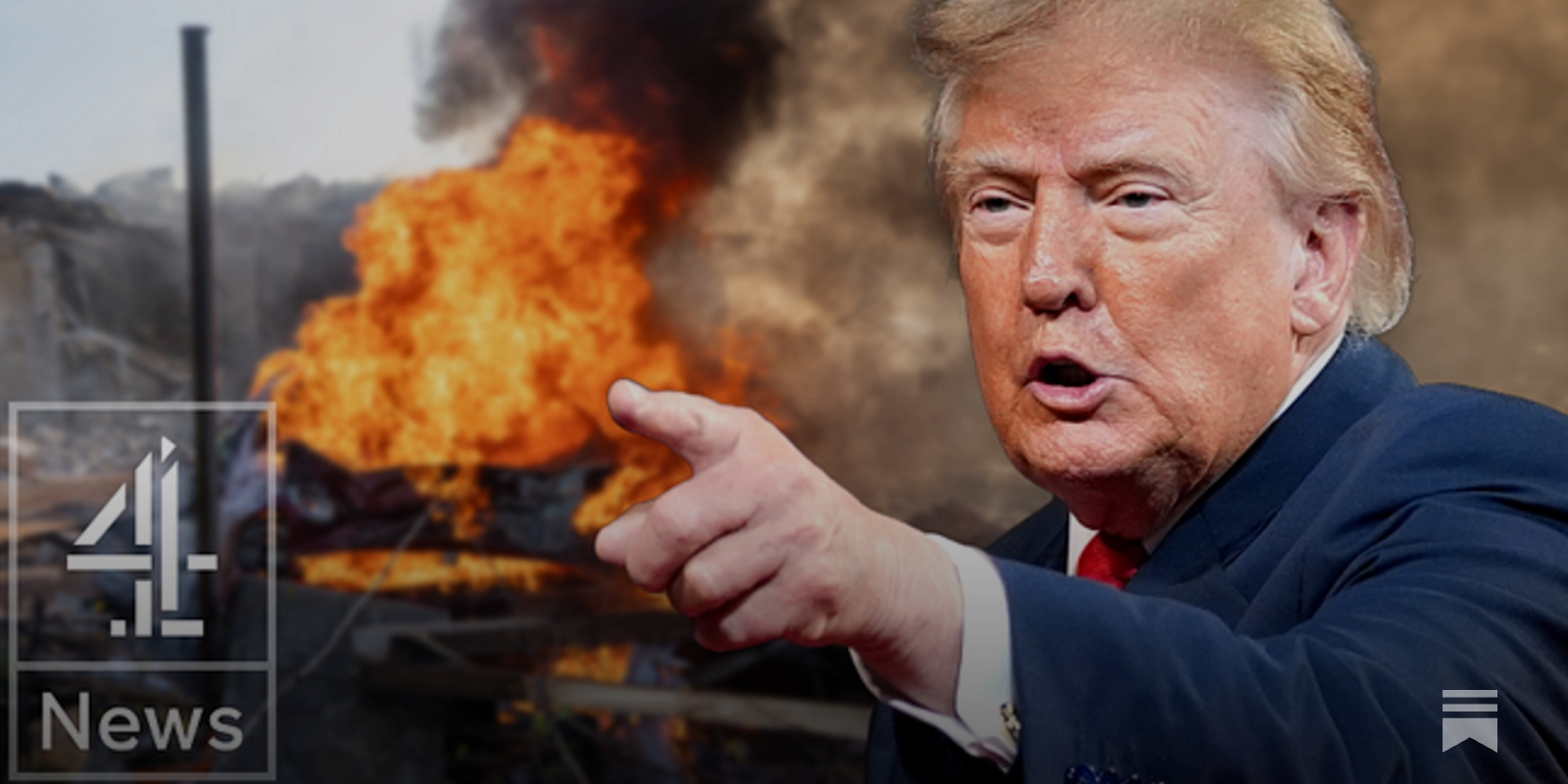
It’s hard being Donald Trump. You think the world should bend to your will and it stubbornly declines to do so. Take the war in Ukraine.
Not only does President Zelenskyy refuse to stand down, but his country has not rolled over and surrendered to Russia. And the diesel deal you did with your friend President Putin won’t solve the problem of high gas prices in the US, which were caused by the war you started with Iran.
You’re reading the latest edition of FourGround , a bespoke newsletter brought to you by Channel 4 News’ experienced journalists reporting on the ground from locations across the world. Some might argue that it’s harder being my friend Olha, who lives in a highrise in Kyiv. “Apologies for not replying sooner, but yesterday was a tough one and even coffee didn’t do its magic,” she messaged me this morning.
After weeks of relentless Russian airstrikes , many of which are getting through because the US is no longer supplying Patriot missile interceptors, I had WhatsApped her to check she was okay. “It’s more challenging lately, but still manageable,” she wrote. “We are back to having power cuts, sometimes after pressure in the pipes goes down a bit.” And then, in characteristic fashion, she thought about me, not herself.
“Please bring warm clothes with you on your next visit as it’s going to be a very deep autumn here and not the cosiest period.” It is indeed not the cosiest period in Ukraine. In Britain, people like to conjure the “Blitz Spirit,” the supposed patriotism and unity of purpose that kept Britons going during the German attacks on cities during WWII.
But the Blitz only lasted eight months - September 1940 to May 1941 - and historians suggest that the much-vaunted spirit was more propaganda than reality. Crime rose, the wealthy retreated to their country homes, and black market traders profited from the deprivation of others. Olha’s generosity, good nature and determination keep her going, but the Russian bombing of Kyiv has continued for nearly five years now, and the strain on Ukrainian society is tangible.
Young men I have met who choose not to fight hide guilt with bravado. Videos circulate of men being captured on the streets by plain clothes police to apparently force them to go to the front. Those who do fight are exhausted, and resent those who don’t.
Women who fled to other European countries with small children in February 2022 are alienated from the husbands they left behind. The children no longer know their fathers. In my book, I Brought the War With Me; Dispatches and Poems from the Front Line, I write about Izium, which was occupied by the Russians early in the war, and then recaptured by the Ukrainians.
A couple told me about their neighbours who, they said, had collaborated with the Russians. Maybe they did, or maybe they just compromised their principles a little in order to stay alive. Either way, suspicion lingers, and will pollute relationships for years to come.
Who is a traitor, and who a survivor? Who will decide in the reckoning that will follow the war? In our reporting of Ukraine, we focus a lot on the tech and the bravery.
The new AI-enabled drones that have changed the battlefield and redefined the nature of warfare in the 21st century. The arms race between Russia and Ukraine as both sides try to gain the technological edge. Ukrainians like Ksenia Arkhipova in my colleague Paraic O’Brien’s story yesterday , pictured on the right below, who risk their lives to rescue others from Russian occupation.
But I find myself thinking about the long-term impact of the war, hidden and not-so-hidden, on a people and a society. And the man in the White House, whose decisions on whether to grant or deny intelligence, to boost or further sanction President Putin, to turn on or off a key satellite facility, will change the lives of those living through years of conflict, whose lives he has neither the empathy nor the desire to imagine.
Share Channel 4 News Leave a comment
Article text via FreeNewsAPI. Rights remain with Channel 4 News | Substack.
Read on publisher site → Opens Channel 4 News | Substack in a new tab


