This device aims to detect a pressure injury before it becomes deadly
A device that fits in the palm of your hand could be the key to detecting a hidden and potentially deadly risk to the human body. It’s a personal issue for Marjan Monfared, who developed the PrevenTherm...
A device that fits in the palm of your hand could be the key to detecting a hidden and potentially deadly risk to the human body. It’s a personal issue for Marjan Monfared, who developed the PrevenTherm Monitoring System , a prevention and patient management tool. Her maternal grandmother Mitan developed a pressure injury while hospitalized in an ICU in her home country of Iran.
She had just had surgery to address a stomach tumor, and died as a result of complications of a bone infection from the pressure injury, she said. “She was like my guardian angel,” she said. “I feel her [like] when you walk barefoot on the soft grass and the sunlight hits your back in early April.
She was that for me.” This pivotal event in Monfared’s life inspired her to develop a monitoring system for this condition. Through her startup Leaf Guardian, the PrevenTherm device uses thermal imaging and AI analysis to detect when and where a patient in an ICU may be developing a pressure injury.
Aliquam luctus scelerisque rutrum. Aliquam erat volutpat. Quisque a ornare nibh.
Maecenas efficitur at lacus vitae tempus. Praesent lobortis diam vel mollis tincidunt. Morbi lacinia sodales metus id malesuada.
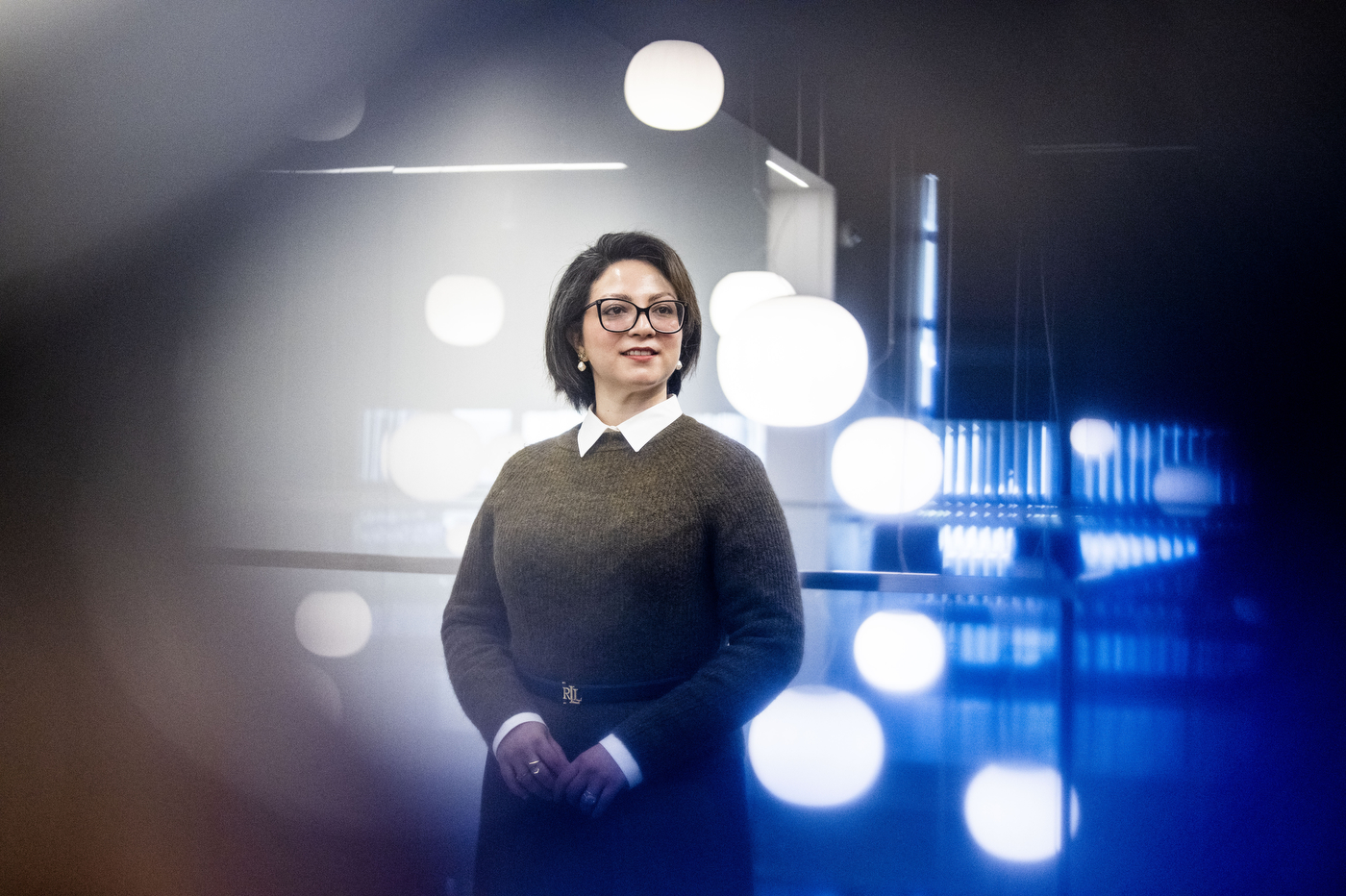
09/24/26 – BOSTON, MA. – Marjan Monfared, a Women Who Empower award winner, poses for a portrait on Sept. 24, 2026.
Monfared created a device called Leaf Guardian which helps measure and monitor pressure injuries and assists with nurse documentation. Photo by Matthew Modoono/Northeastern University 09/24/26 – BOSTON, MA. – Marjan Monfared, a Women Who Empower award winner, poses for a portrait on Sept.
24, 2026. Monfared created a device called Leaf Guardian which helps measure and monitor pressure injuries and assists with nurse documentation. Photo by Matthew Modoono/Northeastern University Marjan Monfared was named a fellow of the 2026 Women Who Empower Innovator Awards for her PrevenTherm device.
Photos by Matthew Modoono/Northeastern University A pressure injury happens when continuous pressure is applied to the soft tissue and can squeeze the blood vessels and cause ischemia, which is the reduced flow of blood and oxygen to the soft tissue. This can lead to tissue death, the permanent decline of cells and tissue, or even bone infections.
These injuries, more commonly known as bedsores, typically occur when someone is confined to a bed or chair. But they can develop anywhere on the body, even on the tip of one’s ear, from the pressure of things like face masks or casts. Pressure injuries can be dangerous and costly.
Each year, 60,000 people die from pressure injury-related complications in U.S. hospitals, according to the American Hospital Association. Each injury can cost from $2,000 up to $150,000 to treat. Monfared’s device is used to scan the ICU patient’s body to get a baseline thermal reading, and then is installed above the patient’s bed for continuous monitoring.
Parts of the body that lack heat could indicate a pressure injury, since there is no blood flowing to that area. Conversely, a spike of heat could point to an infection. For her venture, Monfared was named one of eight fellows of the 2026 Women Who Empower Innovator Awards , a Northeastern program that invests in founders across categories of AI, technology, health, arts, entrepreneurship and social change.
“I was so grateful,” she said in an interview with Northeastern Global News. “In a deeper sense, more than gratitude, is acknowledgement. It’s an acknowledgment so important because it’s like water.
Water is the only thing that the community pours upon you. Water is a blessing.” Her grandmother, who was a nurse, would teach Monfared about the healing power of plants she grew in her home garden. Monfared wanted to become a physician growing up.
But she pursued a bachelor’s degree in mechanical engineering because it offered her a better chance at leaving her home country because there were greater job opportunities abroad, and hardly any scholarships for expensive medical degrees available in Iran. The device the Monfared developed helps continuously monitor patients to track any development of pressure injuries.
Courtesy image While there, a professor told her she could combine these interests through biomedical engineering, and she worked on a wearable EKG monitor with a neighboring university. Monfared would end up moving to the U.S. and earning a graduate degree in civil engineering, working in this field for several years.
But medicine still called to her. Monfared pursued an MBA at the D’Amore-McKim School of Business, two years after her grandmother passed, because “I was a good engineer, but I didn’t have the business acumen.” During her time at the business school, she won a grant through the Srinivasan Family Awards at Northeastern’s Center for Emerging Markets, established for people trying to solve problems in countries that are transitioning from lower to higher income.
This award helped her travel to India where she met with hospital representatives and entrepreneurs and tested her device. Ravi Ramamurti , University Distinguished Professor of International Business and Strategy and director of the Center for Emerging Markets, said Monfared has what it takes – passion and tenacity – to be a successful entrepreneur.
“Even if they don’t succeed with the ventures or ideas we support, we think these are life-transforming investments,” Ramamurti said of the development Northeastern afforded the award recipients. “Marjan is one of those people who has really taken full advantage of that and grown, and she’s run with it.” Monfared said she hopes this device can be the “Superman cape” for the healthcare industry.
“At the human level, we all have a certain capacity,” she said. “I believe AI, if it has been built and integrated well, can unlock a future that is more bright, safe and happy, truly, for everyone.”
Article text via FreeNewsAPI. Rights remain with Northeastern Global News.
Read on publisher site → Opens Northeastern Global News in a new tab