Ueno Bank collapse in Paraguay prompts President Santiago Peña to resign
A sudden blank screen startled the almost three million customers of Ueno Bank in the early hours of Tuesday 3 November. At around 03:24, the app of the Paraguayan institution, a key player in the system that...
A sudden blank screen startled the almost three million customers of Ueno Bank in the early hours of Tuesday 3 November. At around 03:24, the app of the Paraguayan institution, a key player in the system that manages state funds worth millions and has grown at breakneck speed in its three years of existence, stopped displaying users' accounts and showed a single message: "We cannot display the balance".
At the same time, the Central Bank of Paraguay issued a tough statement on its social networks: the institution was being taken over and its liquidation process was beginning. This "resolution procedure" for Ueno Bank was triggered by a broader financial alarm after a critical collapse in its solvency ratio was detected, which had fallen below 50%.
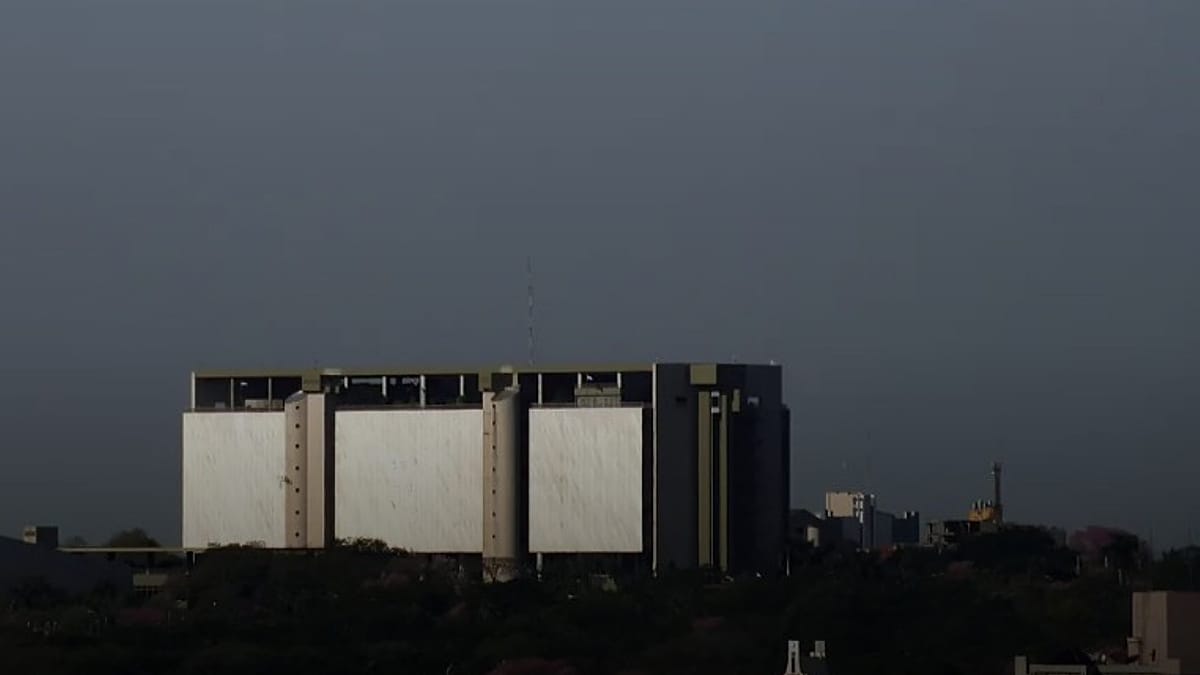
The impact was immediate and set off an unprecedented political earthquake that has ended the government of Santiago Peña. Since Tuesday, crowds of angry users have gathered around the headquarters in Asunción and the country's 75 branches in an attempt to save their money. The scene outside the branches, closed and guarded, has turned into one of extreme tension and desperation .
The distress in front of the branches translated into daily emergencies that quickly became unsustainable. Some people, in tears, begged to withdraw their money to pay for medicine for a seriously ill child ; a few kilometres away, a construction worker was just as desperate when he realised that, without access to his savings, he would not even be able to buy food for his children that day .
The spectre of the corralito The bank held around 850 million dollars (about 758 million euros) in public funds , including money from the Social Security Institute that underpins pensions and healthcare for workers. The spectre of an Argentine-style corralito immediately set off alarm bells among the population.
"Who will answer for a lifetime of savings? Will there be impunity?" read the placards held by demonstrators standing their ground outside the bank's offices. The whole country held its breath ahead of the press conference by the Central Bank of Paraguay (BCP) .
The official confirmation was categorical: "We proceeded to close the institution; neither the app, nor the cards, nor any service is active from today," said board member Liana Caballero. It was of no use that the authorities tried to calm tempers by reminding people that the law provides for a guarantee fund to reimburse each client up to 75 minimum wages (around 228 million guaraníes or 37,700 dollars, about 33,620 euros); mistrust and suspicion had already taken hold on the streets.
Impeachment of Peña and legal clampdown The opposition points to the BCP leadership as accomplices by omission in the fraud, but the coup de grâce is aimed directly at the head of state. Santiago Peña has found himself in the eye of the storm : at the request of 35 lawmakers, the Chamber of Deputies was to meet tomorrow in an extraordinary session to vote on whether to open impeachment proceedings against him, but President Santiago Peña has decided to resign beforehand.
The indictment accuses Peña of "poor performance of his duties", backed by serious charges ranging from conflict of interest and alleged embezzlement of pension funds to giving institutional protection to the Central Bank. In the midst of the storm, the president cancelled his entire official agenda on Wednesday and chose to remain silent until late in the afternoon, when he reappeared online to announce the departure of the head of the central bank and to call on the courts to establish responsibility.
The legal net closed in on Wednesday with the arrest of eight senior executives of the bank, including its chief executive, Miguel Vázquez. At the same time, the knock-on effects quickly hit the real economy: the Association of Importers and Traders warned of an immediate 35% slump in sales at the country's major retailers .
With money blocked and out of reach, domestic consumption ground to a halt overnight. Football, advertising and an inevitable collapse In a country of just over six million inhabitants, the Ueno Bank app went far beyond the financial sphere . Owned by the influential Grupo Vázquez and instantly recognisable for its fluorescent green look, the bank boasted that it had buried the heavy bureaucracy of the country's traditional agrarian republic.
Its presence was ubiquitous in the media and in the sponsorship of the country's most important football clubs , such as Cerro Porteño and Olimpia, as well as the iconic Defensores del Chaco stadium. Only a few days earlier, the bank had been flaunting an ambitious 100 million dollar capitalisation plan .
However, behind the advertising façade and sporting patronage, the Superintendency of Banks uncovered a grim and unsustainable accounting reality: the institution was unable to meet a legal reserve requirement of 70 million dollars (62.427 millones de euros) demanded by the central bank.
The financial collapse was a matter of numbers, and the ensuing explosion, pure political dynamite . An economist with a technocratic profile and a former official of the International Monetary Fund, Santiago Peña came to power in 2023 promising to turn the country into a magnet for foreign capital.
Although under his mandate Paraguay has posted one of the strongest rates of economic growth in South America, the sudden banking collapse has plunged the president into the most critical moment of his term.
Article text via FreeNewsAPI. Rights remain with Euronews.com.
Read on publisher site → Opens Euronews.com in a new tab