What Kiwi buyers need to know before snapping up a tropical getaway
Kiwi holidaymakers relaxing into a Fiji break often dream of buying a home by the beach. Properties up for grabs in the country come with promises of paradise, but what are the upsides and downsides of island...
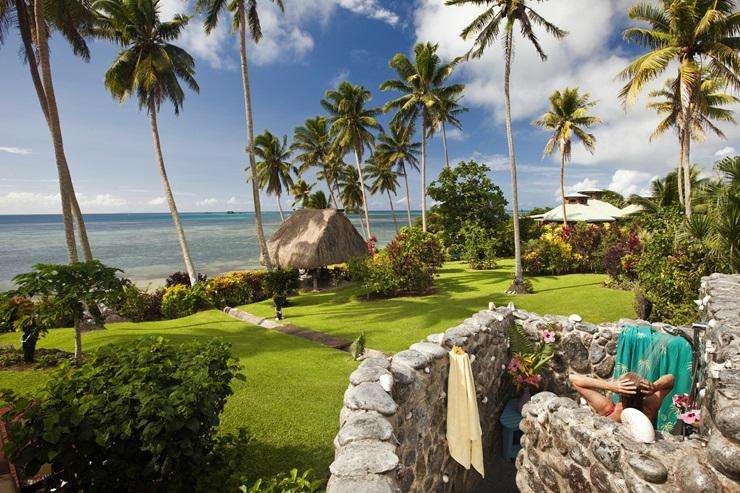
Kiwi holidaymakers relaxing into a Fiji break often dream of buying a home by the beach. Properties up for grabs in the country come with promises of paradise, but what are the upsides and downsides of island real estate? Unlike many Pacific islands, Fiji allows foreigners to buy property, but some restrictions apply.
Understanding what can and can’t be purchased is essential to avoid costly mistakes. Under the rules, a Kiwi buyer can purchase freehold land outside town boundaries, and apartments and strata units in integrated resort developments such as Denarau Island. They would be excluded from buying iTaukei (native) land, which makes up 87% of the country, and state land, although it is possible to lease both.
Professionals Fiji Real Estate owner Baron Bruno sells a steady stream of properties to New Zealanders. Some want a holiday home that can also earn them money; others want a permanent spot for when they retire or are looking for business or agricultural opportunities. Most buyers concentrate their searches in the two main islands, Viti Levu and Vanua Levu, Bruno said.
Sales were dented in the past by political instability, and then the Covid pandemic, but now, with rising uncertainty elsewhere in the world, people are rethinking where they want to live and spend their time. “You can enjoy yourself and have a decent lifestyle, whether it's a full-time move, part-time holiday home or an investment, rental income investment property,” he said, noting that the warmer climate was a big draw for Kiwis.
Bati Ni Wai Tui on Malolo Island is looking for buyer with FJ$20m to spend. Photo / Supplied More affordable but just as stunning is a five-bedroom waterfront home in Denarau for sale for FJ$5.95m. Photo / Supplied “Fiji offers a nice tropical lifestyle, especially for South Island Kiwis who are subjecting themselves to pretty cold weather." Bayleys Fiji managing director Philip Toogood told OneRoof that prices range between FJ$20m and FJ$30m at the top end of the market.
One of his listings, 36 Vunabaka, Malolo Island , is an example of what buyers can get for that money. The eight-bedroom beachfront home sits on 2484sqm of land and bears the imprint of New Zealand architect Richard Priest and interior designer Kathleen Bowen. These types of properties are outside the reach of most Kiwis, but the next tier down does attract buyers who are willing to pool their resources.
It is quite common to find families owning a share of a FJ$10m to FJ$20m home. Toogood points to the recent sale of an FJ$18.5m home on Denarau to a group of five Kiwi families. "The price was a record for Denarau, substantially above the previous record sale.” He said most Kiwi buyers were looking in the FJ$4m to FJ$10m price bracket.
“The last one we sold a couple of weeks ago was for FJ$4.6m. That's [the level] generally where the Kiwis come in. Prime waterfront [property] in that lower price range sells pretty quickly.
That's the stock that we love to have." Discover more: - Kiwi billionaire sells beachfront estate for $40m - Desperate $1 auction as lender turns the screws - What Jacinda Ardern got for her Auckland bungalow Bruno also has a home in that price range in Denarau. His listing describes an “extraordinary executive-class, double-storey waterfront villa that defines tropical luxury, privacy, and investment excellence.
Fully furnished, self-contained, and family-friendly, this stunning residence is set on a generous 1,000 sqm (one quarter acre) freehold land block with sweeping views of the Sleeping Giant mountains, tranquil mangroves, and Denarau Island’s world-renowned Superyacht Marina." Also popular with Kiwi buyers are apartments in the Radisson Blu Resort, Hilton Fiji Beach Resort and Spa and Sheraton resorts on Denarau, mainly due to the yield owners can get.
"Those are very popular with investors. We have several hundred people on a waiting list currently for those. People are also looking to set up a little Airbnb apartment to get rental income here,” Bruno said.
The agent told OneRoof that he often asked potential clients: “Why Fiji? What is alluring about this place to you? Is it that you're just curious?
Is it you came here as a child? What are your goals? What is your budget?
What type of property interests you? There's a diversity of opportunities here depending on your goals, your timing and your budget." Sometimes, however, buyers are looking to start a business, such as farming cocoa, rice, coffee, ginger or turmeric, he said. “High-margin products, shifting away from sugar, growing sugarcane.” A luxury property at Marina Point, in Denarau Island, recently sold for FJ$4.6m - the price point most Kiwi buyers come in at.
Photo / Supplied Clients sometimes assumed that getting finance was difficult, but, said Bruno, the reality was that if they had a good deposit, getting a mortgage was reasonably straightforward. “Most people assume you can only pay cash in Fiji. That's not the case.
You can borrow money here.” The major Fijian banks lend to foreigners for property purchases, Bruno said, noting that the deposit required ranged between 25% and 50%, depending on the security offered. Those banks include local operations belonging to ANZ and Westpac , and other names that are lesser known in New Zealand, including Bank of Baroda , BRED Bank , BSP and HFC Bank .
Each has its own rules and lending rates. Buyers should also familiarise themselves with Fijian real estate law and engage local experts to avoid making costly mistakes. Nadi-based lawyer Varunendra Prasad, a partner at the 122-year-old law firm Cromptons Solicitors, said the laws governing land tenure were especially relevant as the rules weren’t always straightforward.
“They have specific designations which we can check with the Department of Town and Country Planning. Where the boundary is to a township or a city,” Prasad said. “To be 100% sure, it's best to check with the local authority instead of trying to guesstimate.” Fiji's climate and stunning beaches are big drawcards for tourists and buyers.
Photo / Getty Images Another example is the one-acre rule in the Land Sales Act, which trips up some buyers. “If a foreigner is buying anything over an acre, it requires consent,” Prasad said. Some foreigners mistakenly believe they can buy more than four quarter-acre sections, not realising the rule is cumulative.
“It’s total landholding.” And while a foreigner can buy up to an acre from a Fijian citizen without consent, ministerial consent would be required if both the buyer and the vendor were foreigners. That’s because there are different rules for foreigners buying from other foreigners and foreigners buying from a Fijian citizen.
Another law that could potentially trip foreigners up is that if they buy bare land, they must complete a building project on the land within five years and spend at least FJ$250,000 on the construction. Prasad said legal fees range from FJ$3500 to FJ$5000 plus VAT for a typical purchase, but those involving complicated leaseholds would require more time and money.
Valuation costs can vary, but flying a valuer to an outer island would be more expensive than getting a valuation for a property near the biggest towns. Most purchasers need to get tax advice from an accountant or tax adviser regarding double taxation laws between Fiji and New Zealand and other tax-related issues.
Buyers purchasing a property would need a Fiji tax identification number, said Prasad. Foreign sellers are generally liable for 10% capital gains tax (CGT). They also need to be aware that they may need the approval of the Reserve Bank and a tax clearance certificate before they can take their money out of Fiji after selling.
Prasad said buyers should also be aware that laws can change. “Sometimes the law here changes overnight in the budgets.” For example, letting properties on Airbnb is currently legal, but the rules could change at any time. Insurance is another issue to consider.
Prasad recommends that all buyers get fire insurance and consider getting cyclone insurance as well. Prasad also warned that real estate agents were not regulated in the same way as they were in New Zealand. In the past it had been “the wild, wild West”, but the Real Estate Agents Licensing Board recently announced a mandatory Code of Conduct which came into effect in August .
It covers honesty, fiduciary duties and professional standards. Other issues that buyers need to be aware of include the sudden hits to tourism from events such as the highly publicised drug and HIV crisis affecting the country. - Click here to find more properties for sale in Fiji
Article text via FreeNewsAPI. Rights remain with OneRoof.
Read on publisher site → Opens OneRoof in a new tab


