Animal throat bones from China point to possible milk suckling — Science News
A study of a fossil from Inner Mongolia in China has shown that the semiaquatic animal Megacauda sungei, which lived about 165 million years ago, may have been able to suck its mother’s milk as a juvenile. An...
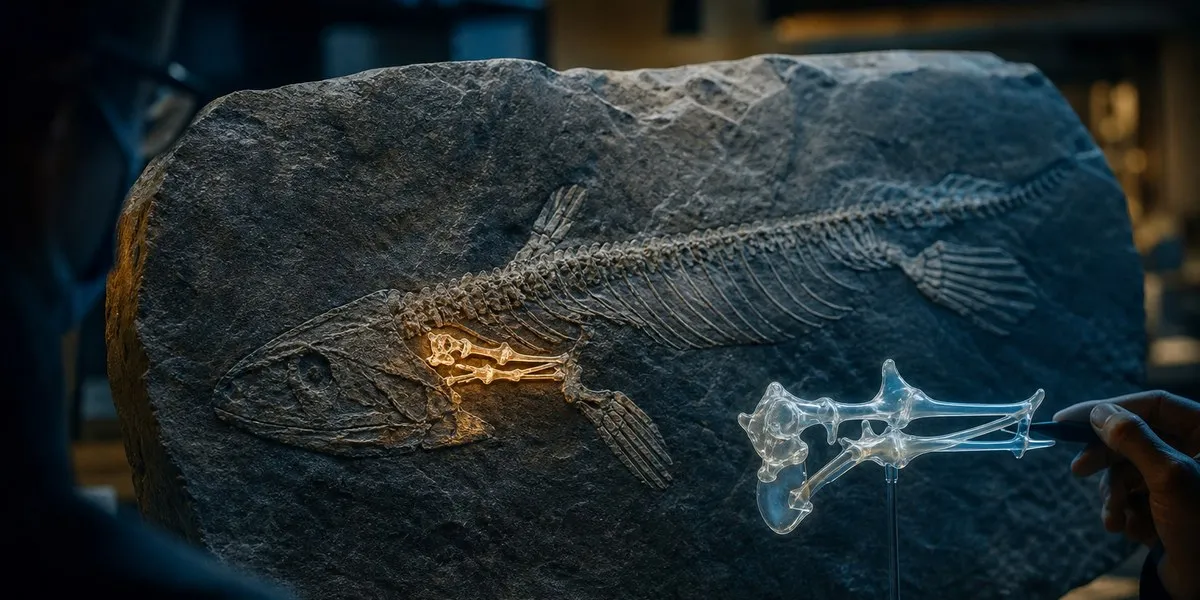
A study of a fossil from Inner Mongolia in China has shown that the semiaquatic animal Megacauda sungei, which lived about 165 million years ago, may have been able to suck its mother’s milk as a juvenile. An analysis of its throat bones indicates the presence of anatomical structures needed for suckling and swallowing without food entering the airways, Science News reports .
Rarely preserved throat bones Local farmers found the fossil in late 2015 in an abandoned quarry in the Xia Yingzi area. The dark bones were embedded in a dark stone slab, making them difficult to study. In 2022, an international group led by paleontologist Zhe-Xi Luo of the University of Chicago and specialists from the Liaoning Paleontological Museum at Shenyang Normal University used X-ray fluorescence to more clearly separate the bones from the rock.
Continue reading
Watch a short ad to unlock the full article
The rest stays locked if you skip or close the ad early.
Scientists classified the animal as a docodont, a large and diverse sister group of modern mammals that became extinct about 100 million years ago. The absence of milk teeth indicates that the individual was an adult at the time of death. It weighed an estimated 1 to 2 kilograms, was about twice as heavy as related animals of that time, and was the largest among representatives of its species.
Swimmer and predator The nearly complete skeleton indicates that Megacauda sungei spent a significant part of its life in water. It had a broad, flattened tail with enlarged bones, similar to the tails of modern platypuses and beavers, indicating its ability to swim. The name Megacauda partly means “large tail.” More current news is available on the UA.News Telegram channel Telegram .
Computed tomography of fossil fragments showed that the animal had short legs and long feet. This structure likely enabled it to move both on land and in water. Its teeth resembled cutting blades and were adapted for hunting live prey, including salamanders, fish, and other aquatic invertebrates.
Anatomical signs of suckling The most important discovery was parts of the palate and small hyoid bones that support the tongue. In modern mammals, these structures support the soft palate and muscles that move food through the throat and prevent it from entering the airways. The researchers virtually reconstructed Megacauda’s throat muscles by comparing its remains with the anatomy of modern animals, including opossums.
The study’s authors concluded that Megacauda likely drank, swallowed, and suckled milk similarly to modern mammals. At the same time, paleontologists note that soft tissues, including mammary glands, are not preserved in the fossil record. Therefore, it is difficult to determine exactly when milk feeding emerged.
Article text via FreeNewsAPI. Rights remain with UA.NEWS.
Read on publisher site → Opens UA.NEWS in a new tab