Scientists build nuclear clocks for the first time — Nature
Two research groups have built nuclear clocks for the first time — ultra-precise devices that measure time using transitions in atomic nuclei. Nature reports that the result has been described as an important...
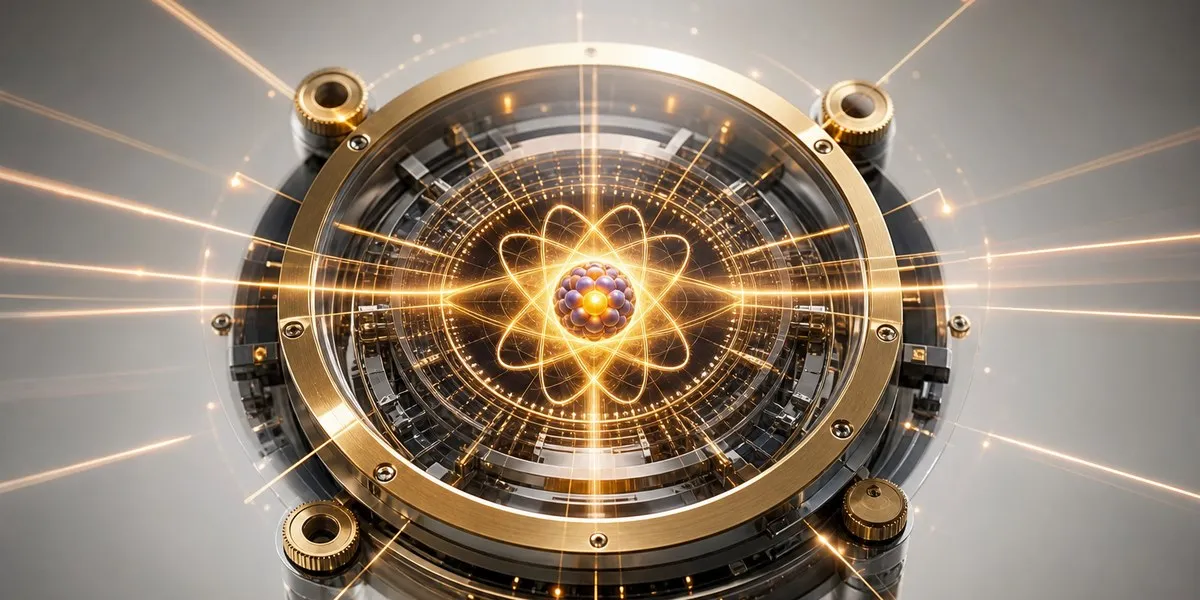
Two research groups have built nuclear clocks for the first time — ultra-precise devices that measure time using transitions in atomic nuclei. Nature reports that the result has been described as an important milestone for metrology. How nuclear clocks work For decades, atomic clocks have remained the most accurate timekeepers.
Continue reading
Watch a short ad to unlock the full article
The rest stays locked if you skip or close the ad early.
Their operating principle is based on electrons transitioning between energy levels in atoms or ions. Nuclear clocks use a different mechanism: transitions that occur directly in atomic nuclei. Nature notes that some applications require even more precise devices for measuring time.
The new clocks are seen as a promising basis for the next generation of time standards. More current news is available on the UA.News Telegram channel Telegram . Searching for fundamental physics One of the teams — Toscani De Col and co-authors — also demonstrated that its nuclear clock holds promise for detecting a possible form of dark matter.
Dark matter is described in the article as invisible matter that makes up most of the matter in the Universe. Nature commentator Akio Kawasaki writes that nuclear clocks have potential not only as a new time standard, but also as a tool for studying fundamental physics.
Article text via FreeNewsAPI. Rights remain with UA.NEWS.
Read on publisher site → Opens UA.NEWS in a new tab