Digital fraud and the cost of ignorance
When I read the Bank of Ghana’s published press release on Wednesday, October 7, 2026, on “Digital Fraud and the Cost of Ignorance”, my mind went back to my September 13, 2025 article in this column in which...
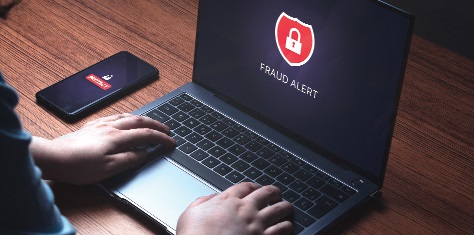
When I read the Bank of Ghana’s published press release on Wednesday, October 7, 2026, on “Digital Fraud and the Cost of Ignorance”, my mind went back to my September 13, 2025 article in this column in which I explained how, through a scam, an order for pizza cost me GH¢5848 instead of the GH¢149 I would have paid if not for the scam.
What I have learnt is that today, you are more likely to be robbed on your phone than on the street! If you are “old school” like me, you are most likely concerned about security within your immediate surroundings. Get the dogs out, ensure the electric fence is well secured and all doors are firmly locked when you leave the house.
These will be the safety protocols you are most likely to follow. But no, it is not enough. It is not enough because in today’s digital space, where we are more exposed to criminals than in our homes, there are no guns, no mask and no motorbike chase.
Fraudsters and criminals don’t need to jump the fence, face the dogs or break into the house. Just a calm voice on the phone: "Good morning, this is your bank. Your account has been blocked.
Please provide your PIN to unlock it." Or a text message: "You have won GH¢50,000. Click this link." Or a WhatsApp message from a friend whose account has been hacked: "Please send me MoMo, I will pay back tomorrow." In my case, as I explained in the September 13, 2025 edition of this column, it was on Sunday, September 7, that I fell victim to these fraudsters, losing GH¢5,848.00 (Five thousand eight hundred and forty-eight Ghana cedis) in the process.
It all started when I felt the urge to have pizza around 4.50 pm that day. Without a pizza place number on hand to call, I decided to search online for the nearest pizza joint to order from. In fact, that wasn’t the first time that I had resorted to the internet to pick a contact number and order pizza to be delivered to me at home or to pick it up from the nearest pizza shop.
On this occasion, while searching online, 0270983903 popped up as the contact for Papa’s Pizza, so I called. “Papa’s Pizza, Tema”, answered and the supposed “client relations officer” at the end of the call walked me through the menu and mentioned what I was looking for, so I felt comfortable.
Comfortable that I was dealing with Papa’s Pizza. How wrong! Where I got it wrong and duly fell for the scam was when I was asked whether I would like to pay before delivery and to give a unique pick-up number.
It was at this time that I got compromised in the whole scam, as I kept clicking on links to confirm the order, and within minutes I saw withdrawals from my mobile money wallet. They emptied the wallet, and the scammers then started hitting bank accounts to see whether I had a linked account.
And they got one, withdrawing further GH₵5000 from the bank account linked to my mobile money wallet and transferring the money to a Telecel Cash number: 0209002827. All this while, like fighting an inferno, I was on the phone, frantically explaining to MTN the situation and pleading with them to block my mobile money wallet to prevent further withdrawals.
The speed with which MTN acted prevented further withdrawals, so the last push the scammers made from my bank account to the mobile money wallet stayed because they could not transfer it out to their Telecel Cash account. Last week, the Bank of Ghana issued a timely press release that every Ghanaian must read twice.
It was titled simply: “Digital Fraud and the Cost of Ignorance”. For me and from my experience, the release is a survival guide for all of us in an increasingly digital economy. As of 2026, Ghana has over 22 million active mobile money accounts, which is driving financial inclusion and helping us enjoy financial services on our mobile phones.
We borrow, save, invest, pay school fees, and receive remittances on our phones. Financial inclusion has been a success story, but there are dangerous gaps. Financial inclusion without financial literacy exposes individuals to increased financial vulnerability.
And we are all vulnerable! Over the past 15 years, one topic that I have used this column to address so often is the dangers of scammers or fraudsters tricking people into parting with huge sums of money through mobile money fraud, phishing or investment scams. But, as you probably know, a man cannot be careful enough, as I fell victim myself!
The 18-point advisory note by the Bank of Ghana offers simple, practical ways for you and your family to protect your hard-earned cash. The first rule the bank gives is simple: safeguard all personal and financial information, including your Mobile Money PIN, ATM PIN, internet banking password, One-Time Passwords (OTPs), and verification codes.
In fact, think of your MoMo PIN like the key to your bedroom, or perhaps your toothbrush. You wouldn’t give your bedroom key to a stranger because he is wearing a nice shirt or share your toothbrush with someone because she is beautiful. No legitimate bank, mobile money operator, payment service provider, or financial institution will EVER request your PIN, password or OTP via phone call, text, email or social media.
Never. And that is the first step to keeping safe digitally. The moment someone asks for your PIN, it is fraud.
End the call. Delete the message. The bank’s release was emphatic on this.
Today, the fraudsters are always ahead of the game in some situations. They have become professional! They clone MTN, Vodafone and AirtelTigo logos.
They create fake Facebook pages of banks with 50,000 followers. They send SMS messages that look exactly like your bank's alert and even know your full name and your Ghana Card number, harvested from previous data leaks. So, let’s be vigilant!
But can a man be careful enough? Well, still be careful.
Article text via FreeNewsAPI. Rights remain with Graphic Online.
Read on publisher site → Opens Graphic Online in a new tab